Wor Shu Duck, also called Mandarin Pressed Duck or Almond Pressed Duck, was a popular Cantonese dish in Chinese and Polynesian-themed restaurants in the United States in the 1950s-1980s (right alongside the famous Pupu Platter).
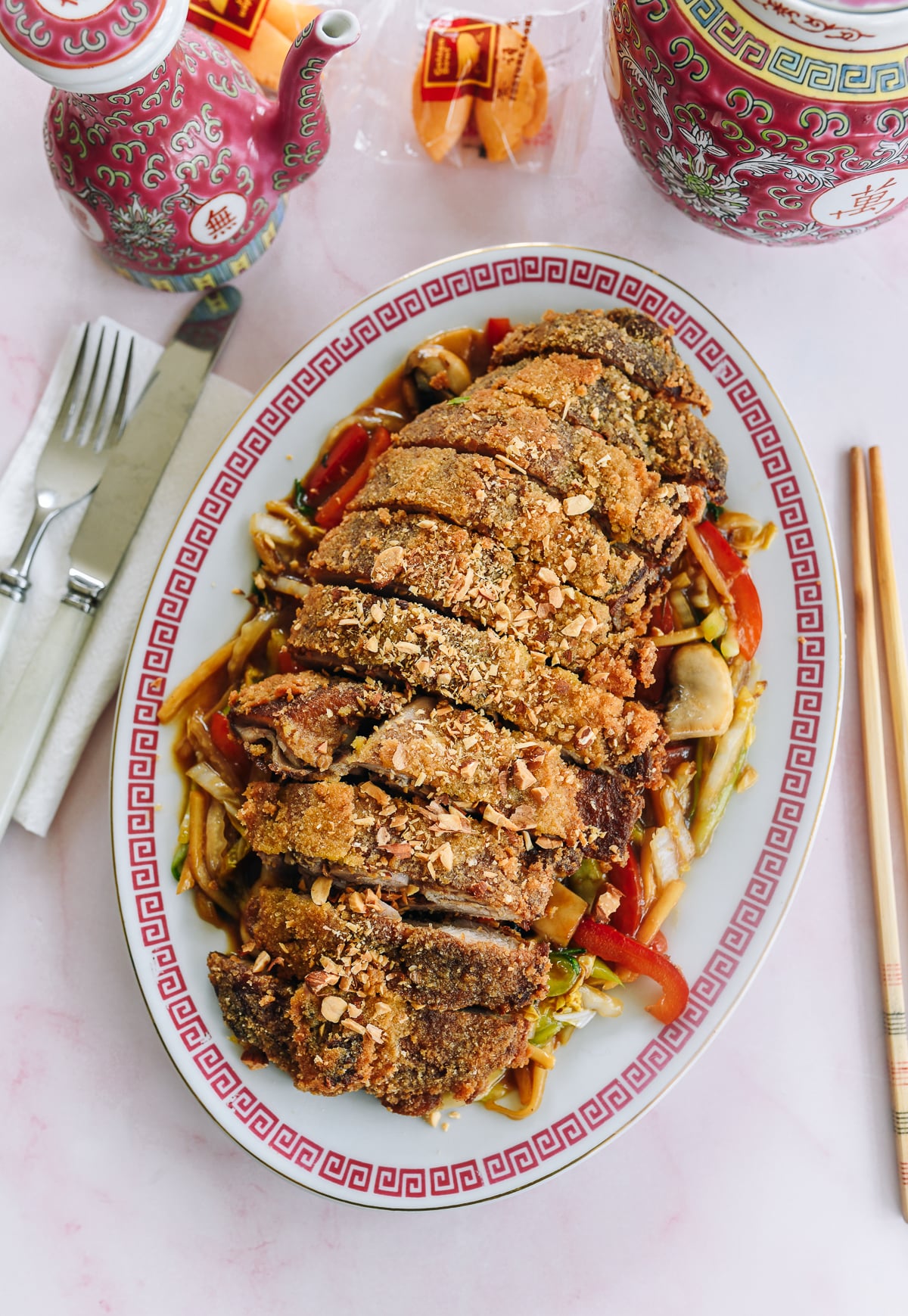
Known as wor shu opp in Cantonese, this dish is now seldom seen on menus. We’ve gotten countless requests for a recipe over the years. I watched my father prepare many orders of Wor Shu Duck back in the day, and our recipe is finally here!
What is Wor Shu Duck?
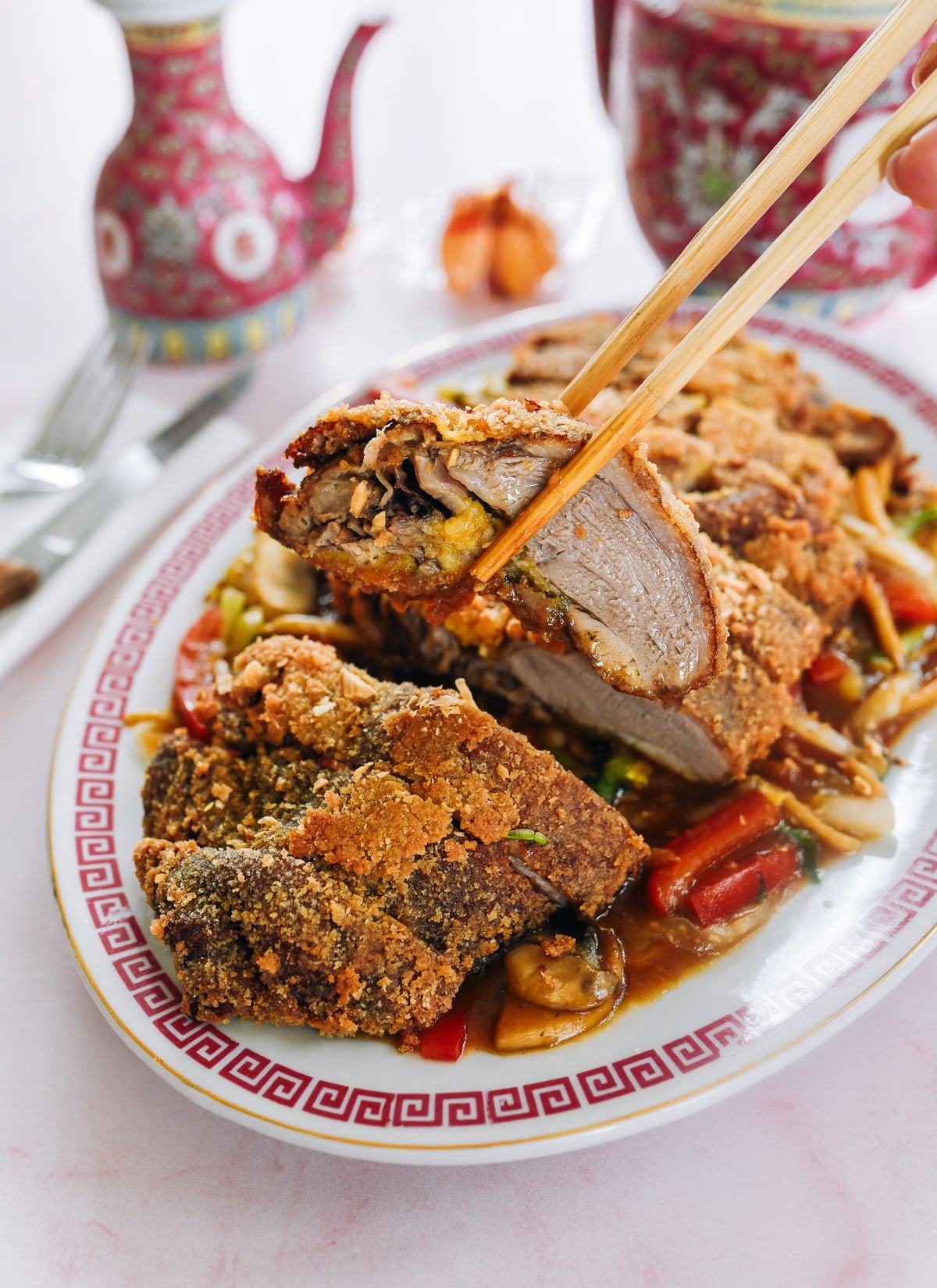
Wor Shu Duck consists of crispy, de-boned duck pieces served over a savory mix of stir-fried vegetables, often topped with sliced or crushed almonds. It starts with a whole duck, which you braise in a master sauce. Then you de-bone it, press and chill it, bread it, deep-fry (or pan-fry to use less oil), and slice into bite-size pieces.
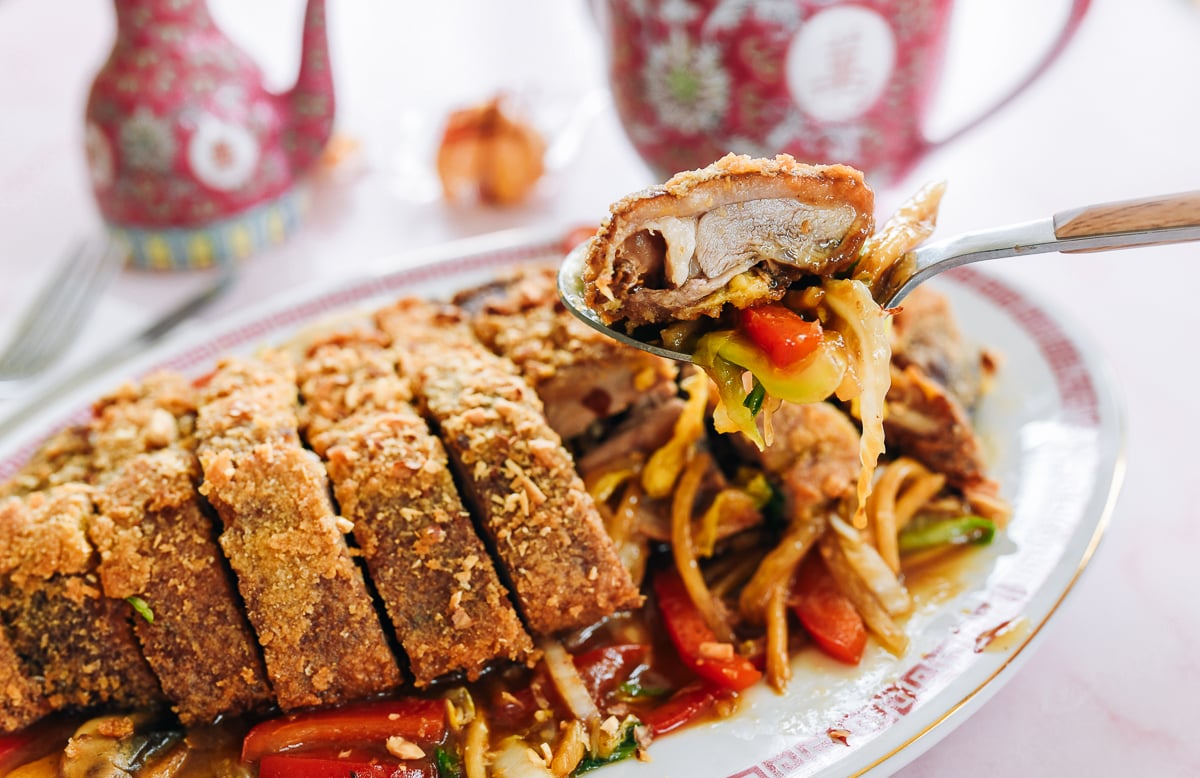
It is a fairly labor-intensive dish, which is probably why it has faded more quickly from restaurant menus than other retro dishes like egg foo young, Americanized chow mein, and chop suey.
There are many theories on the source of the dish, but the reality is that nobody really knows the actual origins of wor shu duck, or the chicken version (popular in the Midwest), wor shu gai.
That said, we assume that it was developed by Cantonese cooks, since early Chinese chefs and restaurants in the U.S. were virtually all from Canton (Guangdong Province).
My Experience with Wor Shu Duck
My father regularly prepared Wor Shu Duck back when he was the head chef at the Holiday Inn in Liberty, NY, which featured both a Chinese-Polynesian and an American menu. He later included the dish at his own restaurant that my parents opened in NJ, Sun Hing, where it sat under the “Special House Dishes” column. (One order cost just $6.75!)
My experience of wor shu duck prep day was that my father first braised whole ducks in a huge wok of aromatic master sauce until tender. After the ducks were cool enough to handle, but still warm, each one was carefully deboned by hand, pressed between two plates, and stored in the walk-in cooler overnight.
We used to make a batch of 6 large Long Island ducklings (6 to 7 pounds each), which would yield 18 orders of wor shu duck. Each portion was breaded, individually wrapped and frozen – ready for the deep fryer when an order came into the kitchen.
For this recipe, we use a smaller duck—4 to 5 pounds—which yields two orders. Each “order” or half-duck can serve 4 people as part of a larger Chinese meal, or it can serve 2 if it is your only dish!
The First Detailed Wor Shu Duck Recipe in English?
Wor shu duck slowly began losing its place on Chinese restaurant menus for several reasons. First, it required a lot of prep work, resulting in higher labor costs. Second, duck was expensive and also less desired amongst American customers. Finally, many Chinese restaurants began serving traditional Peking Duck and Cantonese roast duck, which were mutually loved by both Chinese and non-Chinese clientele.
But based on all the emails, comments, and messages we’ve received about this dish, we know many of you miss wor shu duck.
As of this posting, there are no fully comprehensive Wor Shu Duck recipes to be found on the internet or in books (any recipes we’ve found in old Chinese cookbooks are extremely vague), at least to our knowledge. So we are stepping in to finally fill the void.
We’ve also included a video below to demonstrate the de-boning process.
For me, my father’s wor shu duck recipe is truly a treasure both in memory and in taste.
Wor Shu Duck Recipe Instructions
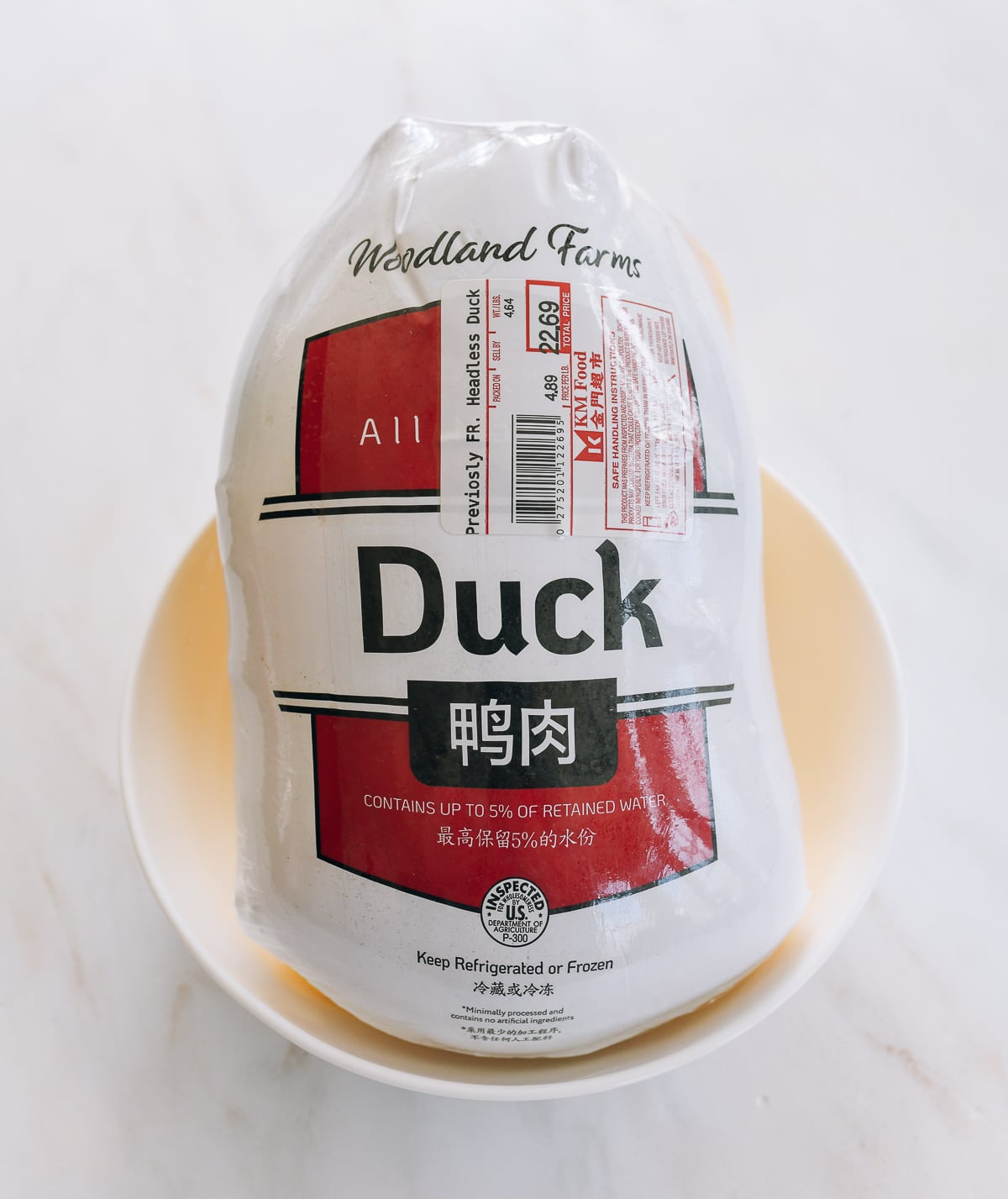
Rinse the duck inside and out and remove the wing tips and flats. You can also leave the wings on and remove (and eat!) them after braising the duck.
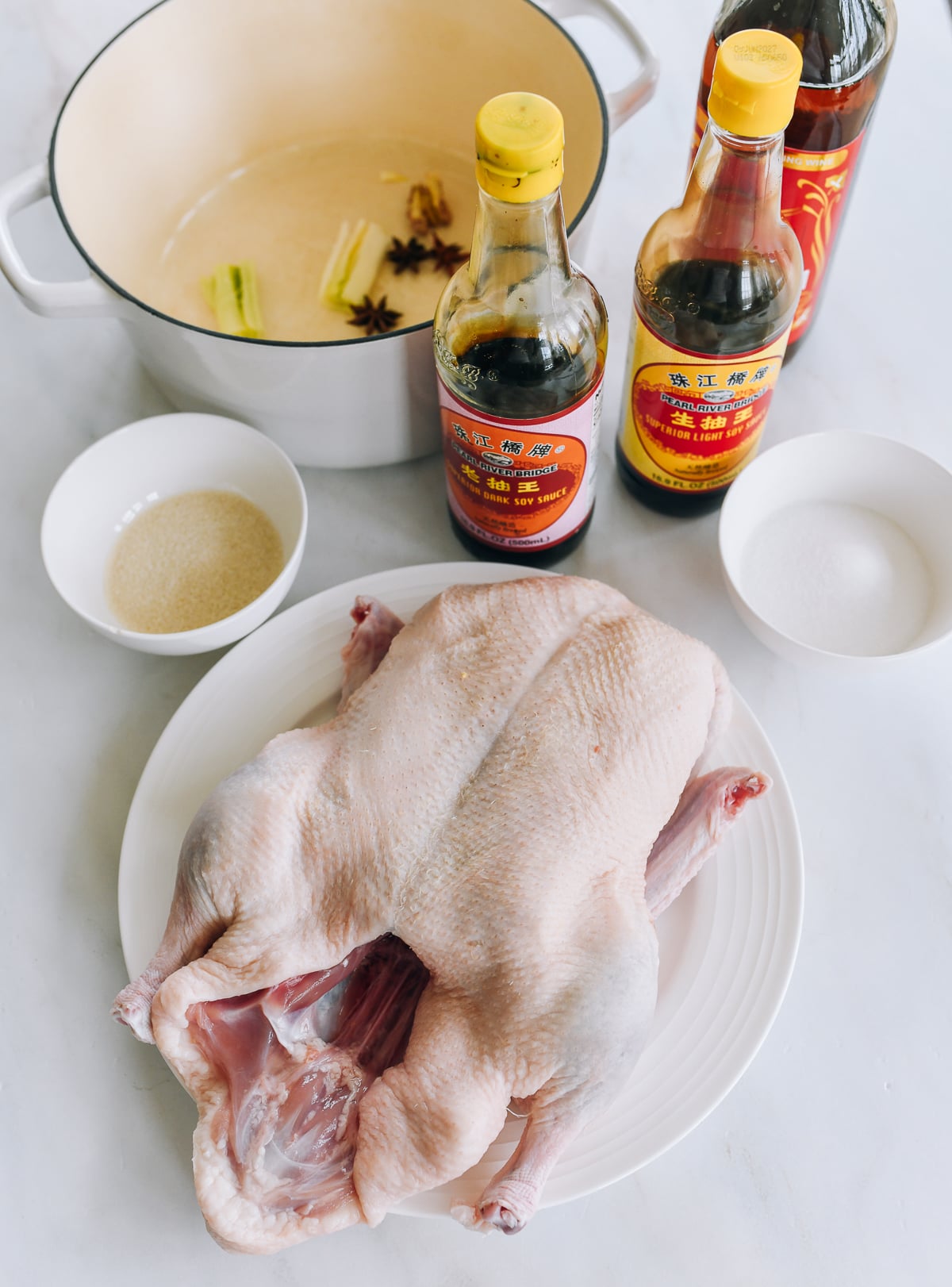
In a pot just large enough to fit your duck, add the neutral oil, ginger, scallion, and star anise over medium-heat. Cook until fragrant, about 1-2 minutes. Then add the salt, sugar, light soy sauce, Shaoxing wine, dark soy sauce, and water. Bring to a boil.

Tip!
Use the smallest pot that will accommodate the duck and liquid ingredients, so the duck is fully submerged. The one we have in the photos below is probably a bit too small, as you want more clearance over the surface of the liquid, but it shouldn’t be too wide a pot.
You can freeze and re-use the braising liquid. Once you are confident in making the recipe, make 2 or more ducks using the same sauce and freeze multiple servings of wor shu duck for later, just like we did in the restaurant!
Carefully lower the duck into the pot. Then lift it out to ensure there are no cold pockets/air pockets inside the duck cavity. Place it back into the braising liquid, again ensuring there are no air pockets inside the duck. Bring to a boil again and adjust the heat to a simmer. Cover and cook the duck on one side for 20 minutes. Carefully flip the duck and simmer for another 20. Then repeat, for another 20 minutes on each side for a total of 80 minutes.
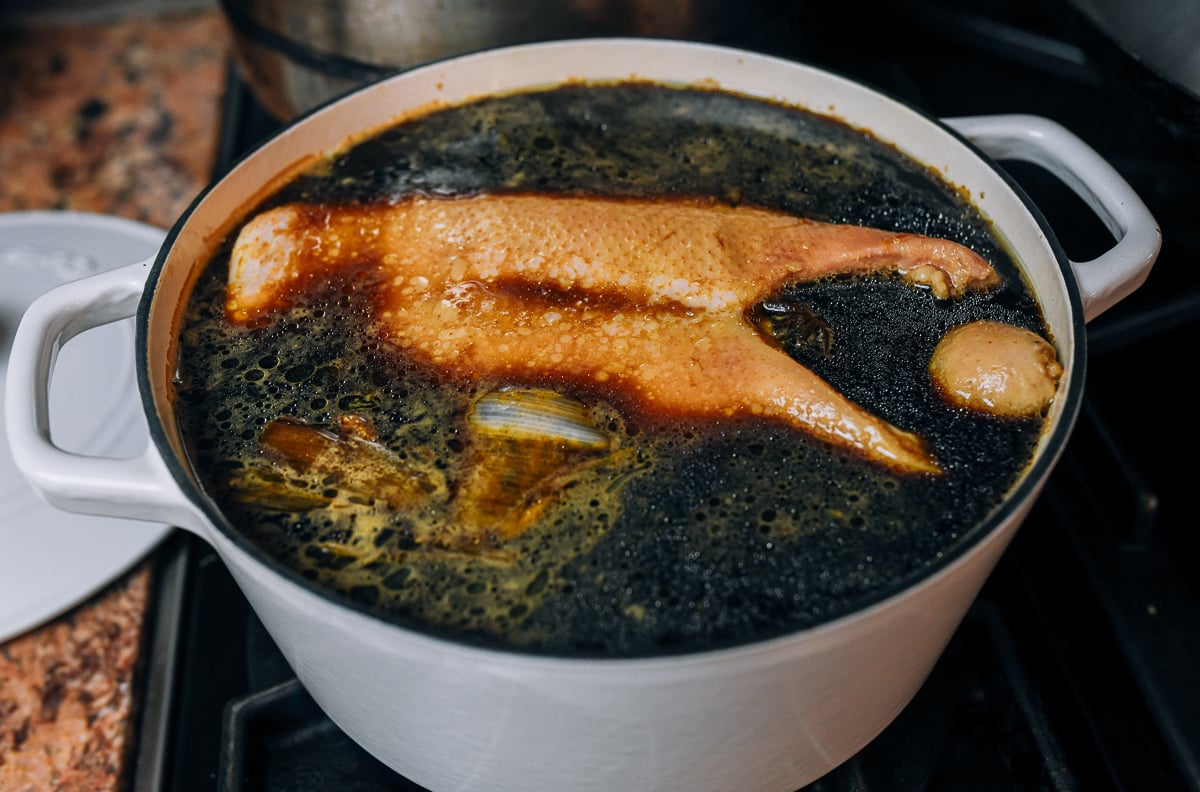
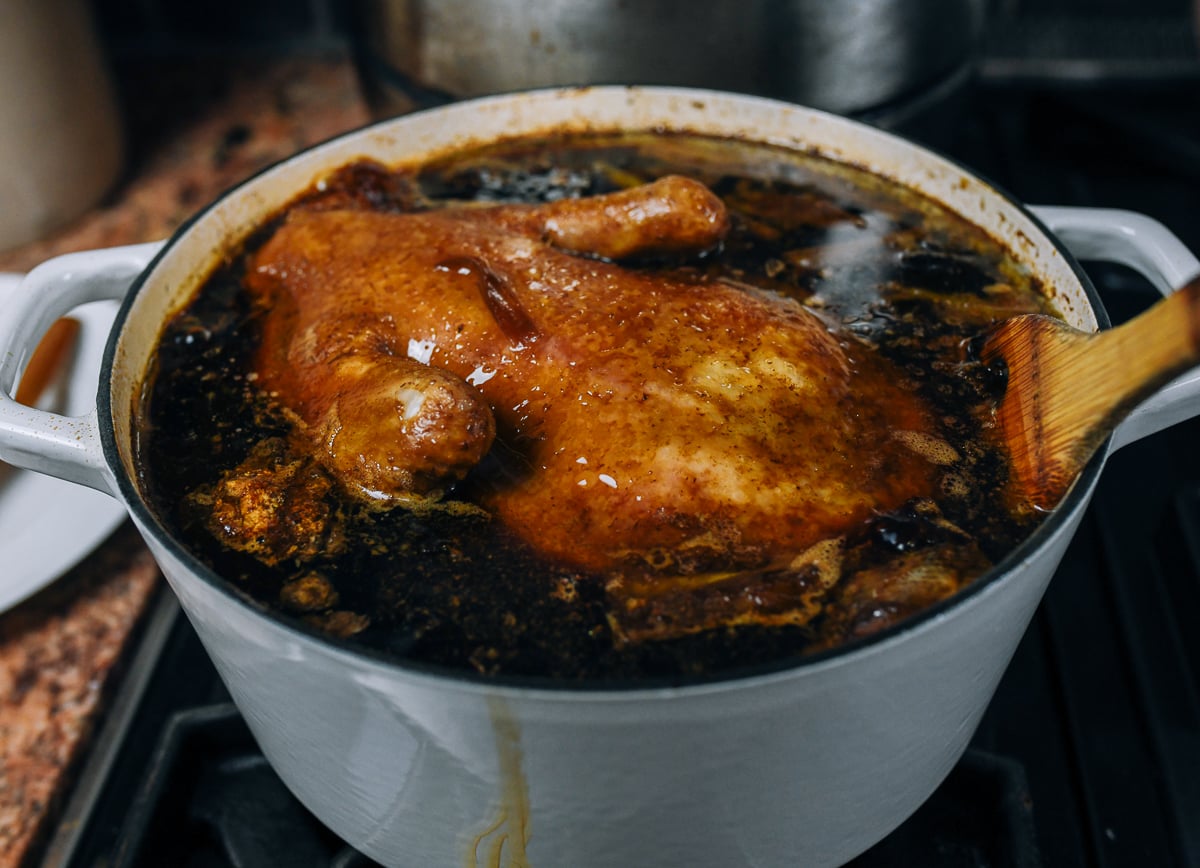
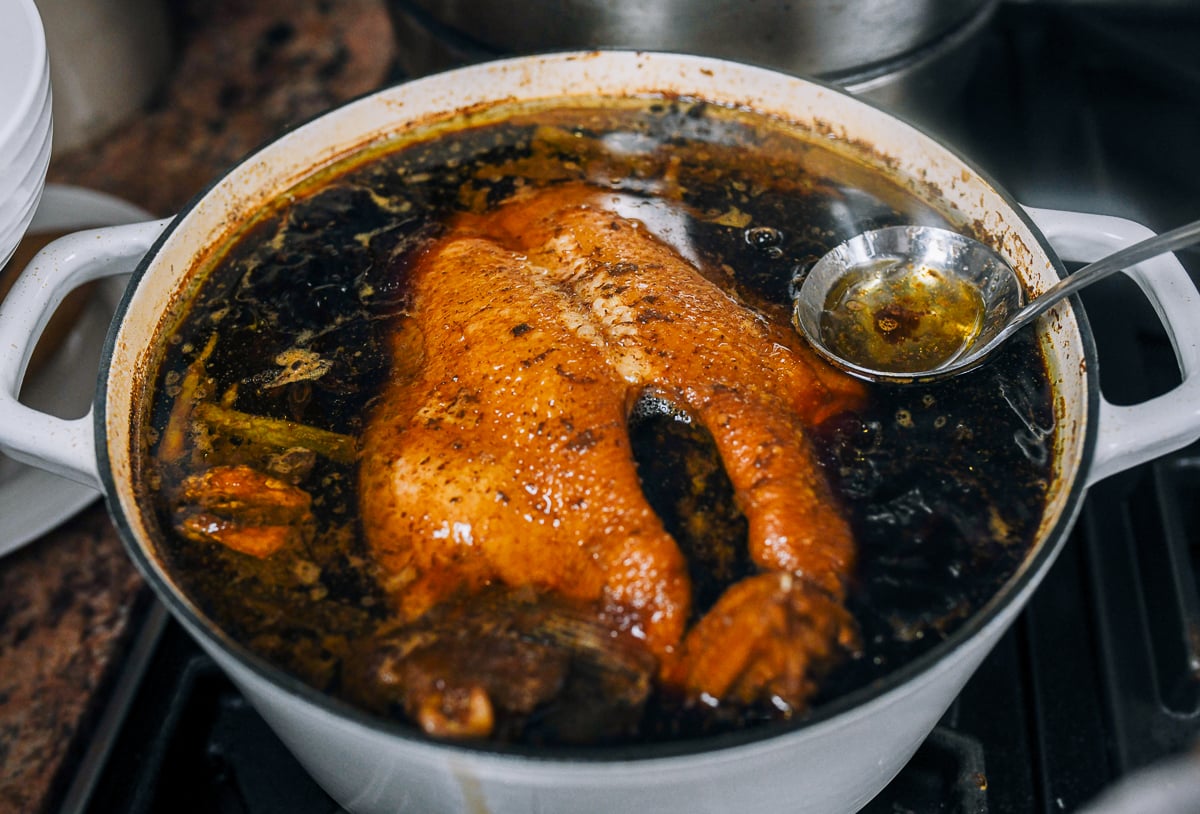
With the duck back side down, turn off the heat, cover, and let it sit in liquid for another 40 minutes. Reserve the braising liquid. If you like, you can skim off some of the fat and reserve it for other cooking.
Note:
This brings the total braising time to 2 hours. The duck must be tender, or the deboning process will be very difficult.
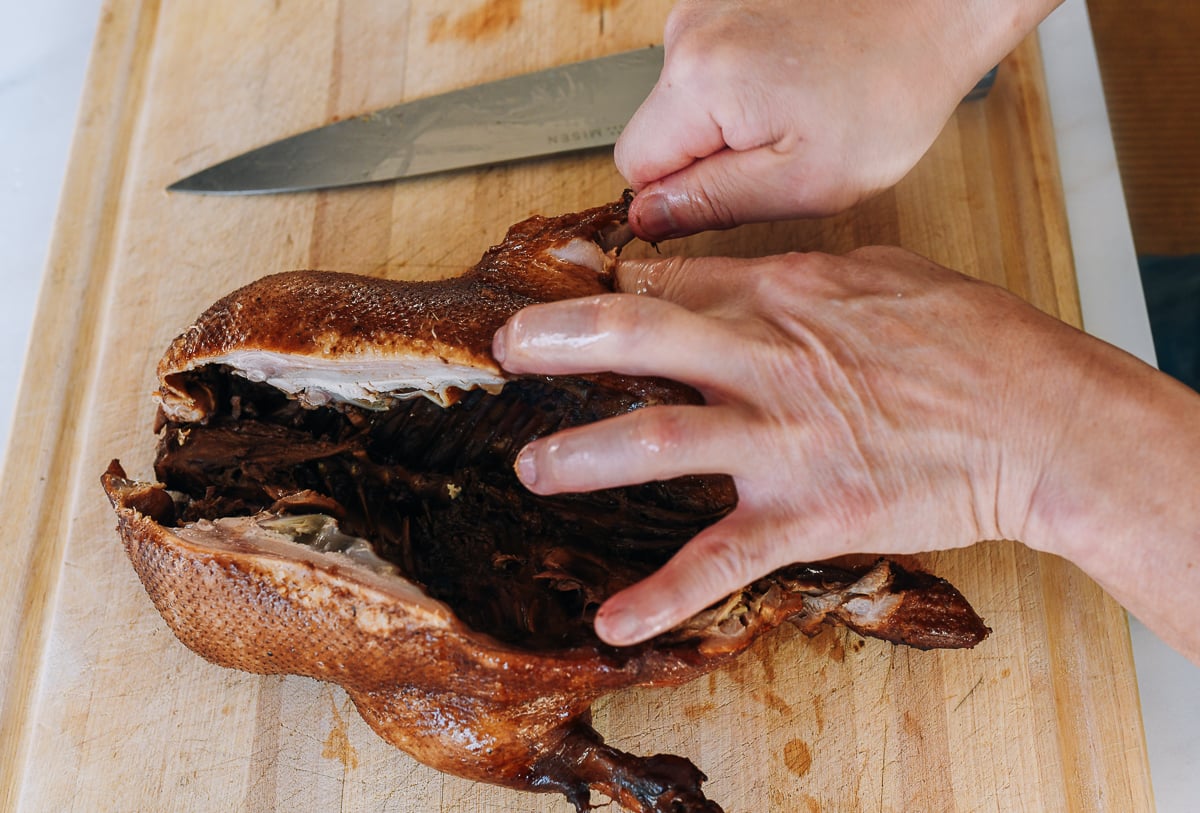
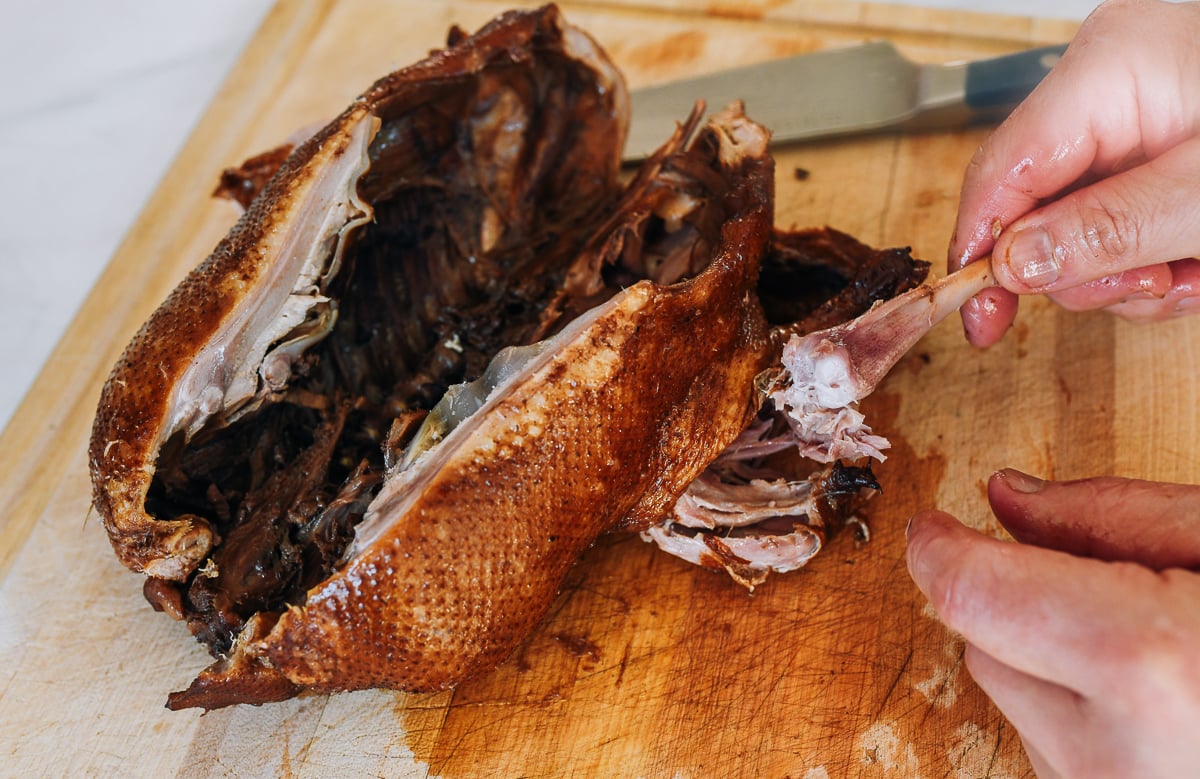
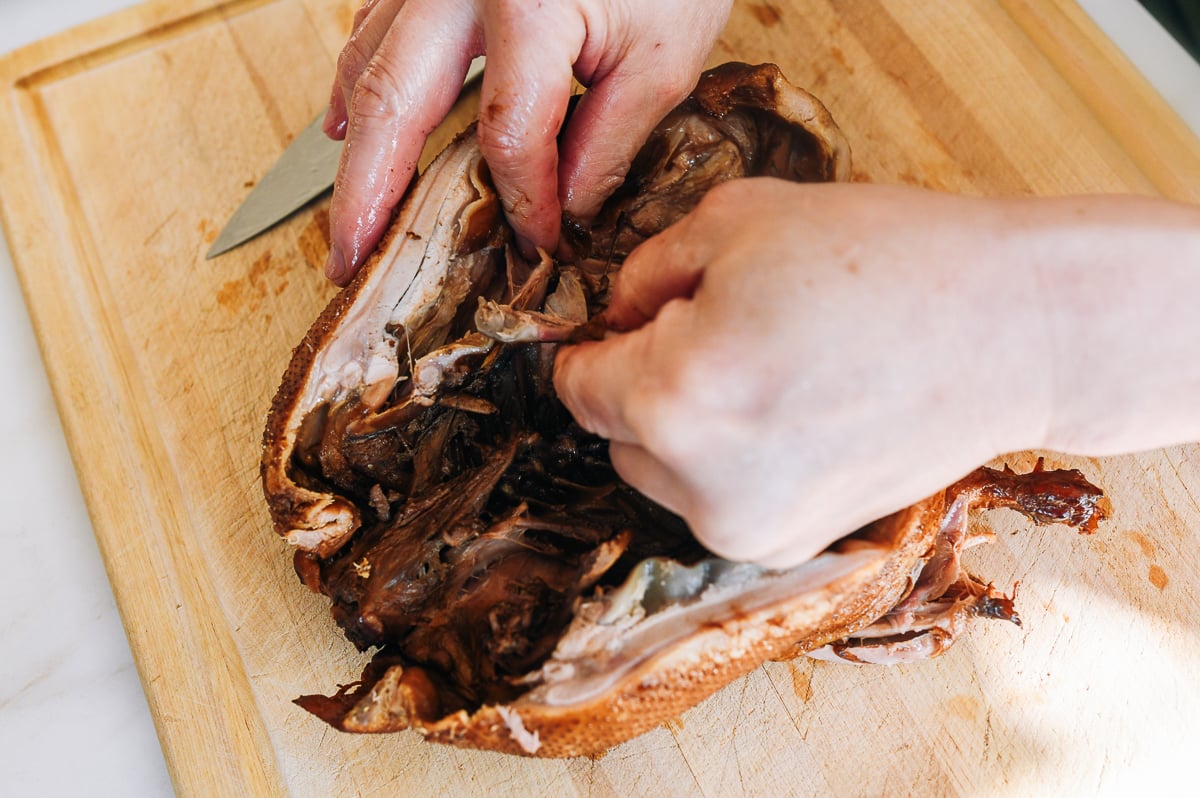
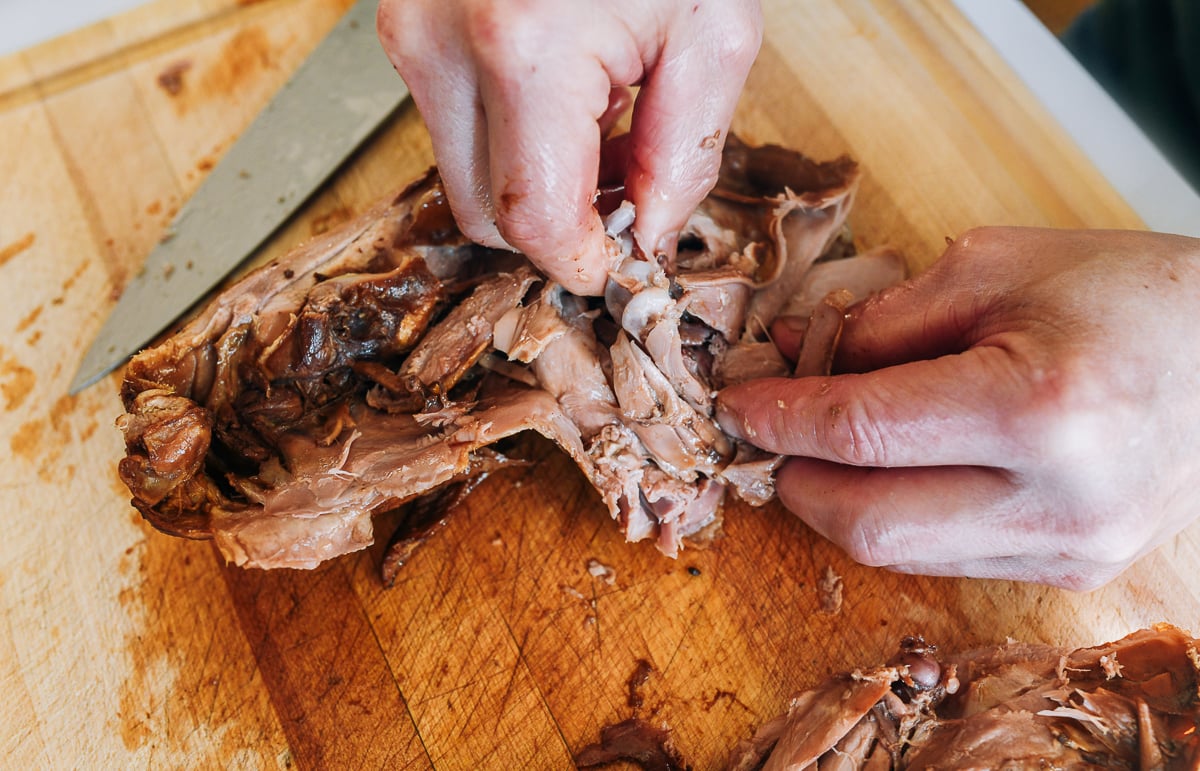
Remove to a plate for 30 to 60 minutes, or until the duck is cool enough to handle but still warm to the touch. Transfer the duck breast-side-up to a cutting board. Cut the duck from the top of the neck down the breastbone to the open cavity, and push both sides down to expose the bones.
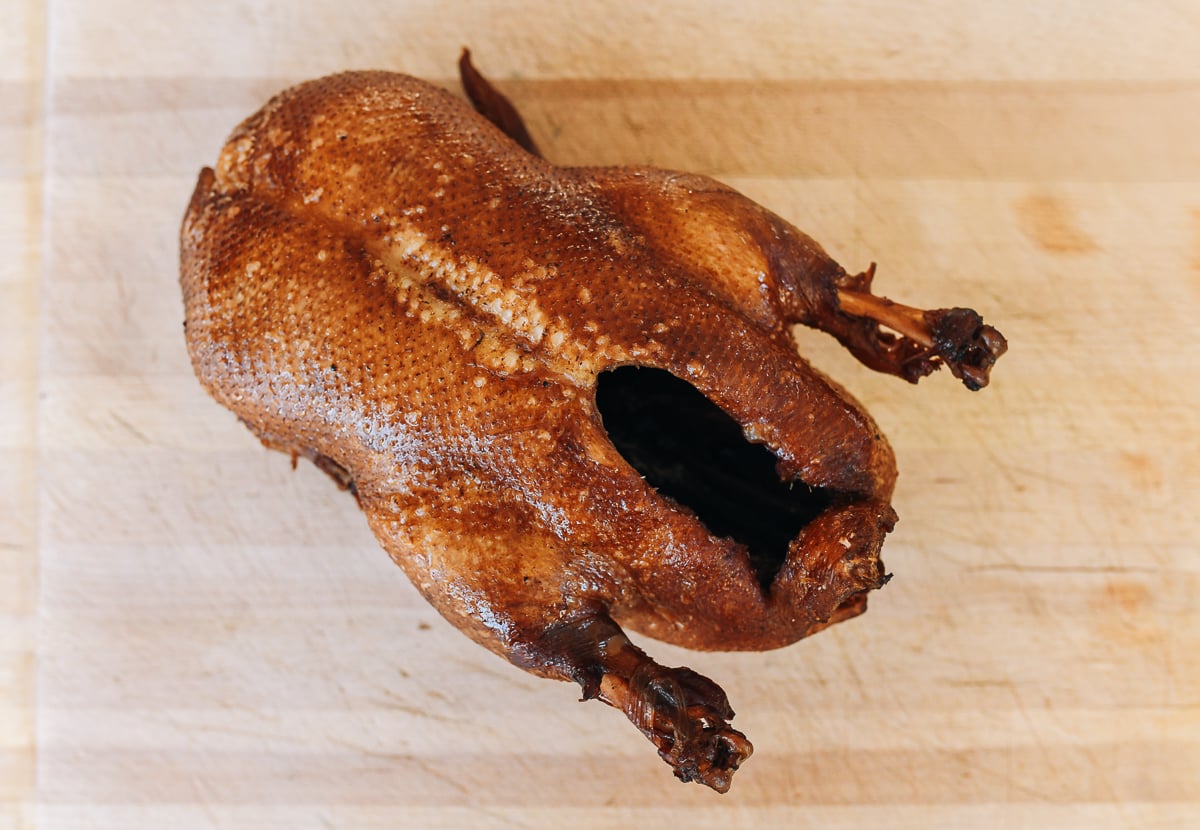
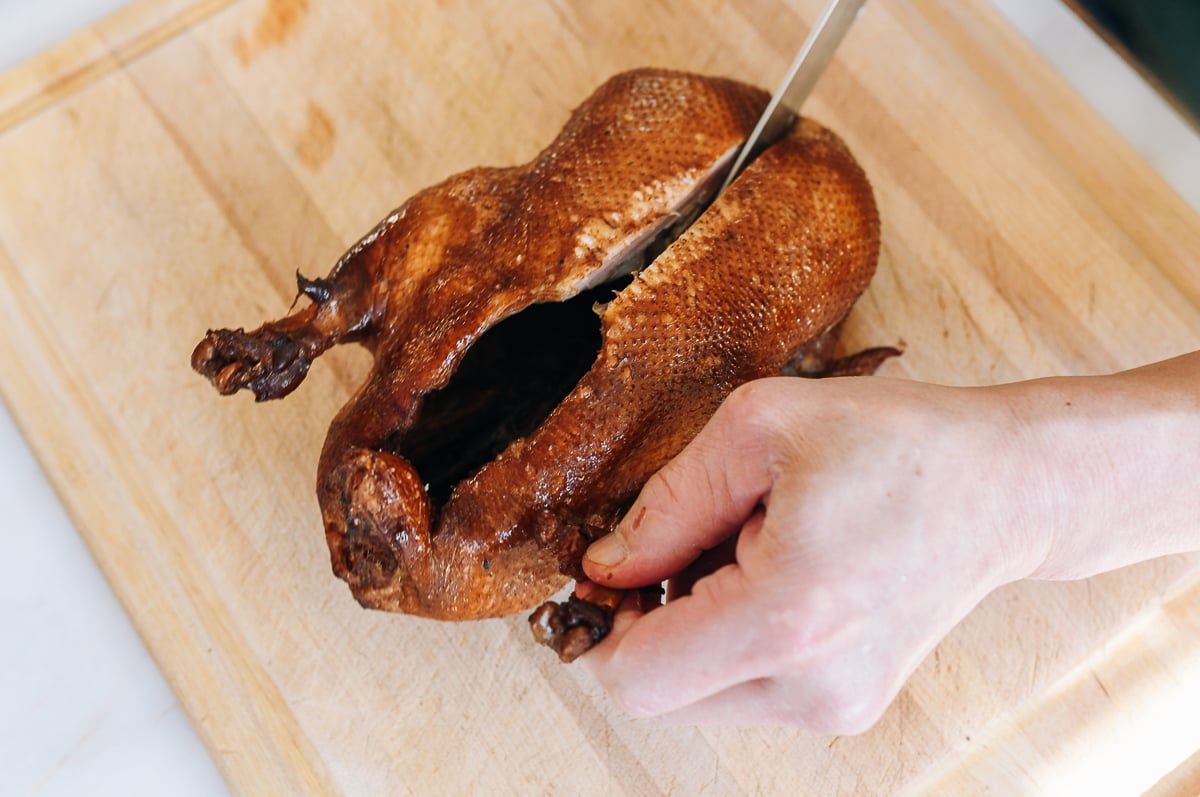
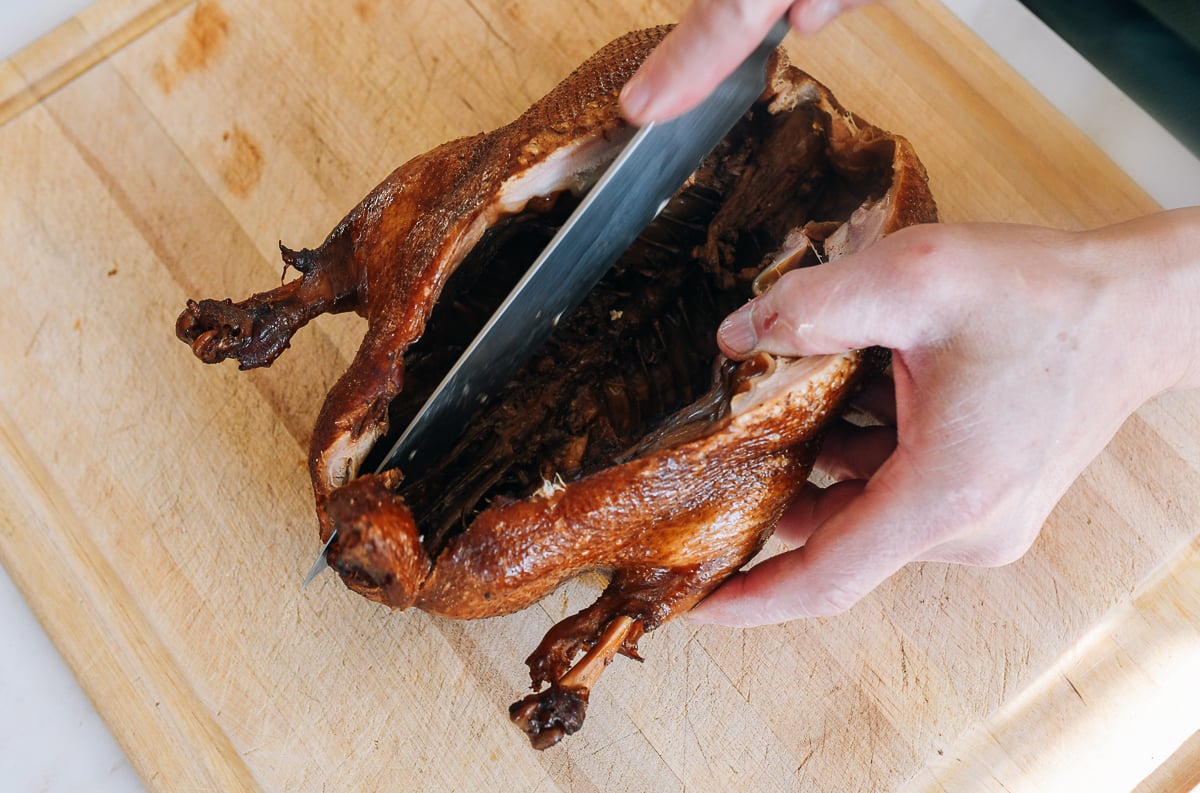
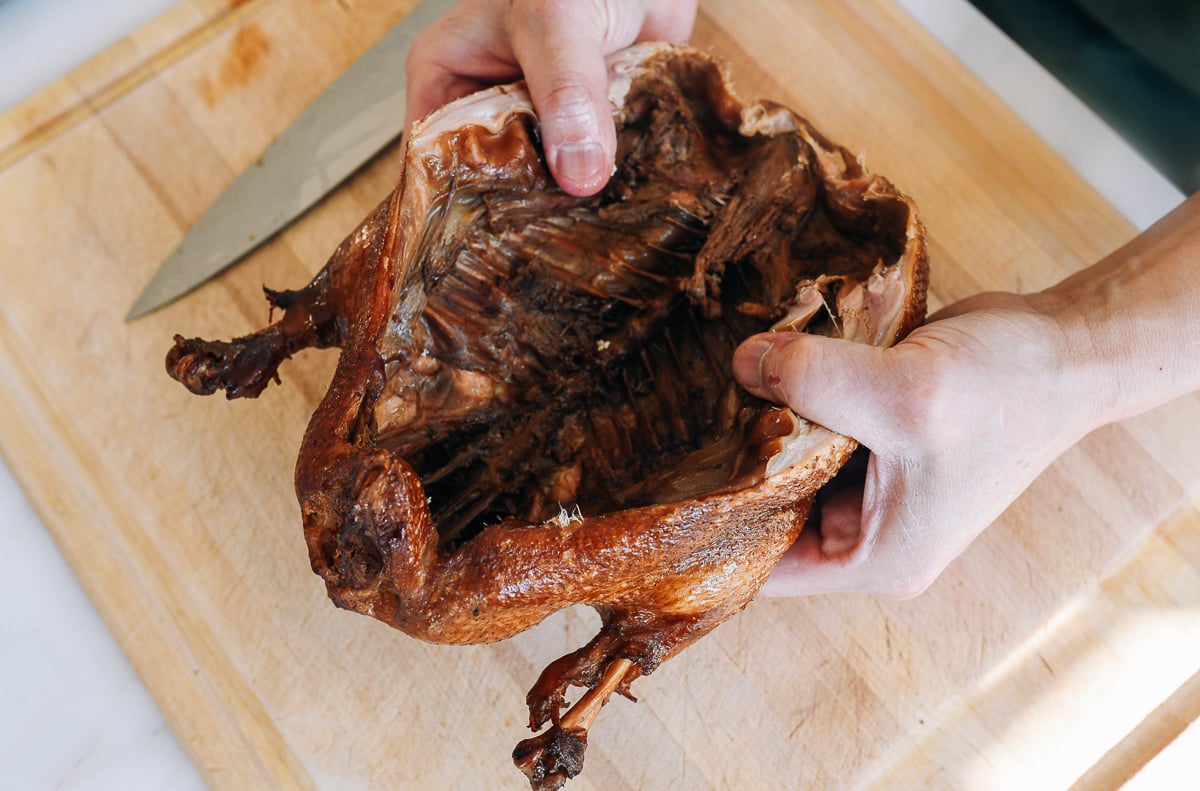
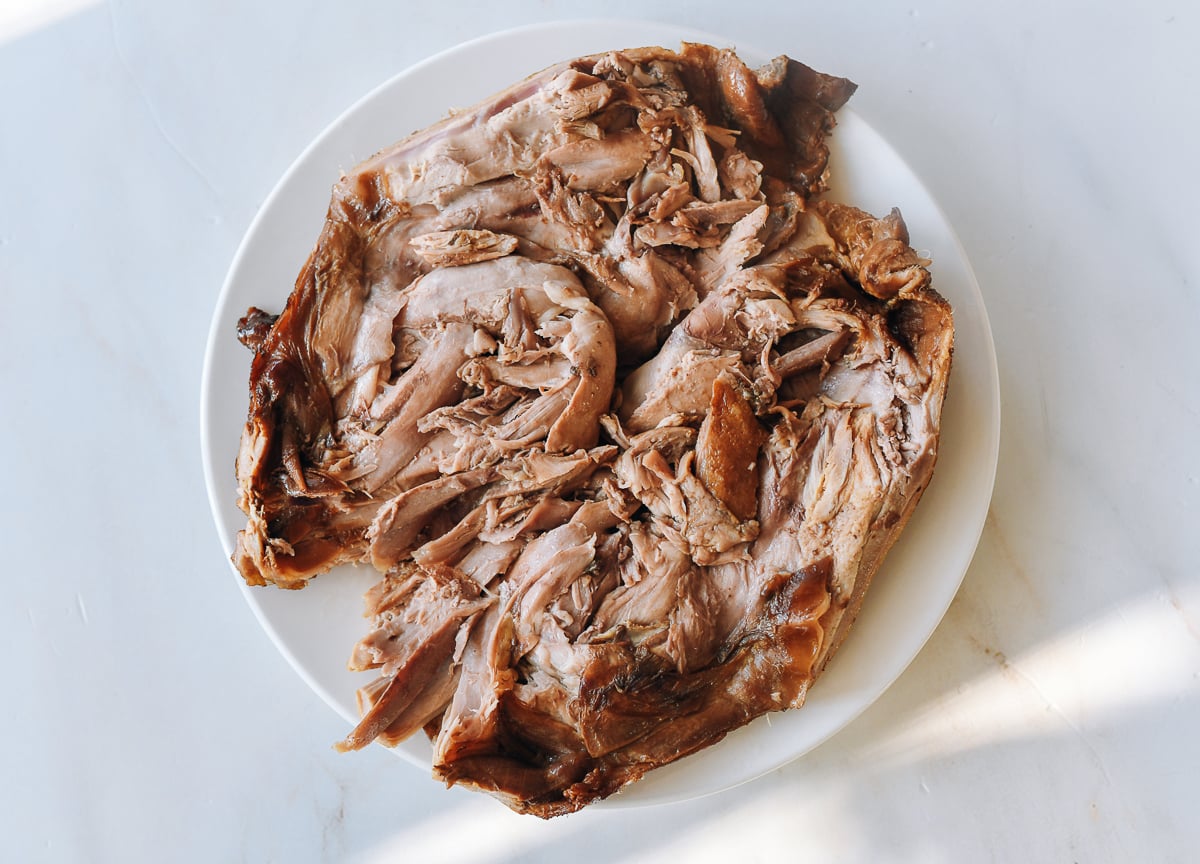
Carefully twist off the drumette bones and drumstick bones. Use a sharp cleaver or chef’s knife to cut out the back bone by making a cut on each side of it. Using your hands, carefully separate the rib and the breast bones from the meat. Pull out the shoulder bones, wish bones, and thigh bones. Feel around with your hands for any remaining loose bones and remove them.
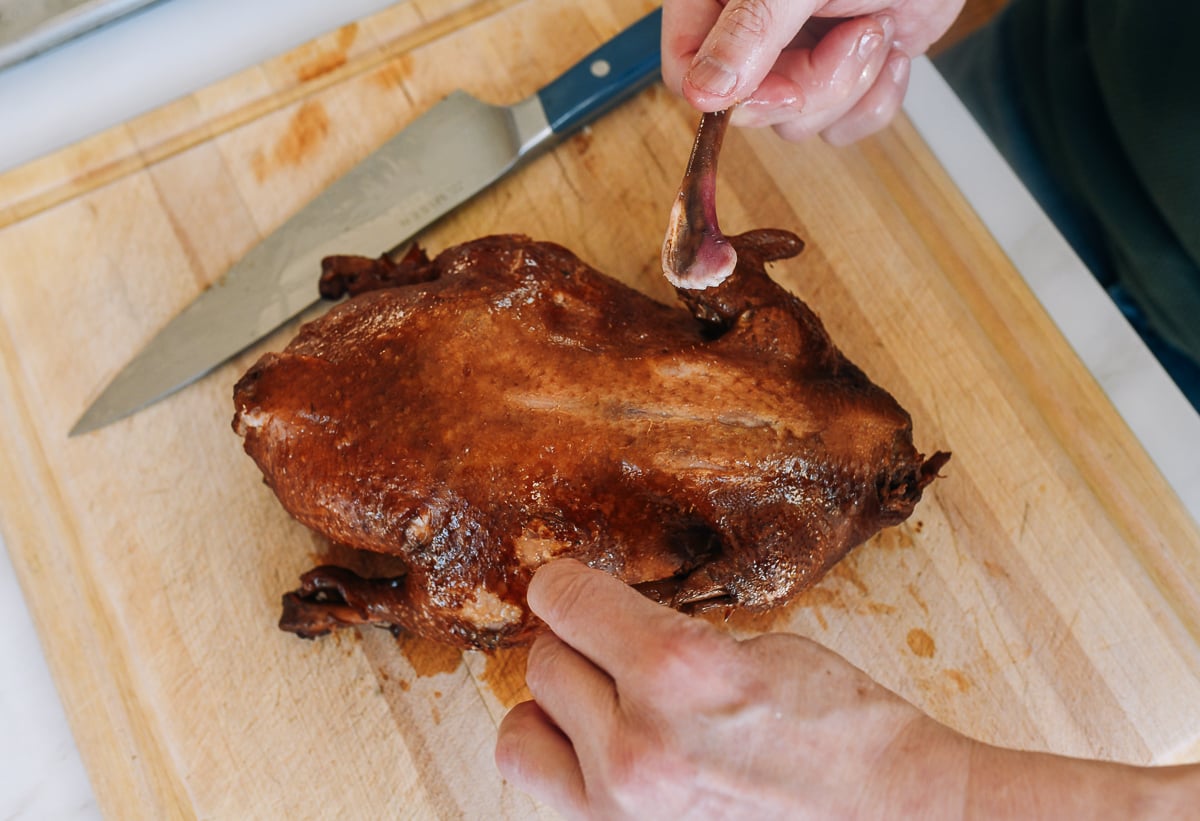
Place the two halves of the deboned duck skin-side down on a plate, and put another plate on top. Refrigerate overnight.
Tip!
Use the duck bones to make a small pot of duck soup or stock!
The next day, you’re ready to assemble the dish. Beat two eggs in a shallow bowl. On a separate wide, shallow dish, toss together the breadcrumbs, cornstarch, flour, salt, and white pepper.
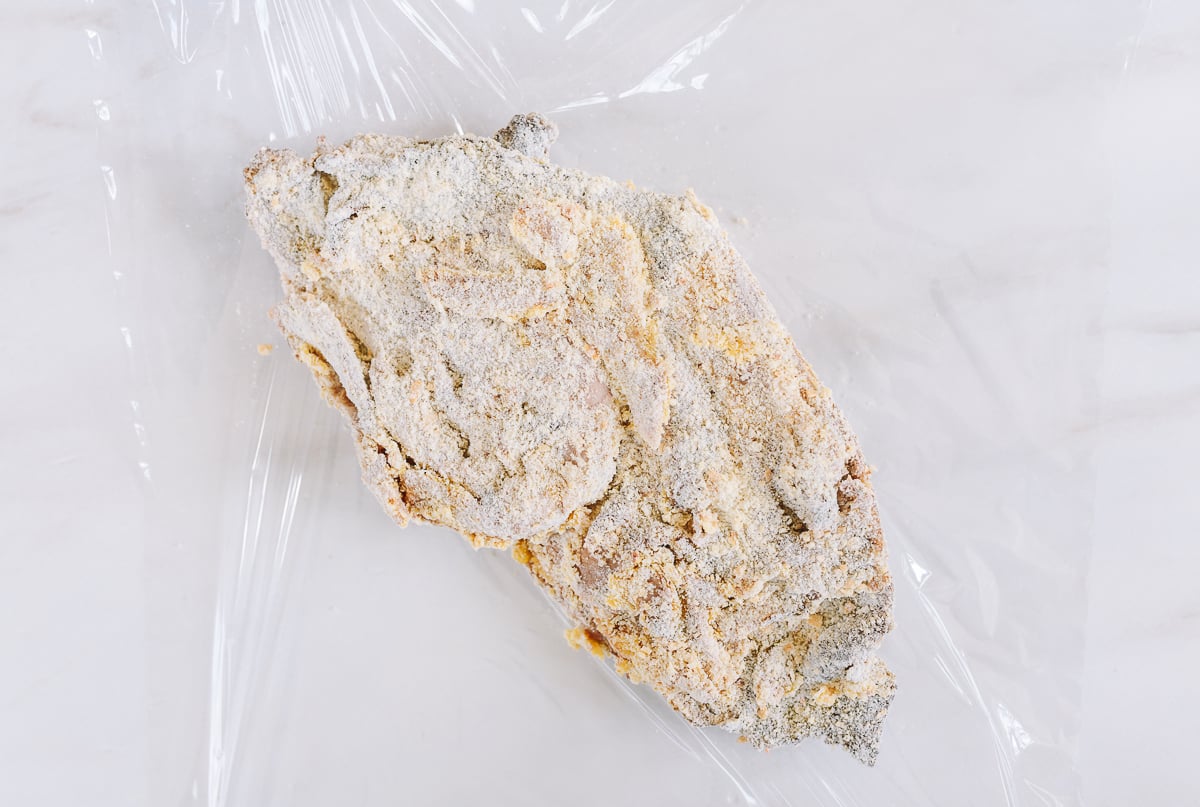
Dip half of the duck into the beaten egg until thoroughly coated. Place the duck into the breadcrumb mixture on both sides. Gently shake off any excess. Repeat this process again until the duck is fully coated with no bare spots.
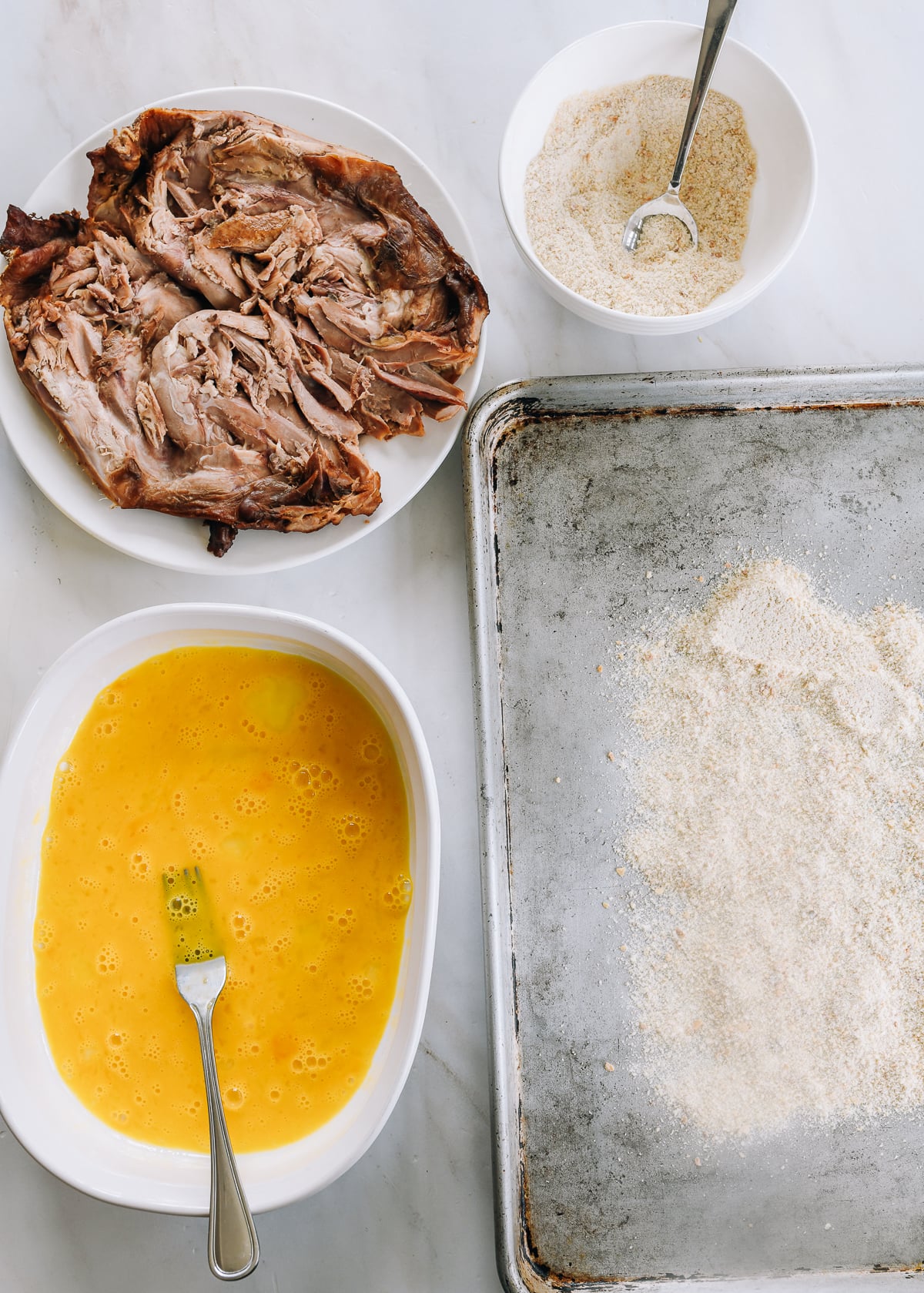
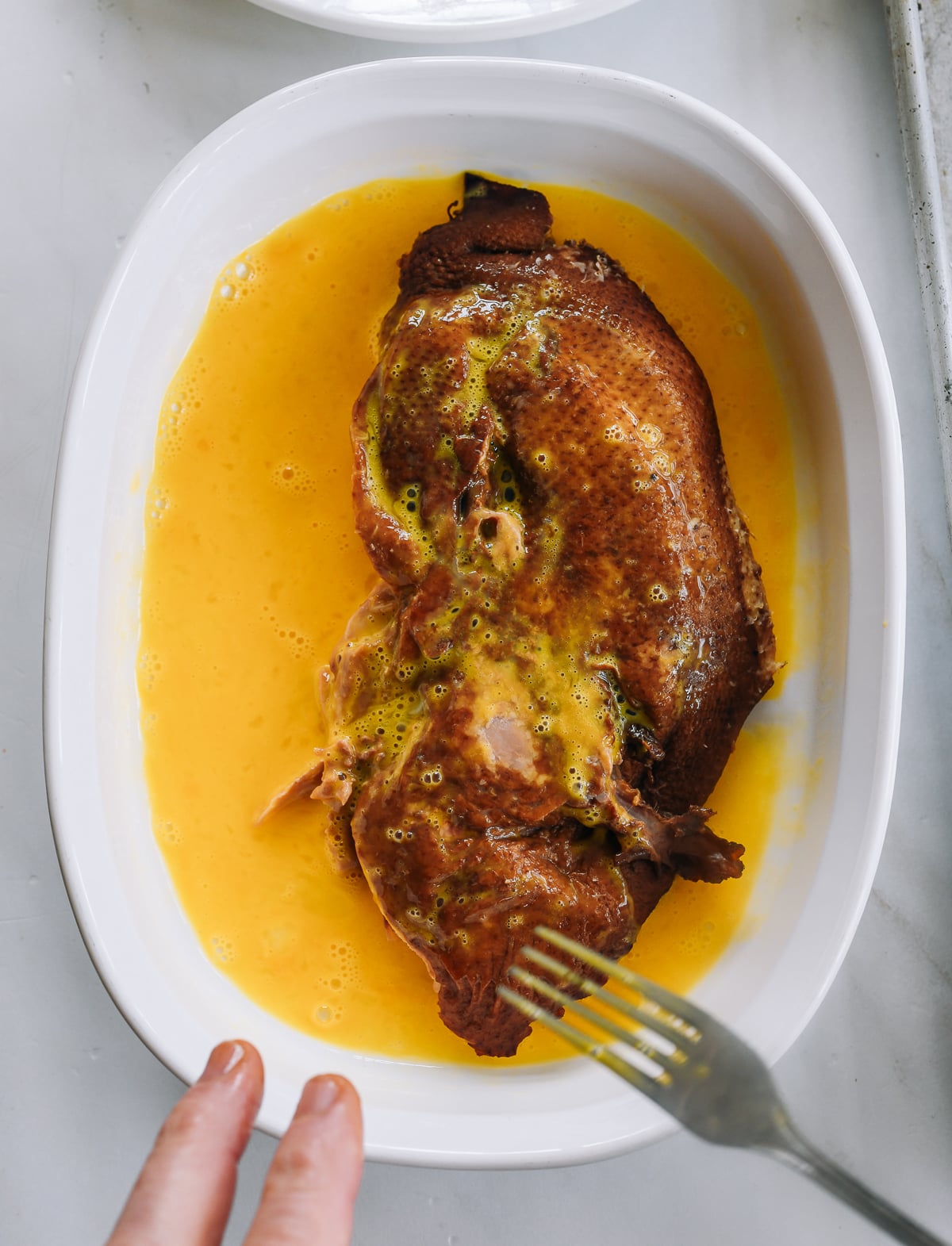
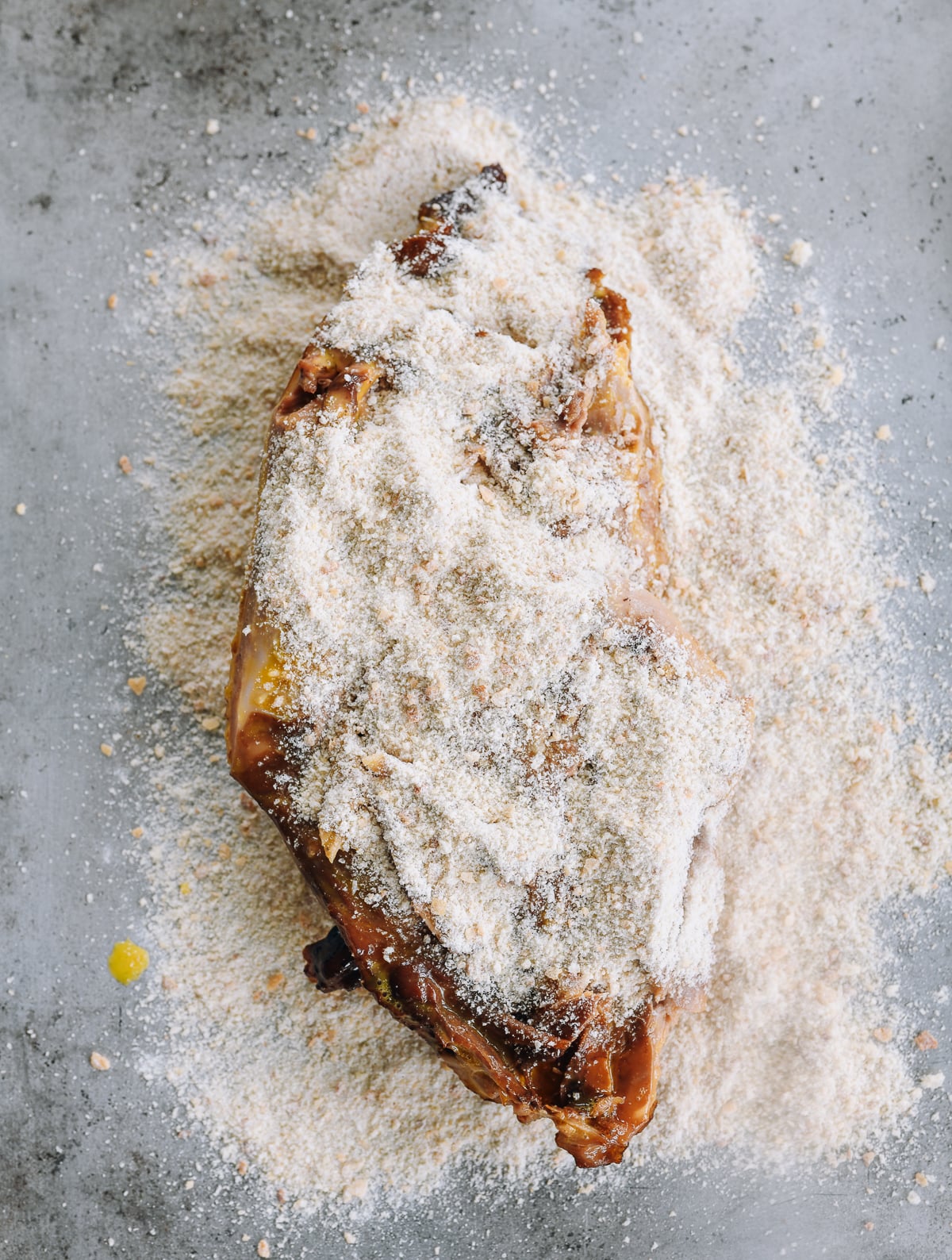
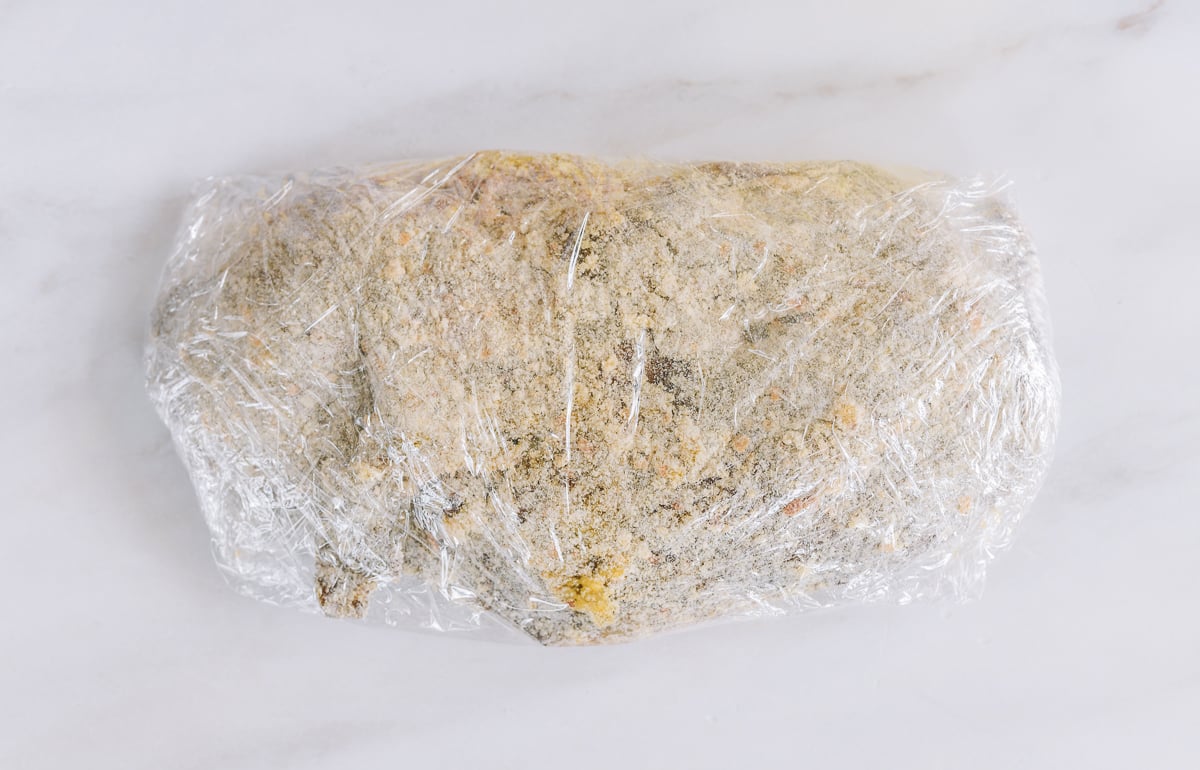
Transfer to a separate plate. At this point, you can choose to wrap one of the duck halves tightly in plastic wrap and freeze it for another day.
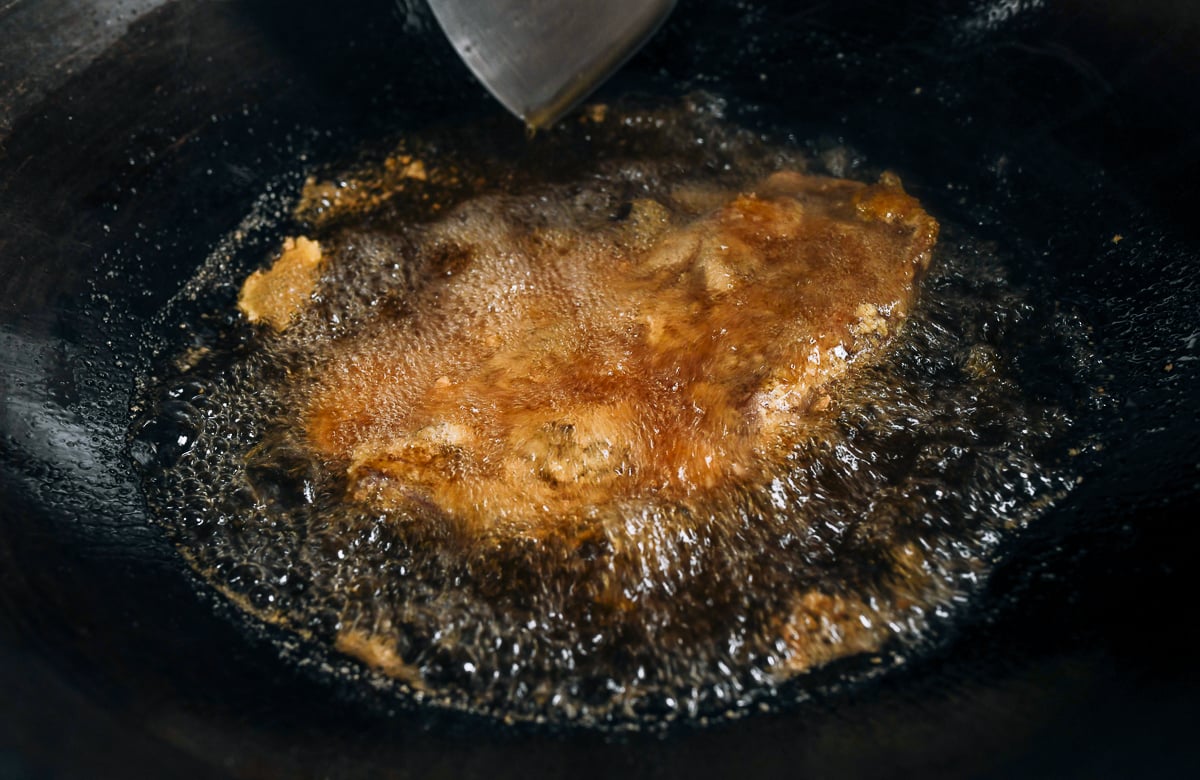
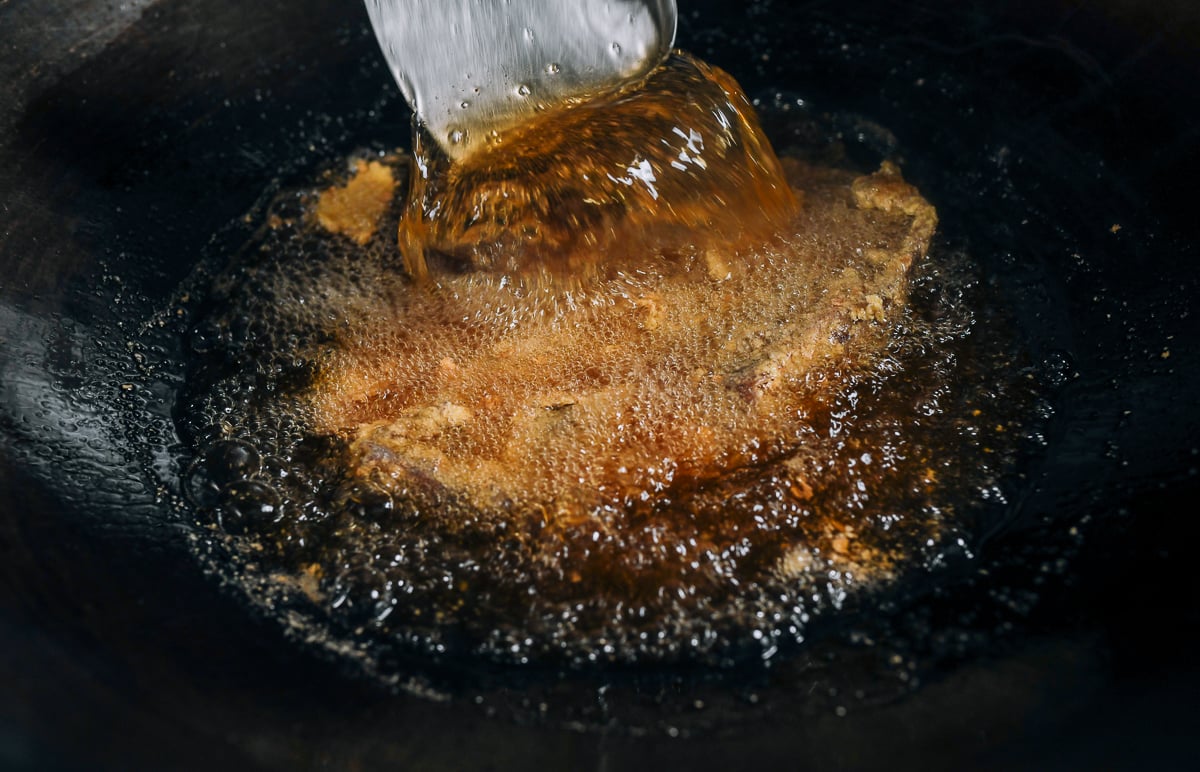
Heat 2 cups of canola oil in a pan or wok until it reaches 350°F/175°C. Lay the duck into the oil and fry for 3-4 minutes. Carefully turn the duck over and continue to fry the other side until both sides are golden brown and crispy. You may have to flip the duck 2 or more times to get even color. Remove the duck onto a cooling rack to drain and rest.
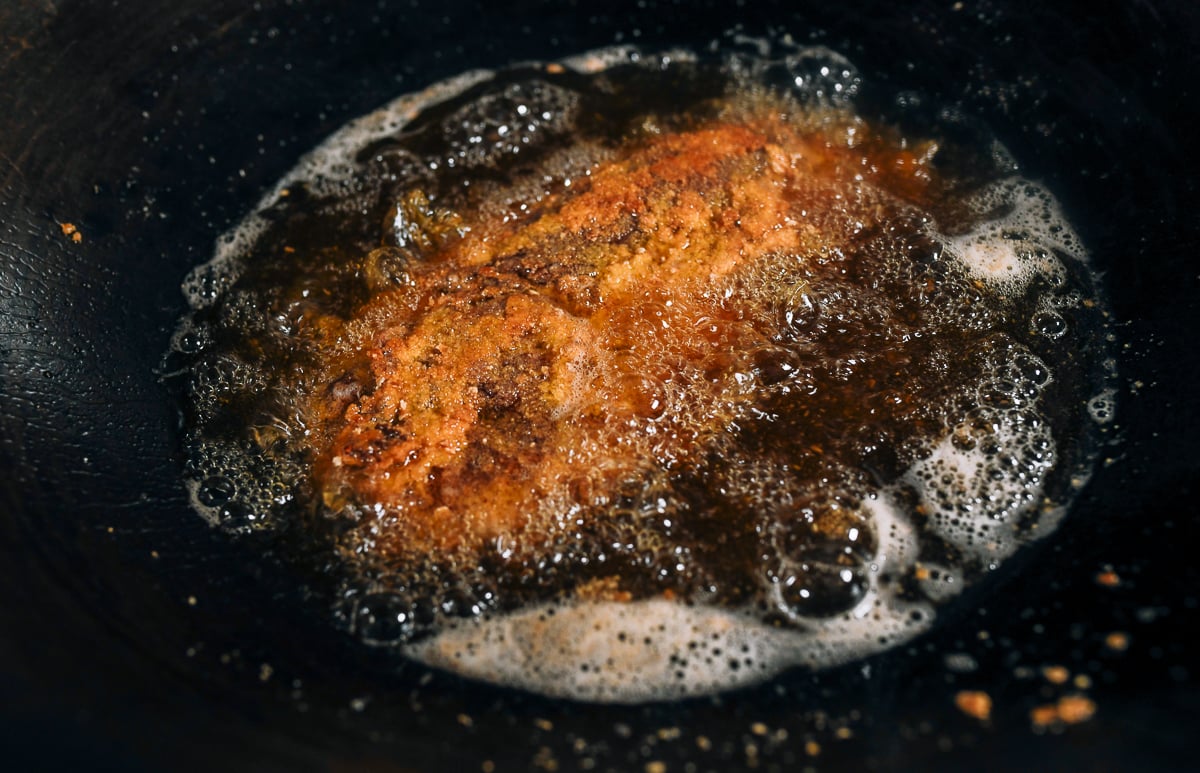
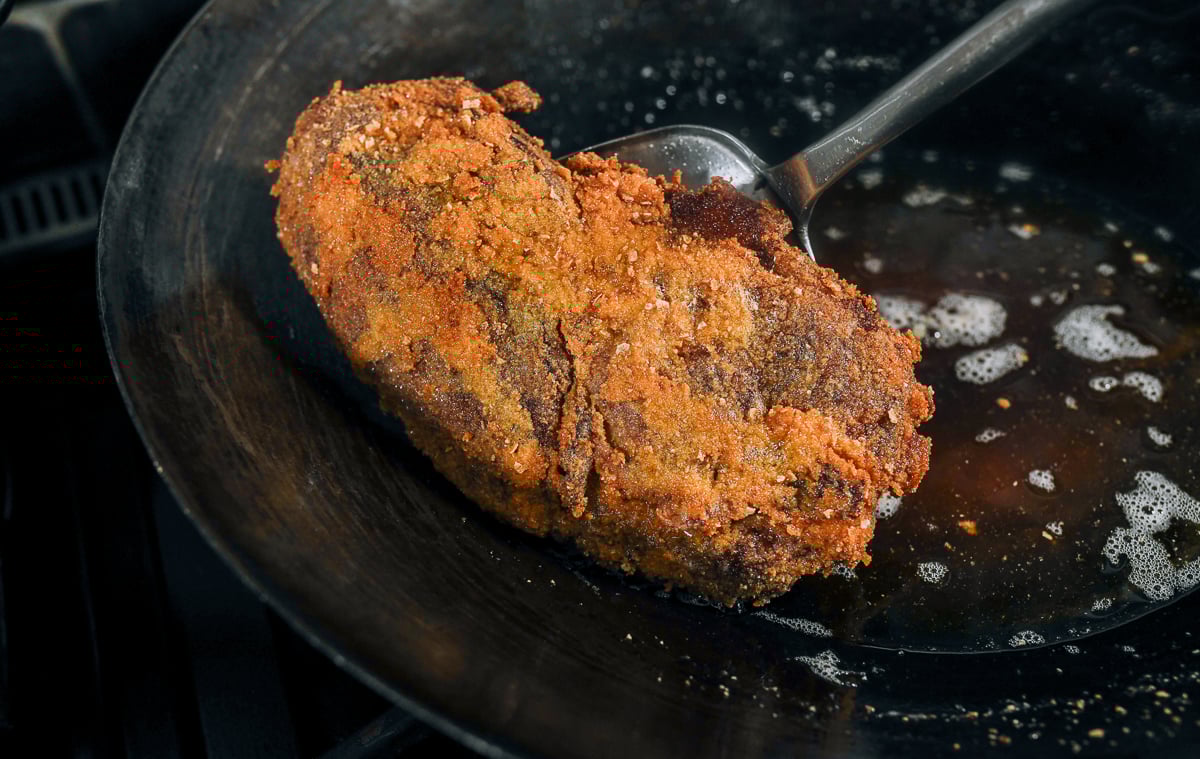
Tip: Pan-fry To Use Less Oil!
We have found pan-frying to be an effective way to cook wor shu duck if you don’t want to do the traditional deep-fry method. Heat ¼ cup of oil in a cast iron pan, and cook on both sides until golden brown and crispy. If you have a previously frozen piece, you will need to thaw it in the fridge before pan-frying. (If deep-frying, you can deep-fry straight from frozen without thawing.)
Now you’re ready to prepare the vegetables and serve the dish!
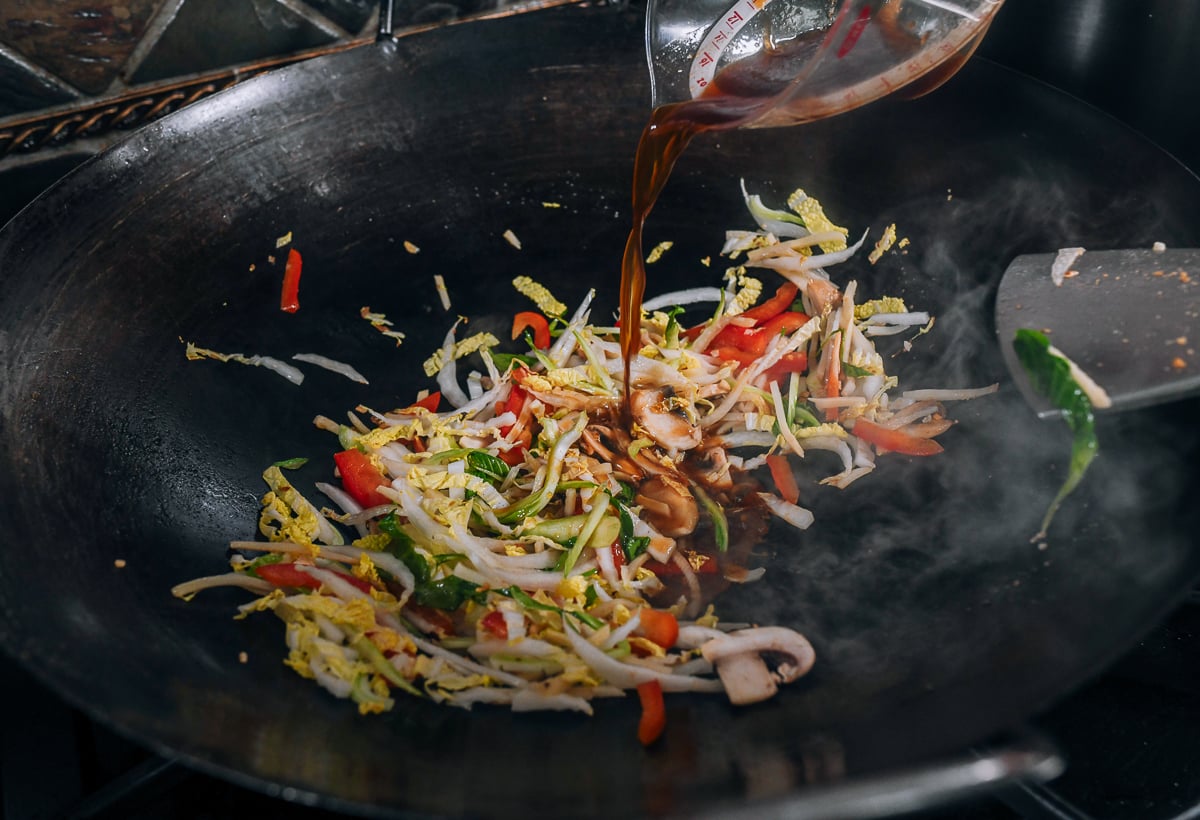
Heat your wok over high heat, and add 1 tablespoon of the frying oil to your wok. Add the garlic, mushrooms, bamboo shoots, and red bell peppers, and stir-fry for 30 seconds. Add the Shaoxing wine, followed by the napa cabbage. Stir-fry for another 30 seconds, and stir in the braising liquid, oyster sauce, sesame oil, and white pepper.
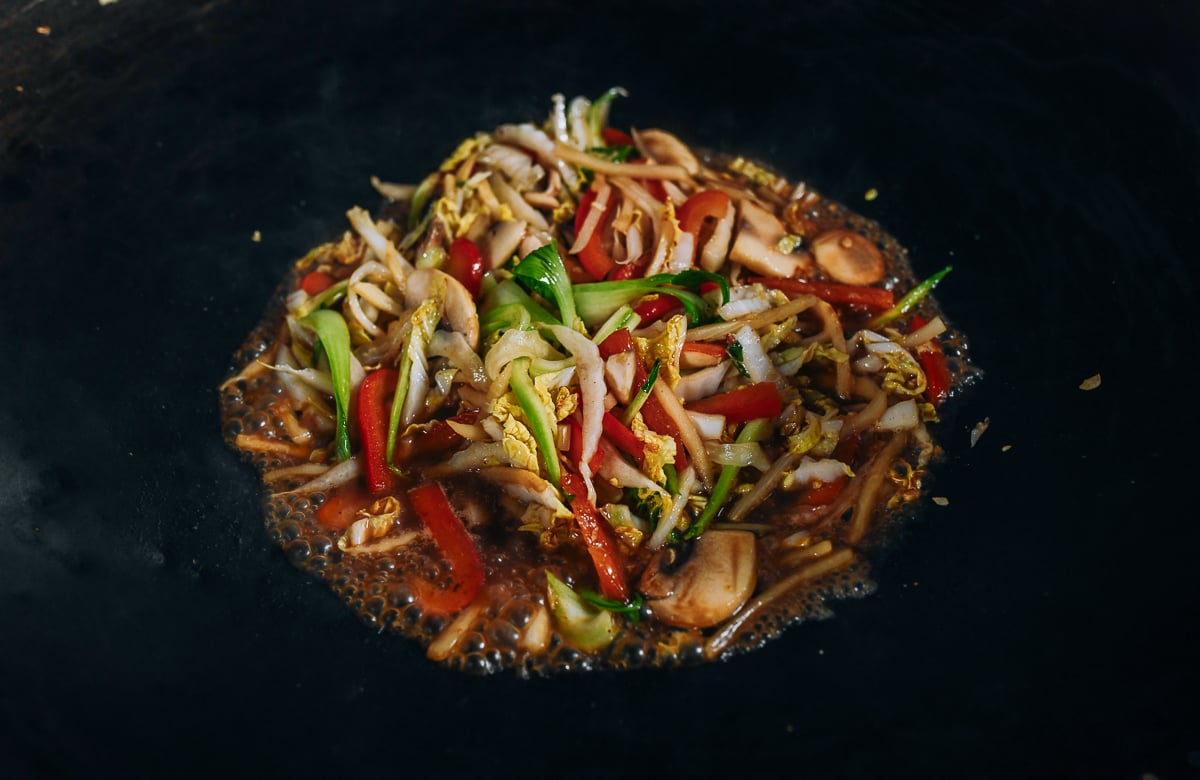
Next, add the julienned bok choy (or snow peas), and give everything a quick stir. Let the sauce come to a boil, and add the cornstarch/water mixture. Stir-fry for another 30 seconds until the sauce has thickened enough to coat a spoon.
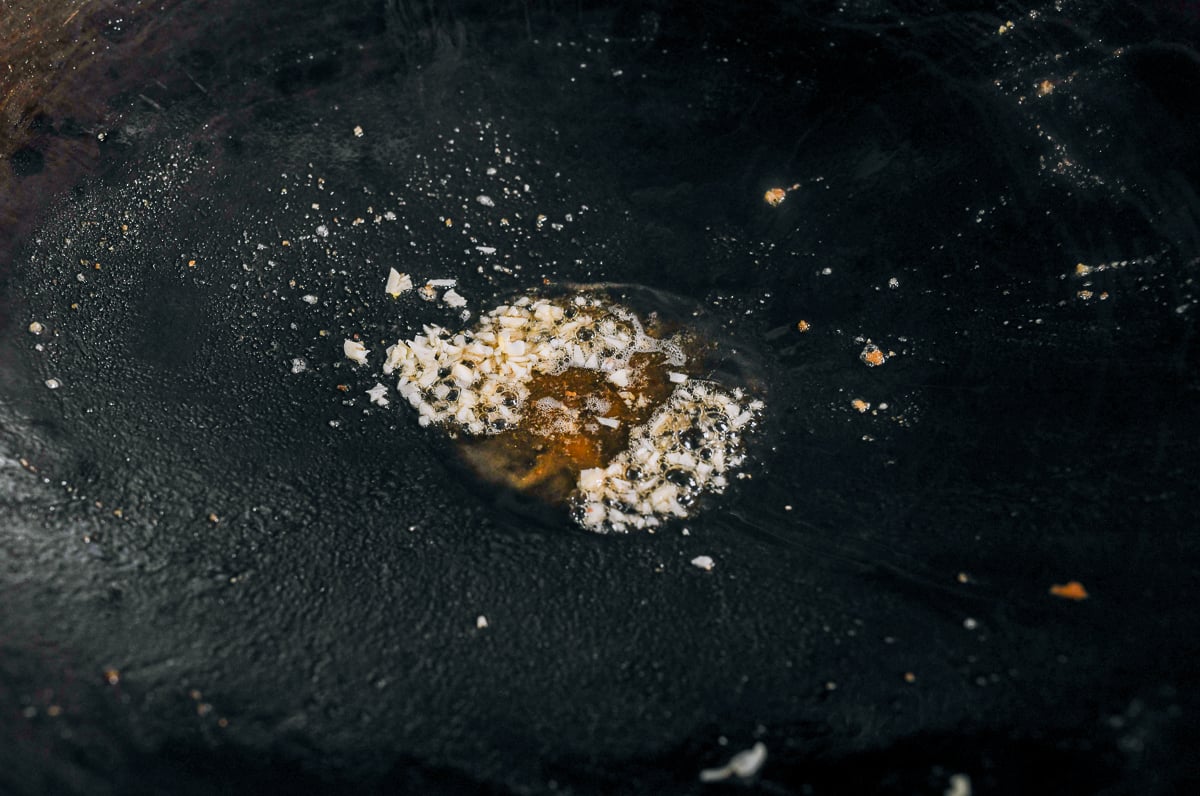
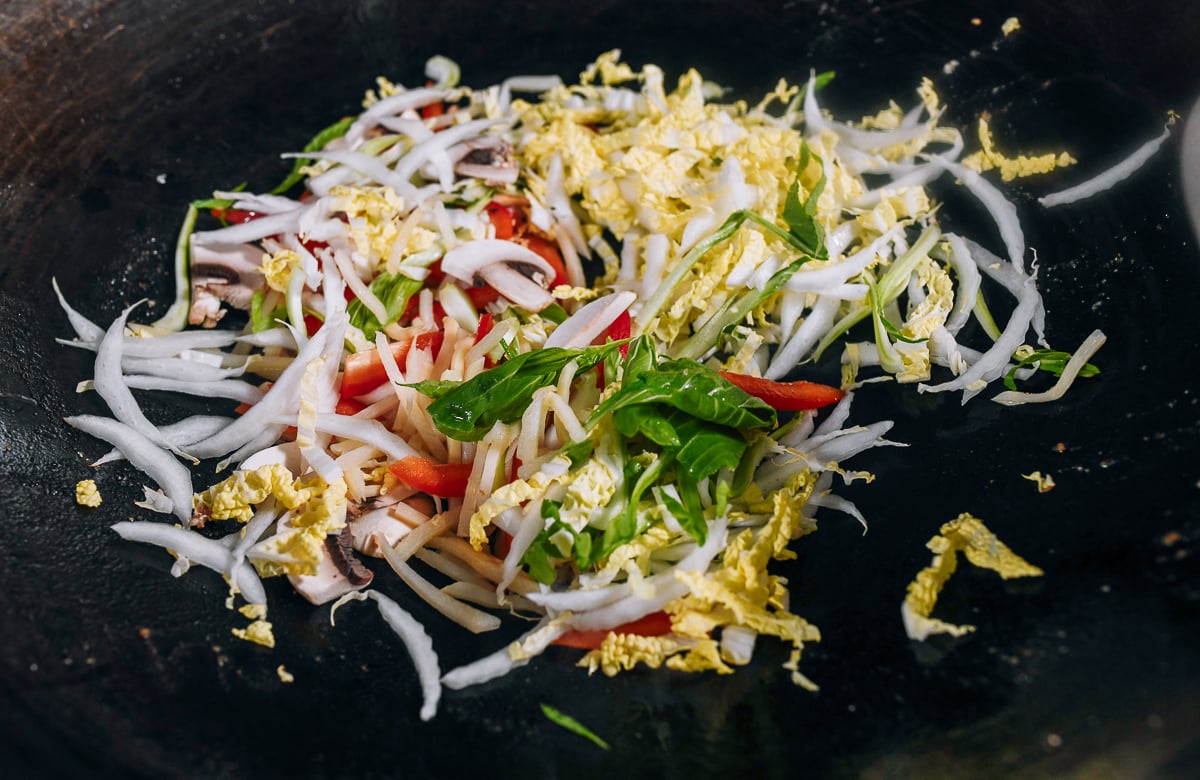
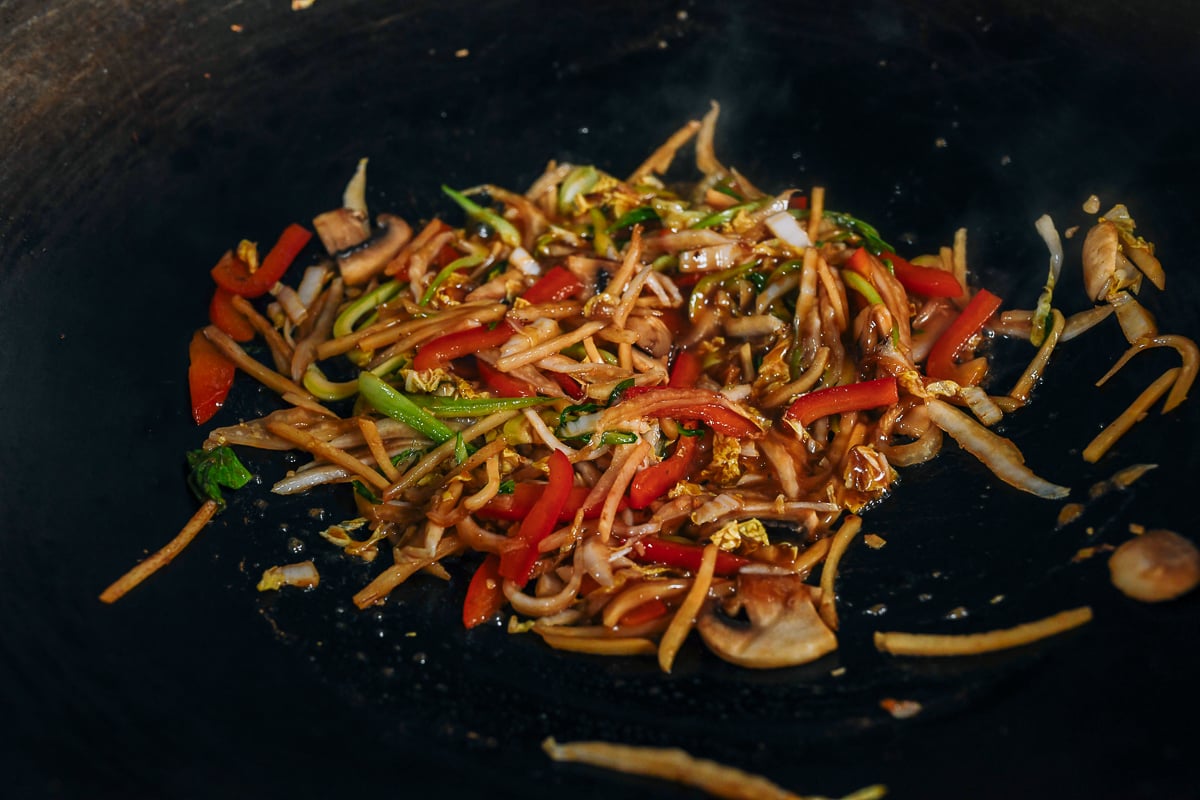
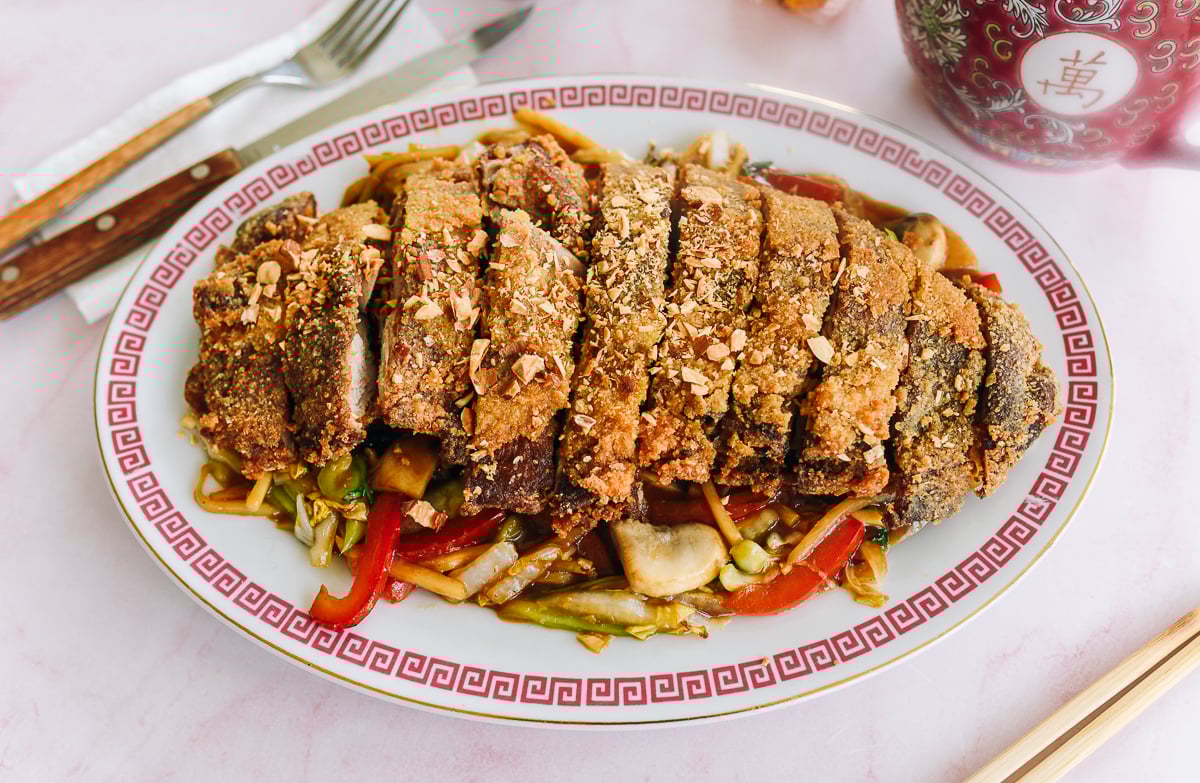
Transfer the vegetable mixture to a platter. Slice the duck into 1-inch/2.5cm wide pieces, and place on top of the bed of vegetables. Top with crushed almonds and serve immediately.
Watch: How to De-bone duck for wor shu duck:

Looking for more authentic recipes? Subscribe to our email list and be sure to follow us on Pinterest, Facebook, Instagram, and Youtube!
Recipe
Wor Shu Duck
Ingredients
For the duck braising:
- 5- pound whole duck (head and feet removed)
- 2 teaspoons neutral oil (such as vegetable, canola, or avocado oil)
- 1 piece smashed ginger
- ½ scallion (white portion, smashed)
- 3 whole star anise
- ⅓ cup kosher salt or sea salt (yes you read that right)
- ¼ cup sugar
- 1½ cups light soy sauce
- ½ cup Shaoxing wine
- ¼ cup dark soy sauce
- 8 cups water
For coating and frying the duck:
- 2 eggs
- ⅔ cup dried unseasoned breadcrumbs (or panko)
- 2 tablespoons cornstarch
- 2 tablespoons all-purpose flour
- ¼ tsp salt
- ¼ teaspoon white pepper
- 2 cups canola oil (for frying)
For the rest of the dish:
- 1 clove garlic (minced)
- ½ cup sliced mushrooms (such as button, cremini, or shiitake)
- ½ cup bamboo shoots (sliced or julienned)
- ½ cup julienned red bell pepper or carrot
- 2 teaspoons Shaoxing wine
- 1 cup julienned napa cabbage
- ⅓ cup duck braising liquid
- 1 tablespoon oyster sauce
- ½ teaspoon sesame oil
- 1/8 teaspoon white pepper
- 1 cup julienned bok choy (or snow peas)
- 1 tablespoon cornstarch (mixed with 2 tablespoons water)
- 2 tablespoons crushed almonds (for topping)
Instructions
Braise the Duck:
- Rinse the duck inside and out and remove the wing tips and flats. You can also leave the wings on and remove (and eat!) them after braising the duck. In a pot just large enough to fit your duck, add the neutral oil, ginger, scallion, and star anise over medium-heat. Cook until fragrant, about 1-2 minutes. Then add the salt, sugar, light soy sauce, Shaoxing wine, dark soy sauce, and water. Bring to a boil.
- Carefully lower the duck into the pot. Then lift it out to ensure there are no cold pockets/air pockets inside the duck cavity. Place it back into the braising liquid, again ensuring there are no air pockets inside the duck. Bring to a boil again and adjust the heat to a simmer. Cover and cook the duck on one side for 20 minutes. Carefully flip the duck and simmer for another 20. Then repeat, for another 20 minutes on each side for a total of 80 minutes. With the duck backside down, turn off the heat, cover, and let it sit in liquid for another 40 minutes. Reserve the braising liquid.
De-Bone & Chill the Duck:
- Remove to a plate for 30 to 60 minutes, or until the duck is cool enough to handle but still warm to the touch. Transfer the duck breast-side-up to a cutting board. Cut the duck from the top of the neck down the breastbone to the open cavity, and push both sides down to expose the bones.
- Carefully twist off the drumette bones and drumstick bones. Use a sharp cleaver or chef’s knife to cut out the back bone by making a cut on each side of it. Using your hands, carefully separate the rib and the breast bones from the meat. Pull out the shoulder bones, wish bones, and thigh bones. Feel around with your hands for any remaining loose bones and remove them. Place the two halves of the deboned duck skin-side down on a plate, and put another plate on top. Refrigerate overnight.
Fry the Duck:
- The next day, you’re ready to assemble the dish. Beat two eggs in a shallow bowl. On a separate wide, shallow dish, toss together the breadcrumbs, cornstarch, flour, salt, and white pepper.
- Dip half of the duck into the beaten egg until thoroughly coated. Place the duck into the breadcrumb mixture on both sides. Gently shake off any excess. Repeat this process again until the duck is fully coated with no bare spots. Transfer to a separate plate. At this point, you can choose to wrap one of the duck halves tightly in plastic wrap and freeze it for another day.
- Heat 2 cups of canola oil in a pan or wok until it reaches 350°F/175°C. Lay the duck into the oil and fry for 3-4 minutes. Carefully turn the duck over and continue to fry the other side until both sides are golden brown and crispy. You may have to flip the duck 2 or more times to get even color. Remove the duck onto a cooling rack to drain and rest. Alternatively, you can pan-fry in a cast iron pan with 1/4 cup oil until crispy and golden on both sides.
Stir-fry vegetables & serve:
- Heat your wok over high heat, and add 1 tablespoon of the frying oil to your wok. Add the garlic, mushrooms, bamboo shoots, and red bell peppers, and stir-fry for 30 seconds. Add the Shaoxing wine, followed by the napa cabbage. Stir-fry for another 30 seconds, and stir in the braising liquid, oyster sauce, sesame oil, and white pepper.
- Next, add the julienned bok choy (or snow peas), and give everything a quick stir. Let the sauce come to a boil, and add the cornstarch/water mixture. Stir-fry for another 30 seconds until the sauce has thickened enough to coat a spoon.
- Transfer the vegetable mixture to a platter. Slice the duck into 1-inch/2.5cm wide pieces, and place on top of the bed of vegetables. Top with crushed almonds and serve immediately.