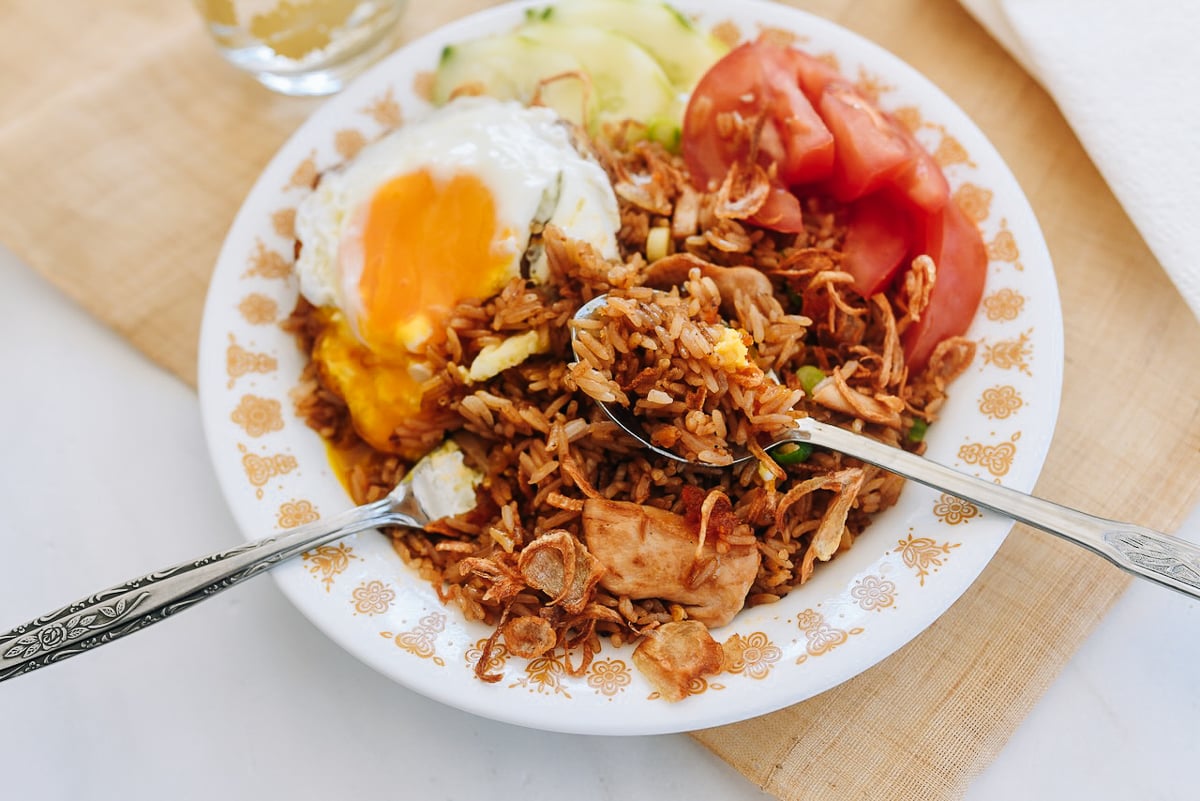
Nasi Goreng is the beloved national dish of Indonesia, an Indonesian fried rice with aromatic shrimp paste, sweet soy sauce, and savory elements like garlic and fried shallots. This Nasi Goreng recipe isn’t your average takeout fried rice, but a complex, smoky, and deeply satisfying dish.

What Makes Nasi Goreng Different?
Nasi goreng literally means “fried rice,” but it has a different flavor profile than the Chinese Chinese fried rice dishes you might be more familiar with. Here are some of the ingredients that make it unique:
- Kecap Manis is a sweet Indonesian soy sauce and the soul of the dish. Unlike regular soy sauce and even Chinese dark soy sauce, Kecap Manis is thick, syrupy, and infused with palm sugar. With such high sugar content, it caramelizes in the wok, giving the rice a dark mahogany color and a distinct smoky-sweet flavor.
- Terasi is a pungent Indonesian shrimp paste that comes in brown blocks, similar to belacan from Malaysia. There are many different kinds of shrimp paste that you can buy, and you can customize how much you add to the rice. I like to add a good amount to really appreciate the flavor of Nasi Goreng.
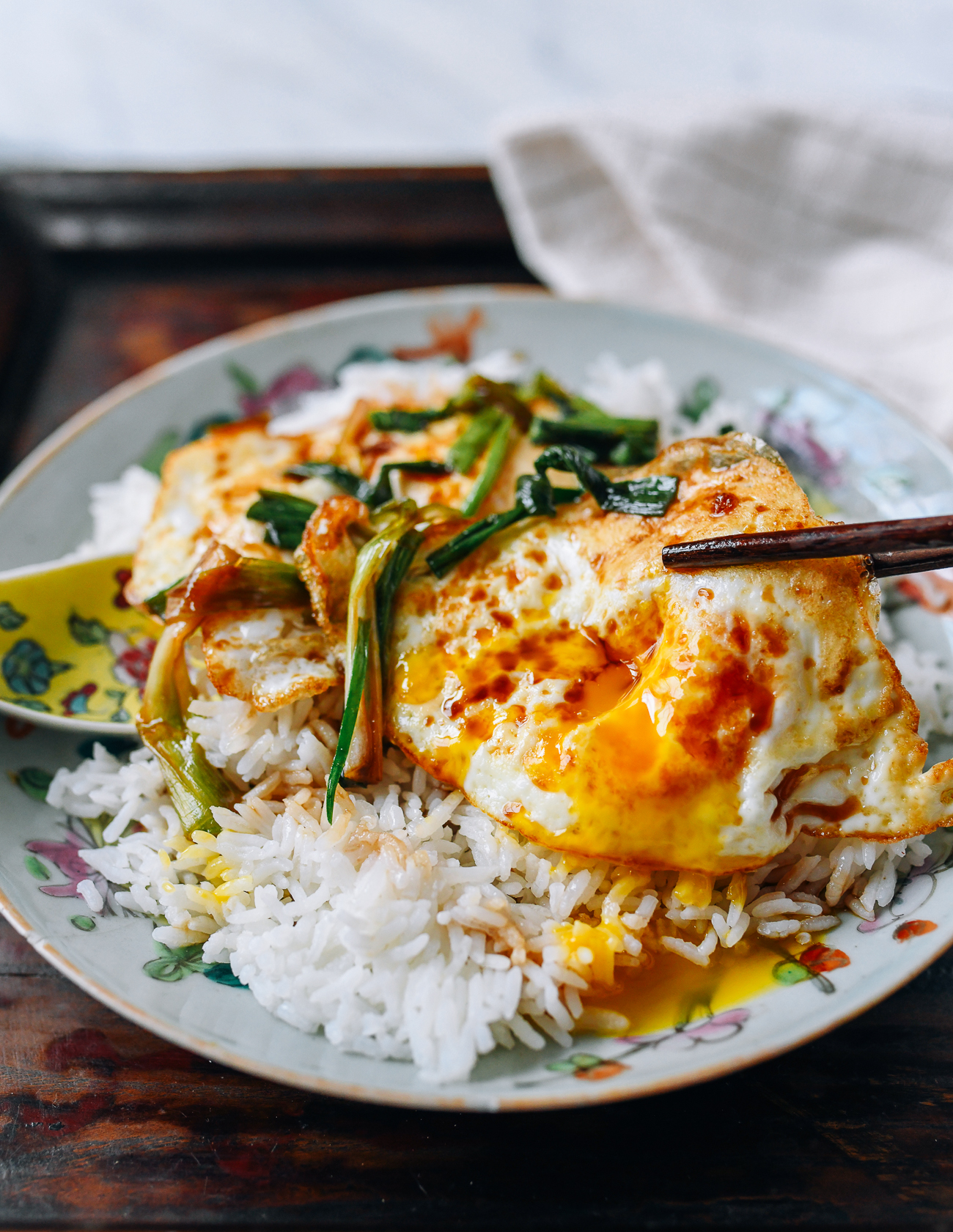
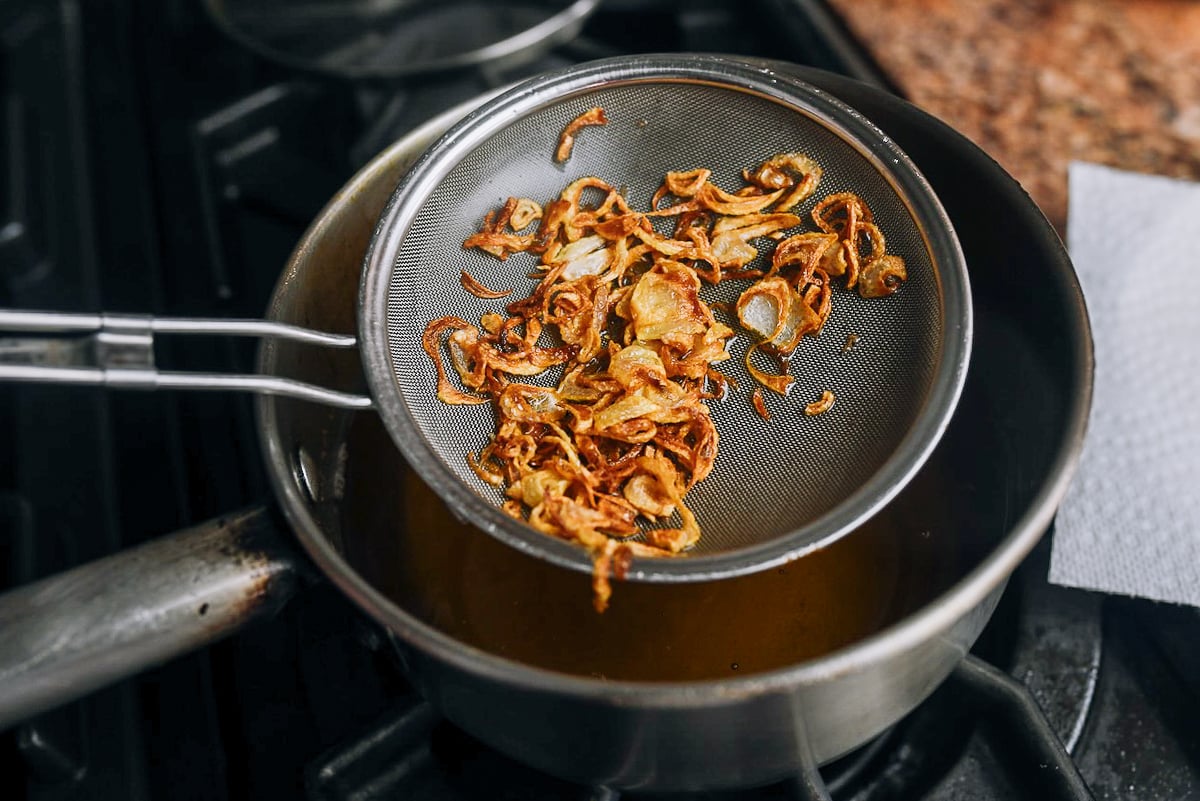
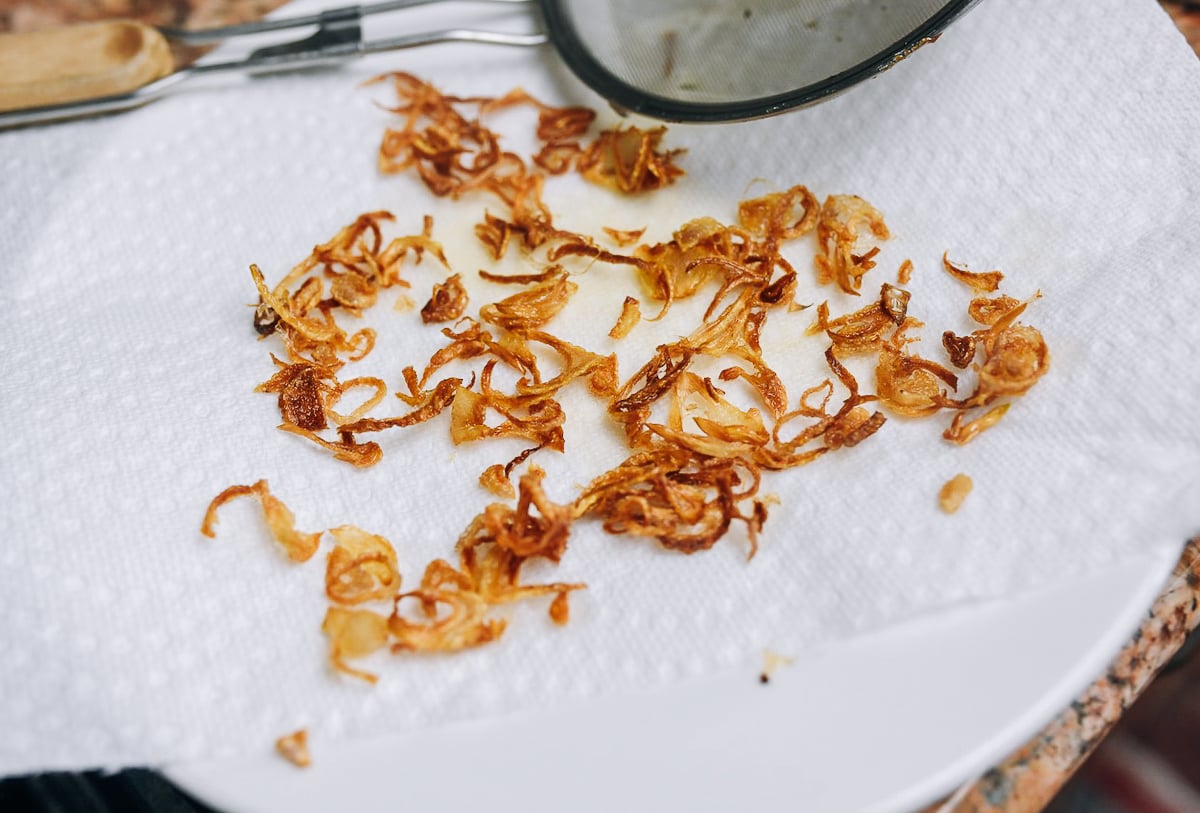
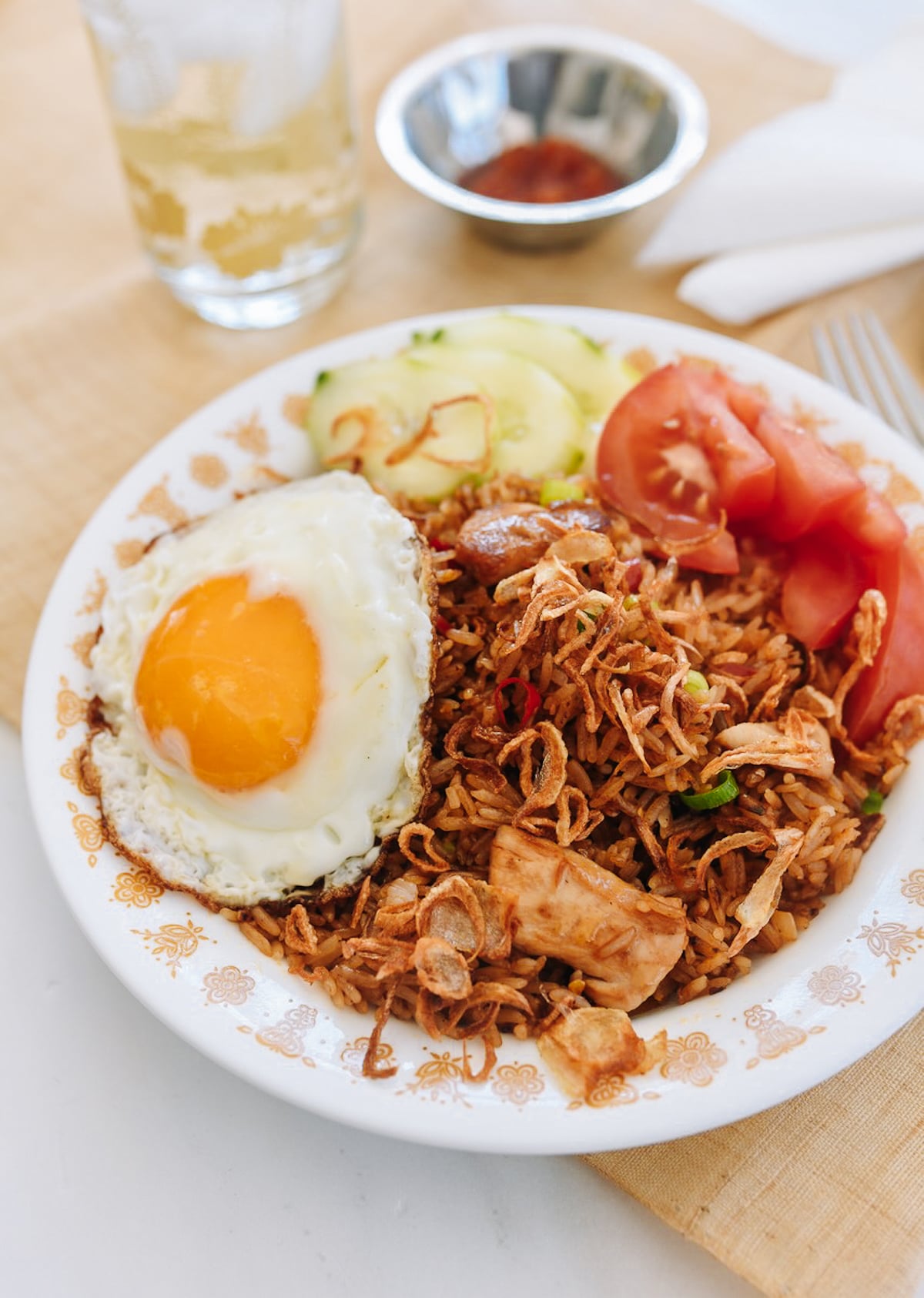
- The Toppings and Sides are a big part of the Nasi Goreng experience. The traditional way to serve it is with a crispy fried egg (telur ceplok), fresh cucumber slices, tomato wedges, and crispy shallots for crunch and fragrance. Sometimes, crunchy fried crackers (krupuk) come on the side as well.

Is Nasi Goreng Spicy?
While Nasi goreng is usually spicy, you can customize the spice level. Our recipe uses Thai chilies as an optional ingredient, so you can add less or leave them out completely! Some shrimp pastes are made with chili peppers and can add to the spice, so choose accordingly. If you are a spice fiend, you can add more chopped Thai chili peppers or a teaspoon or two of sambal.
If using chopped Thai Chilies, you can add them early with the diced onions and chopped garlic, or at the end of the dish with the chopped scallion. Adding them at the beginning of the recipe with the diced onions yields a uniform spicy heat throughout the fried rice. Adding them in the end with the scallions will give you a spicy kick whenever you bite into one, which I personally prefer.
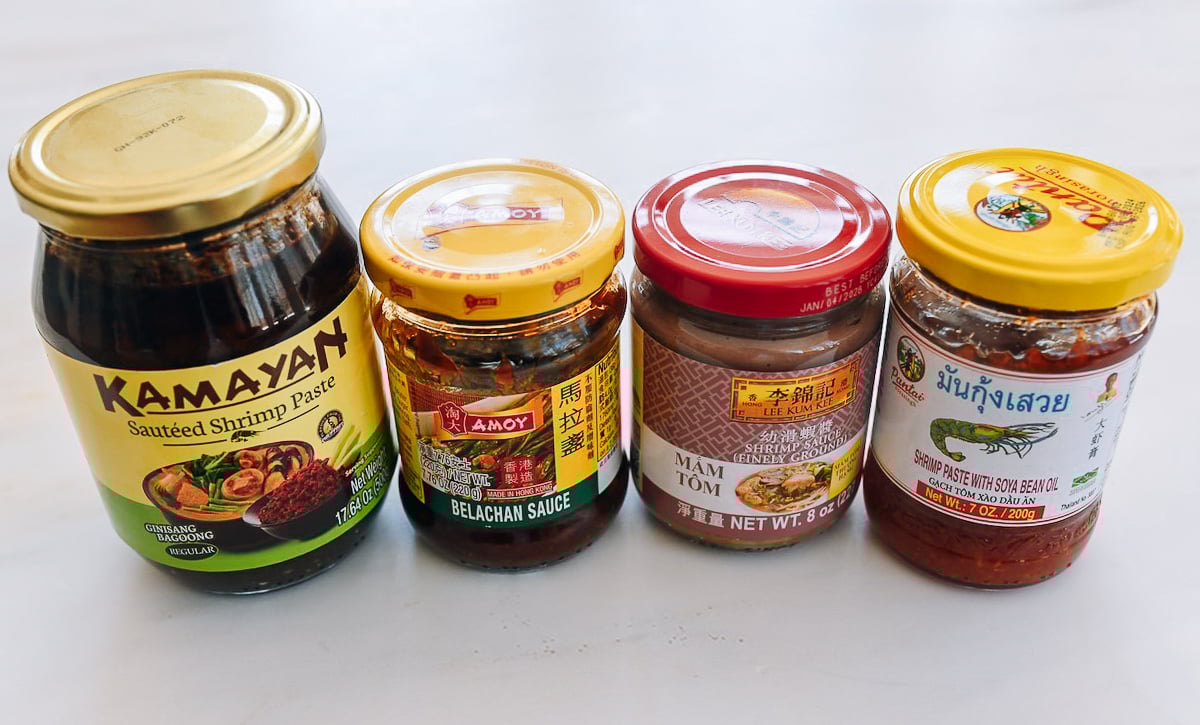
Different Types of Shrimp Paste
Shrimp paste comes in many different forms and versions. You can read more about it in our post on shrimp paste. For Nasi Goreng, we’ve outlined some choices below depending upon your personal tastes and preferences:
- Terasi is Indonesian shrimp paste, which is the most “authentic” type of shrimp paste you can use. It comes in blocks similar to some types of Malaysian belacan, though it can be more pungent than belacan.
- Belacan is an essential ingredient in Malaysian cooking. Belacan comes in blocks, but you’ll also see jarred sauces labeled belacan/belachan. Belacan sauce has a medium fermented shrimp flavor and can be spicy, while the belacan blocks have a strong fermented shrimp flavor and aren’t spicy. We also have our own homemade Belacan sauce recipe that’s similar to jarred sauces (particularly the Hong Kong version, like the Amoy brand, pictured).
- Shrimp sauce: Chinese shrimp pastes (such as Lee Kum Kee) are ground into a fine sauce and sold in jars. The sauce has a thick consistency and pinkish gray color. The flavor is similar to Malaysian belacan sold in compressed blocks, but is more convenient to work with. Shrimp sauce has a strong fermented shrimp flavor and is not spicy.
- Thai shrimp paste, or kapi/gapi (such as Trachang brand)is similar to Chinese shrimp sauce, though it is a bit drier in consistency.
- Thai shrimp sauce condiments (like Pantai Shrimp Paste with Soya Bean Oil, pictured) are condiments with dried shrimp, shrimp roe, and chilies with a wonderful mild shrimp flavor. These condiments can be a great alternative to traditional shrimp pastes, as they have a more mild (less funky) flavor than other pastes. Although these condiments can be more expensive, I love using them in cooking or just with plain rice. Don’t let the price (2x to 3x other brands) discourage you. It is delicious in my opinion and worth the price!
- Ginsiang Bagoong is a Filipino fermented shrimp paste (brands include Kamayan and Barrio Fiesta) with aromatics and seasonings like garlic, sugar, and vinegar. A condiment or cooking ingredient, it’s full of umami. It has a medium fermented shrimp flavor and (unless it’s the spicy version) it is mild.
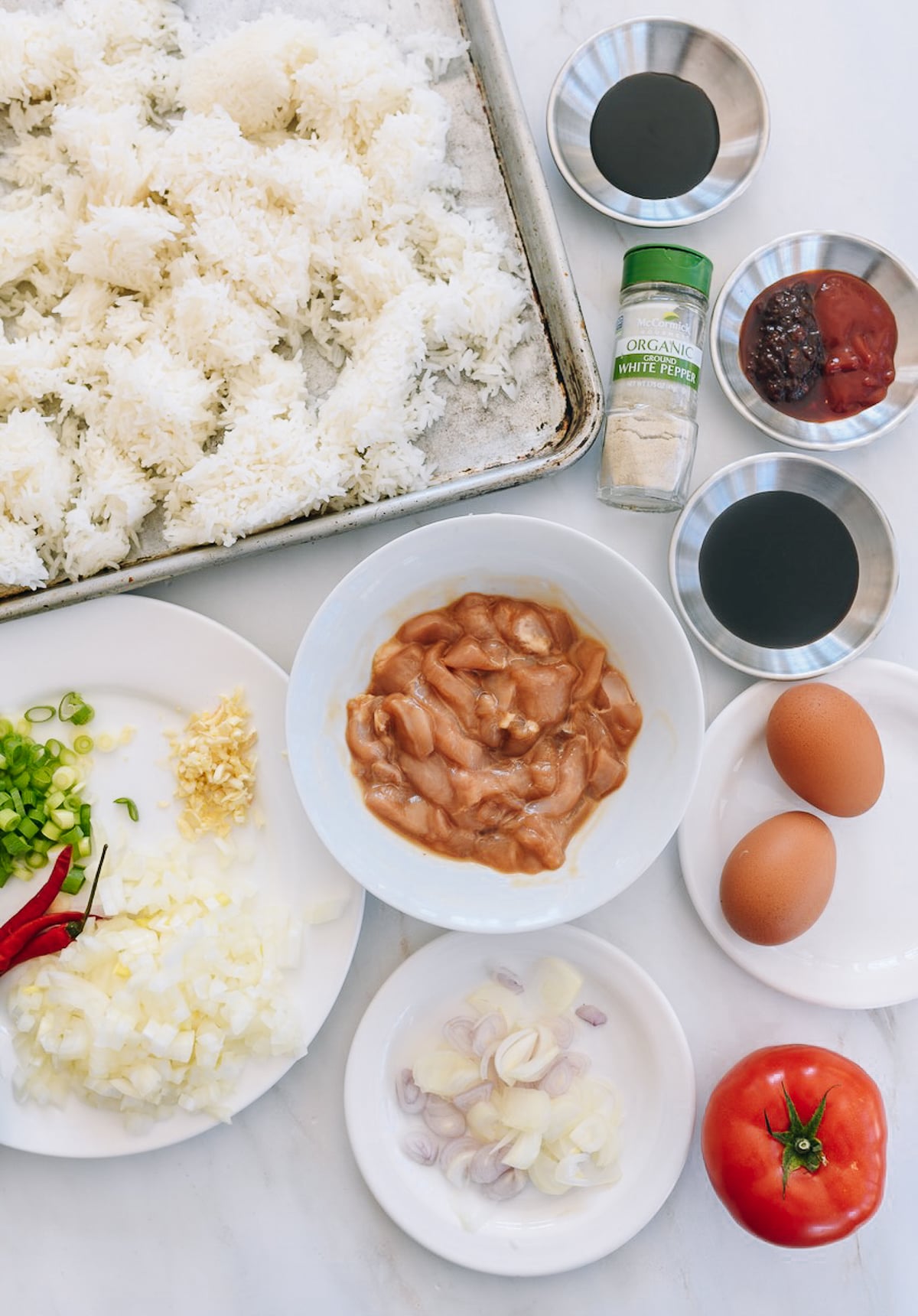
Nasi Goreng Recipe Instructions
In a medium bowl, combine the chicken pieces, cornstarch, water, and soy sauce. Marinate for 20-30 minutes while you prepare the rest of the ingredients.
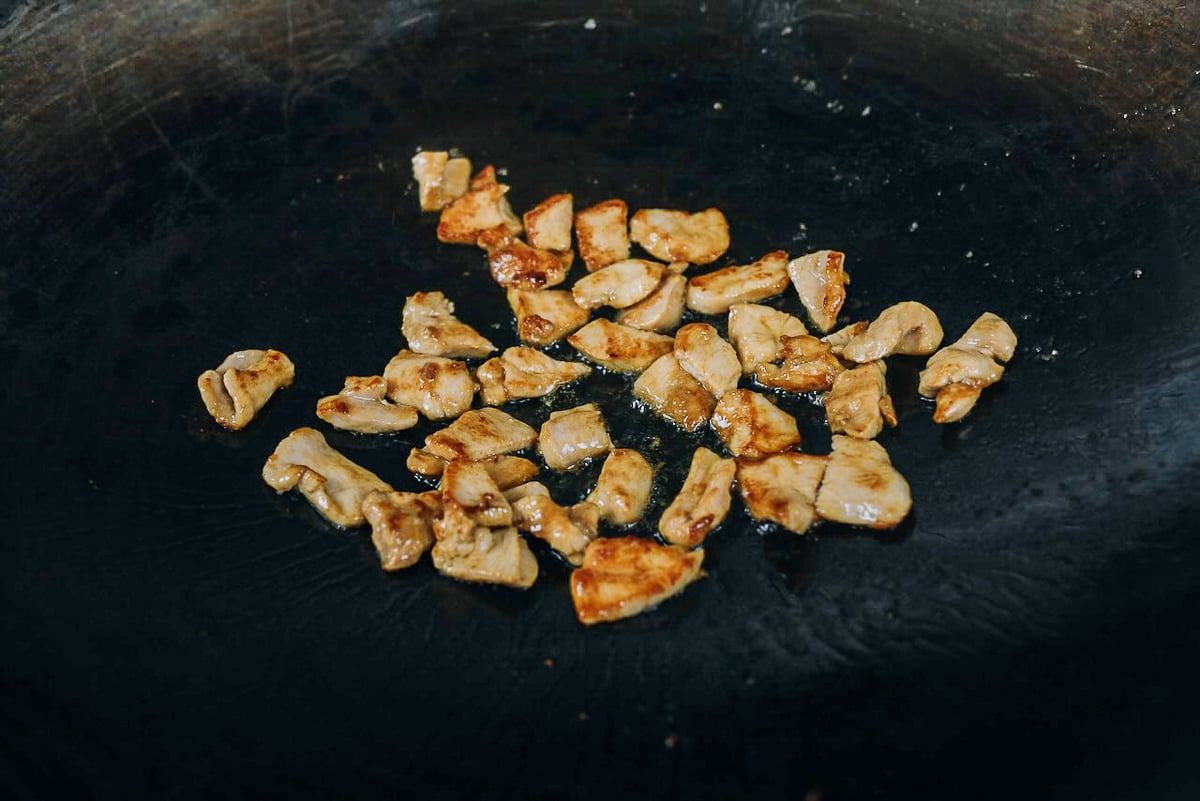
Heat the wok until just smoking and add 2 tablespoons of oil (if you’ve already fried your shallots for the topping, use the shallot frying oil). Sear the chicken until 80% done. Remove from the wok and set aside.

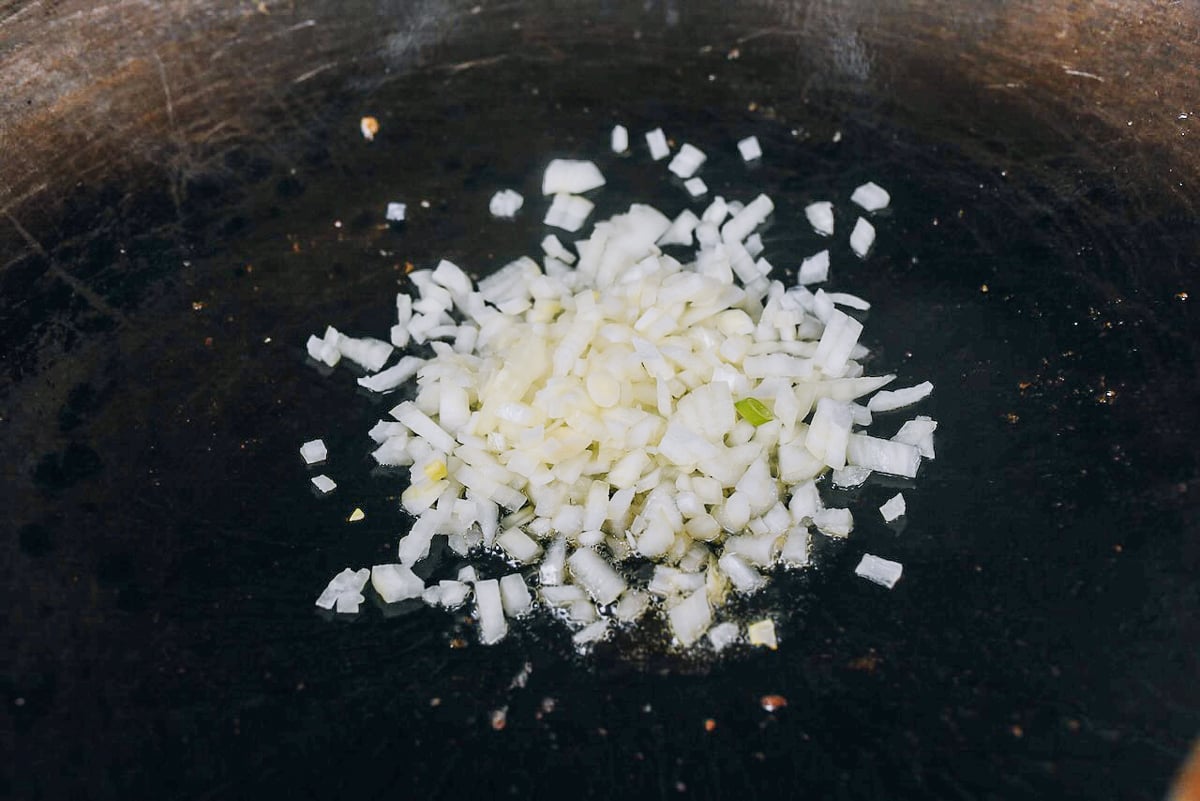
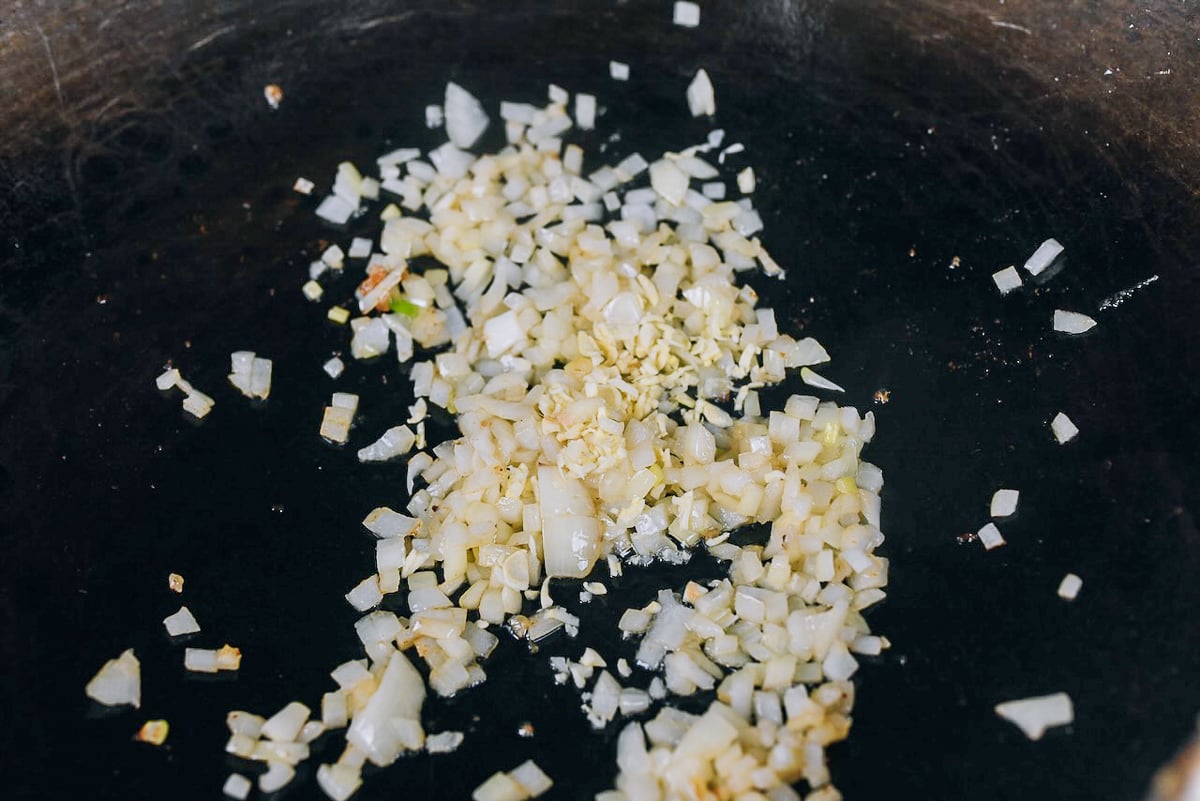
Reduce the heat to medium. Add 1 tablespoon of oil, along with the onions, garlic. At this point, if using Thai chilies, you can add them in if you want heat throughout the dish. (Alternatively, add them later with the scallions.) Stir-fry for 1 minute, or just until the onions are translucent.
Chili Tip!
Add the chopped Thai chilies early with the onions and garlic if you like a spicier rice. Alternatively, you can add it in the end with the scallions, and the rice itself will be less spicy. The chopped chillies will give you a separate spicy kick instead of a long spicy burn in the entire dish.
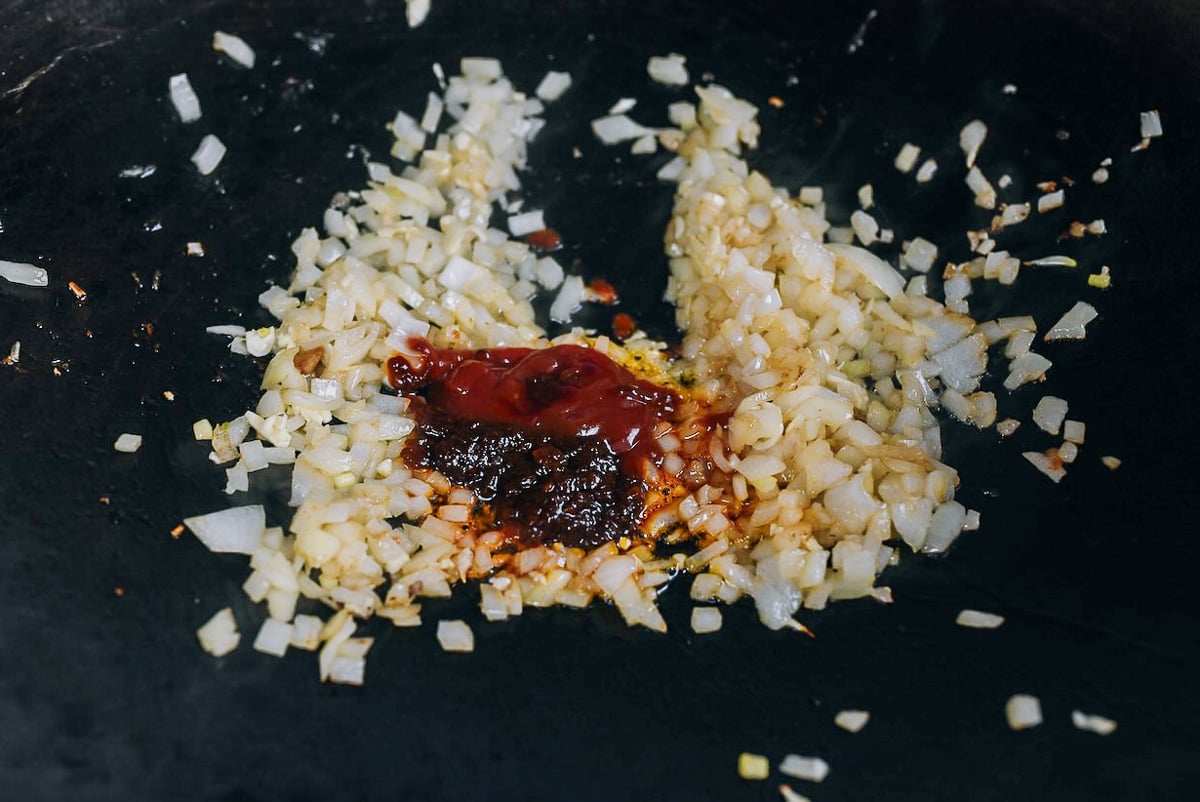
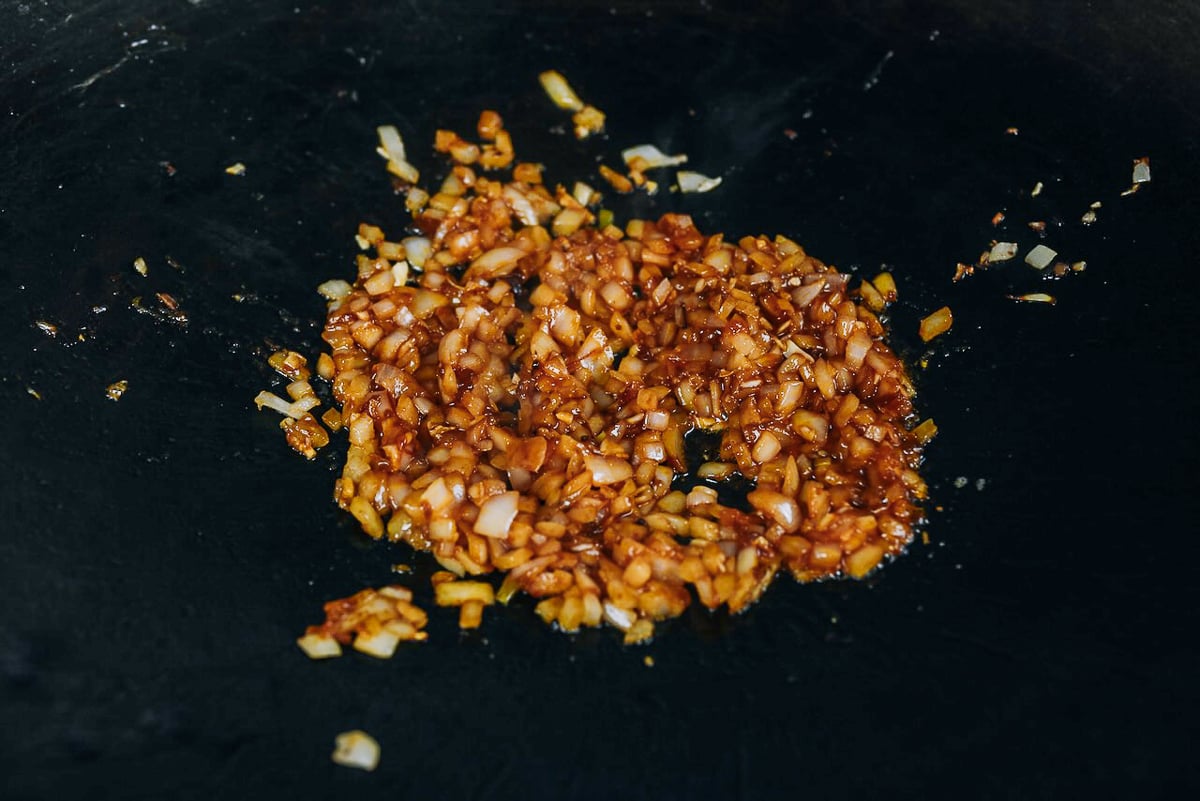
Next, add the shrimp paste and ketchup. Increase the heat to high and fry the mixture for 20 seconds, or until fragrant. Frying the shrimp paste and ketchup caramelizes them and brings out more flavor.
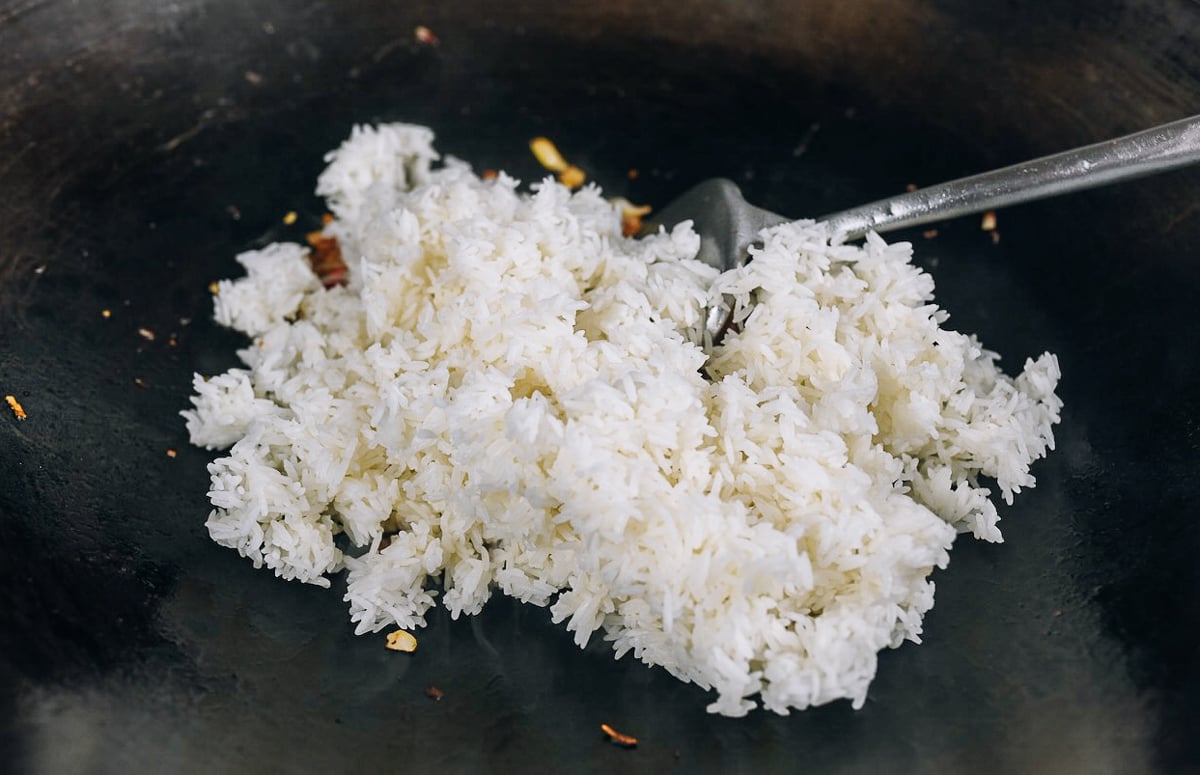
Add the cooked rice and stir-fry until everything’s well distributed. Use your metal wok spatula to scrape any rice that’s starting to stick to the wok. Gently smash down any rice lumps to break them apart. Keep the wok on high and as you continue to stir-fry the rice. The hot wok will become more non-stick as the rice fries.
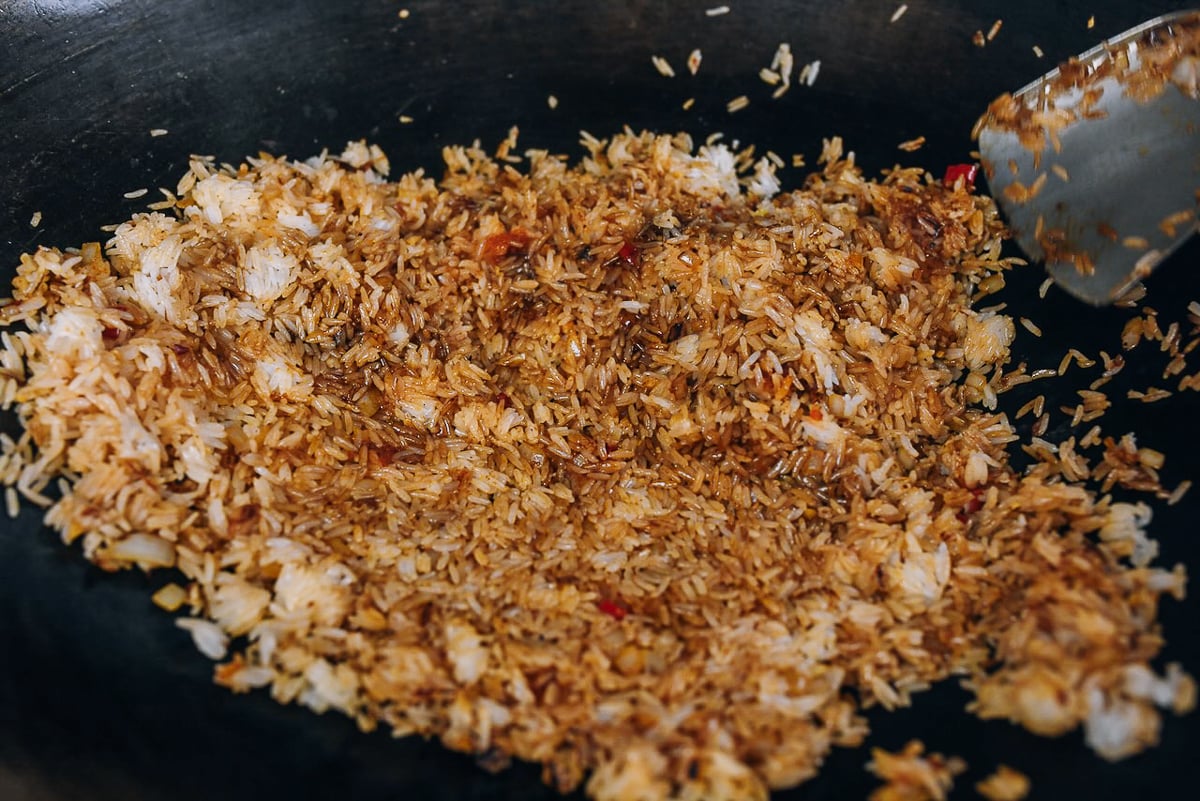
Add the soy sauce, kecap manis, optional MSG, and white pepper. Stir-fry for another 1 to 2 minutes, or until the color is uniform.
Next, add the chicken and its juices to the rice. Continue to stir-fry for another minute to heat the chicken through. Stir in the scallions and the chopped Thai chilies (if you didn’t add them earlier). Taste for seasoning, and add salt if needed.
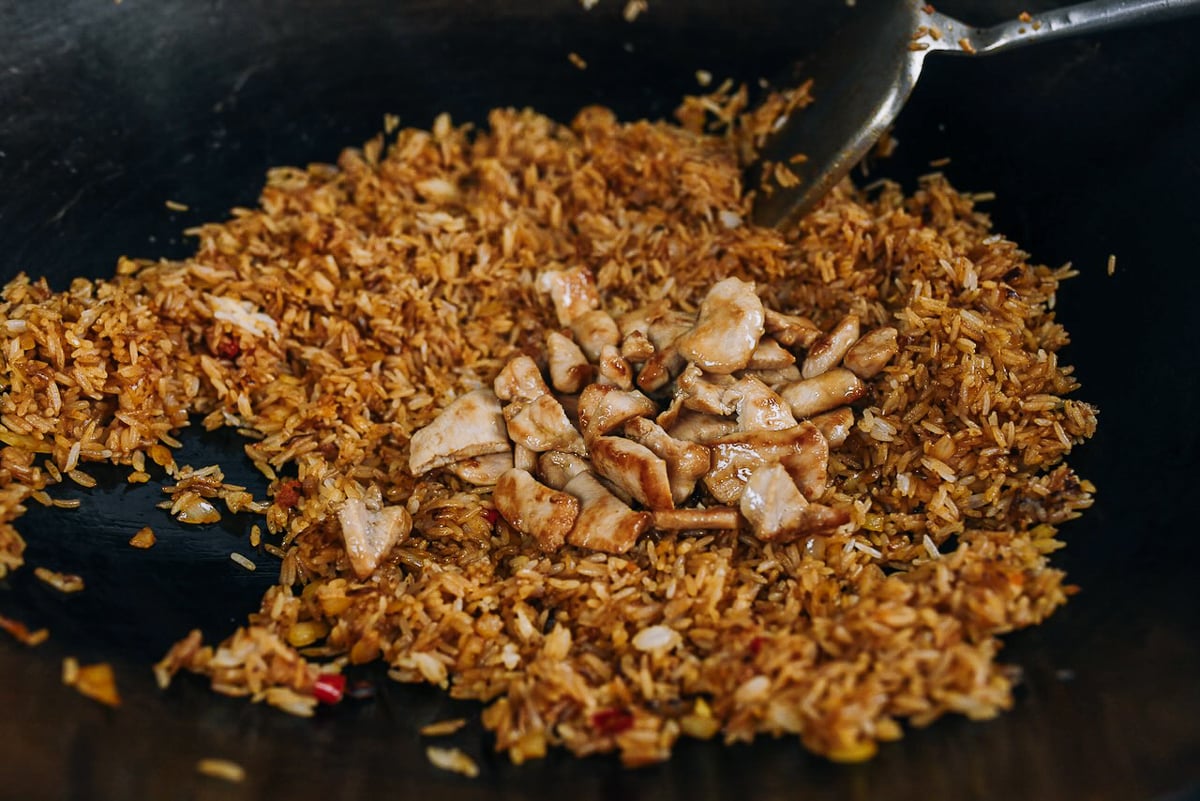
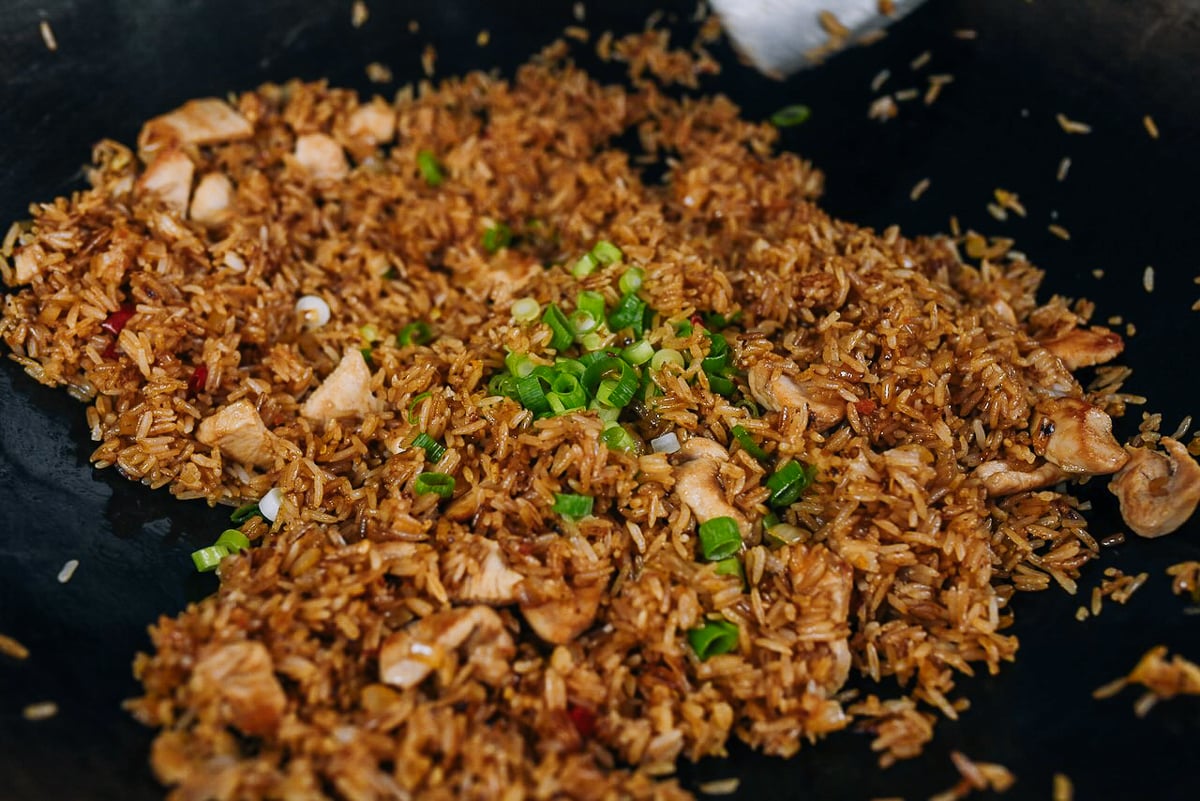
Plate the rice, and top with fried shallots, a fried egg, and the sliced tomato and cucumber. The eggs can be served sunny side up or over-easy, depending on your preference. The egg is traditionally cooked so the yolk is still runny. Serve!
Looking for more authentic recipes? Subscribe to our email list and be sure to follow us on Pinterest, Facebook, Instagram, and Youtube!
Recipe

Nasi Goreng (Indonesian Fried Rice)
Ingredients
For the chicken:
- 8 ounces boneless skinless chicken thighs or breast (sliced or cut into small ½-inch/1cm chunks)
- 1 teaspoon cornstarch
- 1 tablespoon water
- 1 tablespoon soy sauce
For the rice:
- 3 tablespoons neutral oil (plus more for frying eggs and shallots)
- 1 small onion (diced; about ⅔ cup)
- 2 cloves chopped garlic
- 3 Thai bird's eye chilies (chopped, optional)
- 1-3 tablespoons shrimp paste see notes
- 1 tablespoon ketchup
- 4 cups cooked, cooled jasmine rice
- 2 tablespoons light soy sauce
- 3 tablespoons kecap manis
- ¼ teaspoon MSG (optional)
- ⅛ teaspoon ground white pepper
- 1 chopped scallion
- ½ teaspoon salt (optional, or to taste)
For the toppings:
- ⅓ cup shallots (thinly sliced and fried until crispy, or use pre-fried shallots; see notes)
- Fried eggs
- Sliced tomatoes
- Sliced cucumbers
Instructions
- In a medium bowl, combine the chicken pieces, cornstarch, water, and soy sauce. Marinate for 20-30 minutes while you prepare the rest of the ingredients.
- Heat the wok until just smoking and add 2 tablespoons of oil (if you’ve already fried your shallots for the topping, use the shallot frying oil). Sear the chicken until 80% done. Remove from the wok and set aside.
- Reduce the heat to medium. Add 1 tablespoon of oil, along with the onions and garlic. For a spicier dish, you can also add the Thai chilies at this point (alternatively, add them at the end with the scallions). Stir-fry for 1 minute, or just until the onions are translucent. Next, add the shrimp paste and ketchup. Increase the heat to high and fry the mixture for 20 seconds, or until fragrant.
- Add the cooked rice and stir-fry until everything’s well distributed, using your metal wok spatula to scrape any rice that’s starting to stick to the wok. Gently smash down any rice lumps to break them apart. Keep the wok on high and as you continue to stir-fry the rice, the hot wok will become more non-stick as the rice fries. Add the soy sauce, kecap manis, optional MSG, and white pepper. Stir-fry for another 1 to 2 minutes, or until the color is uniform.
- Next, add the chicken and its juices to the rice and continue to stir-fry for another minute or until the chicken is heated through. Stir in the scallions and the chopped Thai chilies (if you didn’t add them earlier). Taste for seasoning, and add salt if needed.
- Plate the rice, and top with fried shallots, a fried egg, and the sliced tomato and cucumber. The eggs can be served sunny side up or over-easy, depending on your preference but the egg is traditionally cooked so the yolk is still runny. Serve!