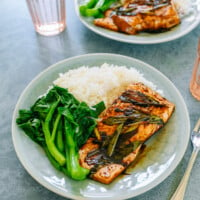
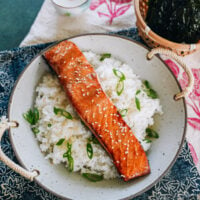
This Miso Salmon is unfussy to make, and tastes like you’re eating at your favorite Japanese restaurant! It has a light sweetness and lots of savory umami flavor, and we’re betting it makes it into your rotation of salmon recipes!
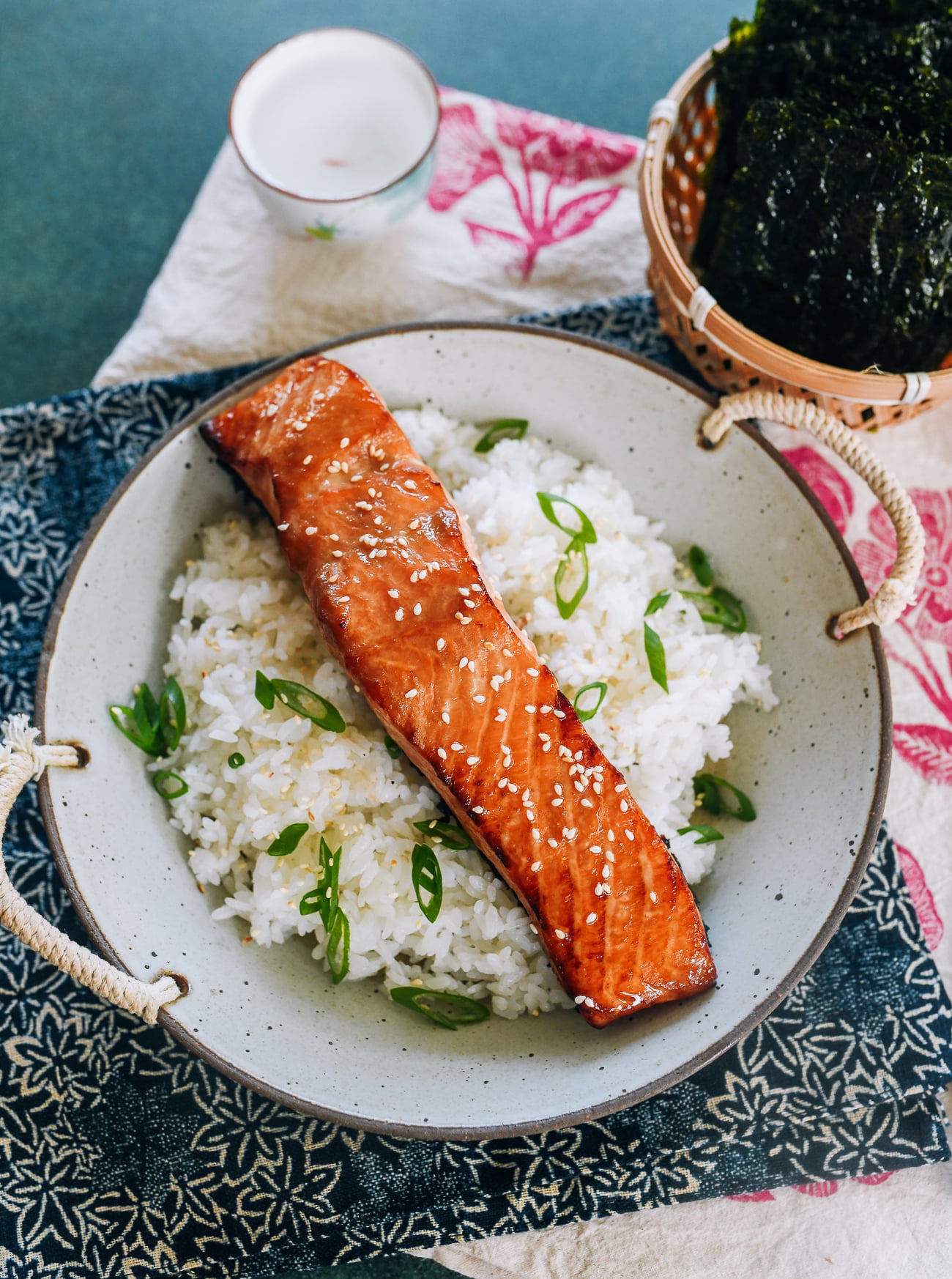
A Hardworking Salmon Recipe with Minimal Effort
This miso salmon recipe is based on our popular Miso Fish recipe, where I leave it to you to decide what flaky white fish to use, whether it’s cod, tilapia, or mahi mahi filets. So many of you reported back that the recipe worked well with salmon, so we decided to tweak the method and ingredients to perfectly suit salmon!
It takes about 5-10 minutes of active effort to whisk the marinade together and watch it while it’s baking and broiling. The reward is golden, perfectly burnished miso salmon that tastes like it came from a fancy restaurant!
The main difference between this recipe and our Miso Fish recipe is the addition of soy sauce and honey, as well as the cooking method. Between the two recipes, you’ll find the method for oven-baking or pan-searing, and hopefully have some insight into what to do if your pantry is lacking one or two ingredients.
A No-sake Miso Salmon
I don’t have anything against sake at all, but it is a liquor that I don’t reach for often, so I almost never have it on hand.
I understand that a more traditional miso salmon calls for sake (as you’ll see in Just One Cookbook’s excellent recipe), but I don’t think this recipe leaves anyone wanting for more depth or complexity. It’s also great for those who are avoiding alcohol in their diet or looking to save some extra money.
How Long to Cook Miso Salmon
Salmon can be tricky to cook, because it’s one of those proteins that really continues to cook by residual heat.
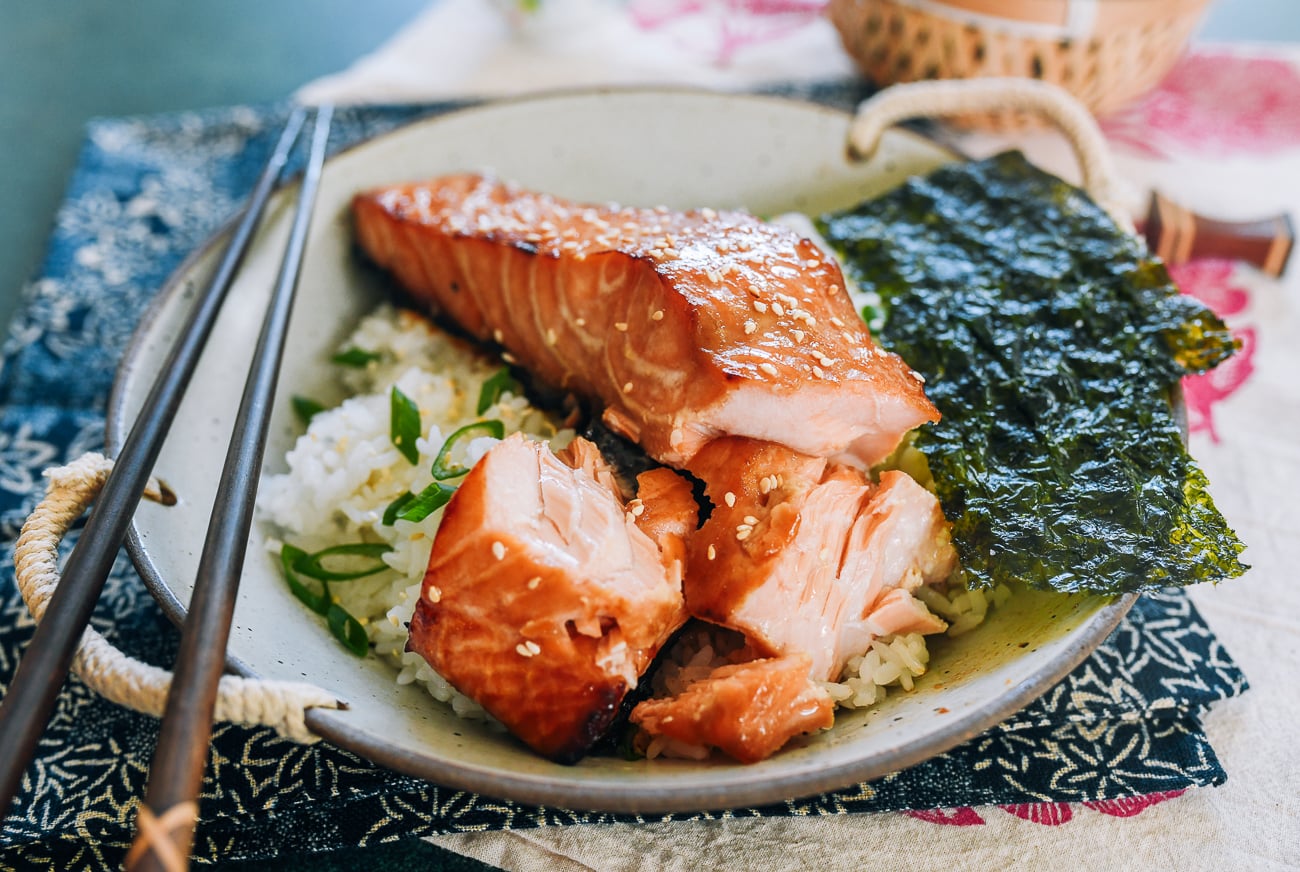
According to food safety guidelines, salmon is considered “done” at 145°F (63°C). At this point, it’s okay but will have a drier texture. Depending who you ask, it may even be in the realm of overcooked. Many agree that 120-125°F (49-52°C) will yield a more tender and silky result.
What’s more, there’s variation in how thick the fillets are. Most center cut fillets are about 1-inch thick. These were large, thicker Faroe Island salmon filets and needed about 15 minutes in a 400°F/200°C oven. If you have thinner filets or you prefer a rarer result, I would opt to cook them for 10-12 minutes and monitor from there. If cooking salmon in the air fryer at 400°F, the cooking time drops even more, to 7-9 minutes.
Regardless of your preferred doneness, if you’re using a thermometer, I would remove the salmon when the probe inserted in the center of the salmon filet registers five degrees shy of your target. As soon as it reaches your desired temperature, move it to a serving plate rather than keeping it on the baking sheet.

Tips for success
- Don’t marinate the fish overnight as it can have a curing effect. A minimum of 1 hour to marinate is great. 3 or 4 hours is even better if you have the time. Much longer than that isn’t necessary!
- Don’t skip the broiler! In the last 2 minutes of cooking, we call for switching your oven to the broiler setting. It’s what gives the salmon that beautiful burnished look. Just don’t walk away, and watch the bottom edges of the salmon, which can go from caramelized to burnt in the blink of an eye. If there are some burnt bits of marinade on the edges, we’ve found it’s easy to scrape it away with a thin metal spatula, and it bears very little on the taste of the final salmon
Recipe Instructions
Pat the salmon dry with a paper towel. If you have a single large fillet, cut it into 2-4 smaller pieces to make 6- to 8-ounce fillets. The more surface area for the marinade, the better! For this recipe, we like to leave the skin on.
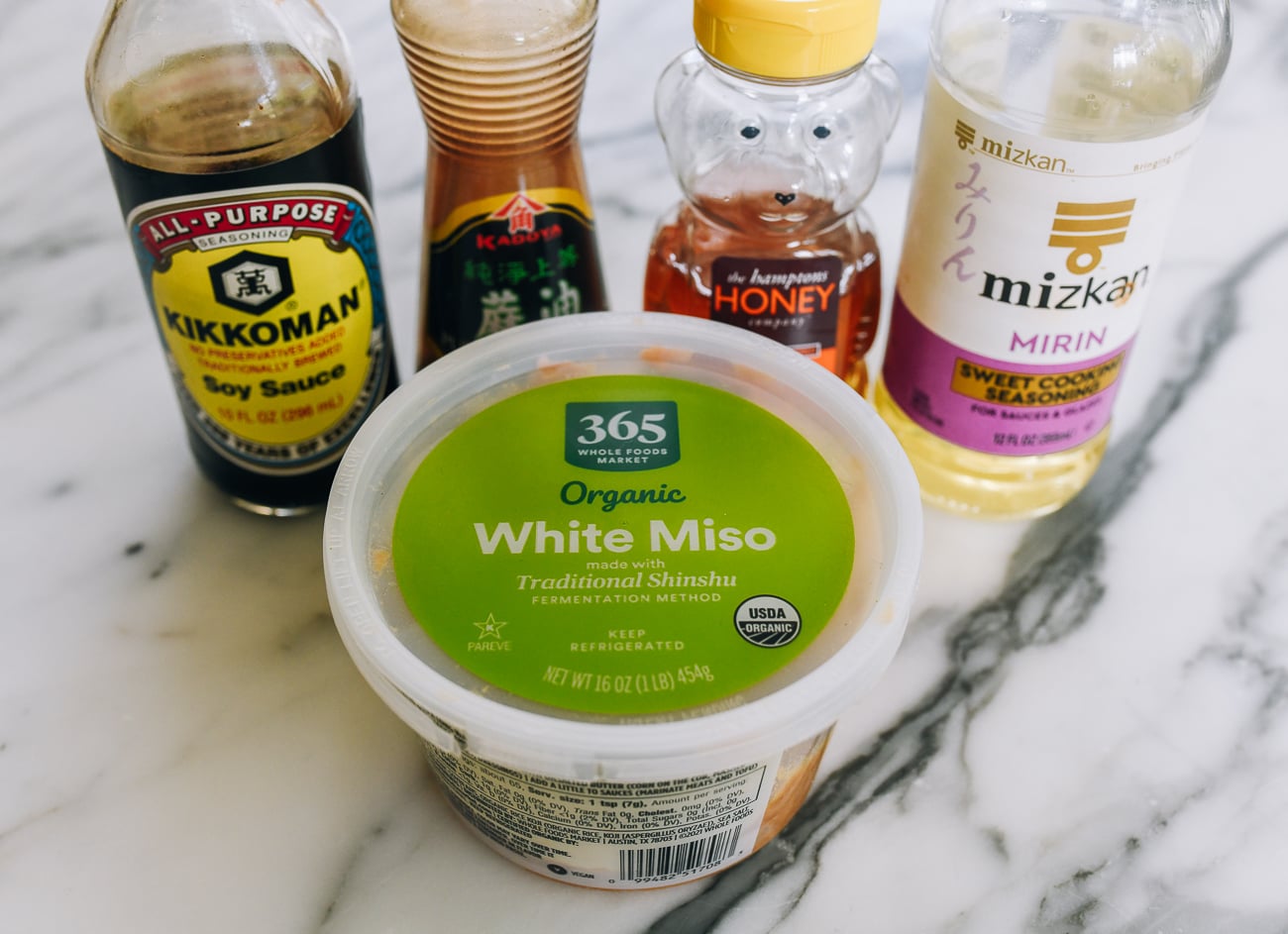
In a shallow dish large enough to fit all the salmon comfortably, whisk together the white miso paste, mirin, soy sauce, sesame oil, honey, and oil. Add the salmon filets and use your hands to coat them in the marinade. Cover and marinate in the fridge for 1-4 hours.
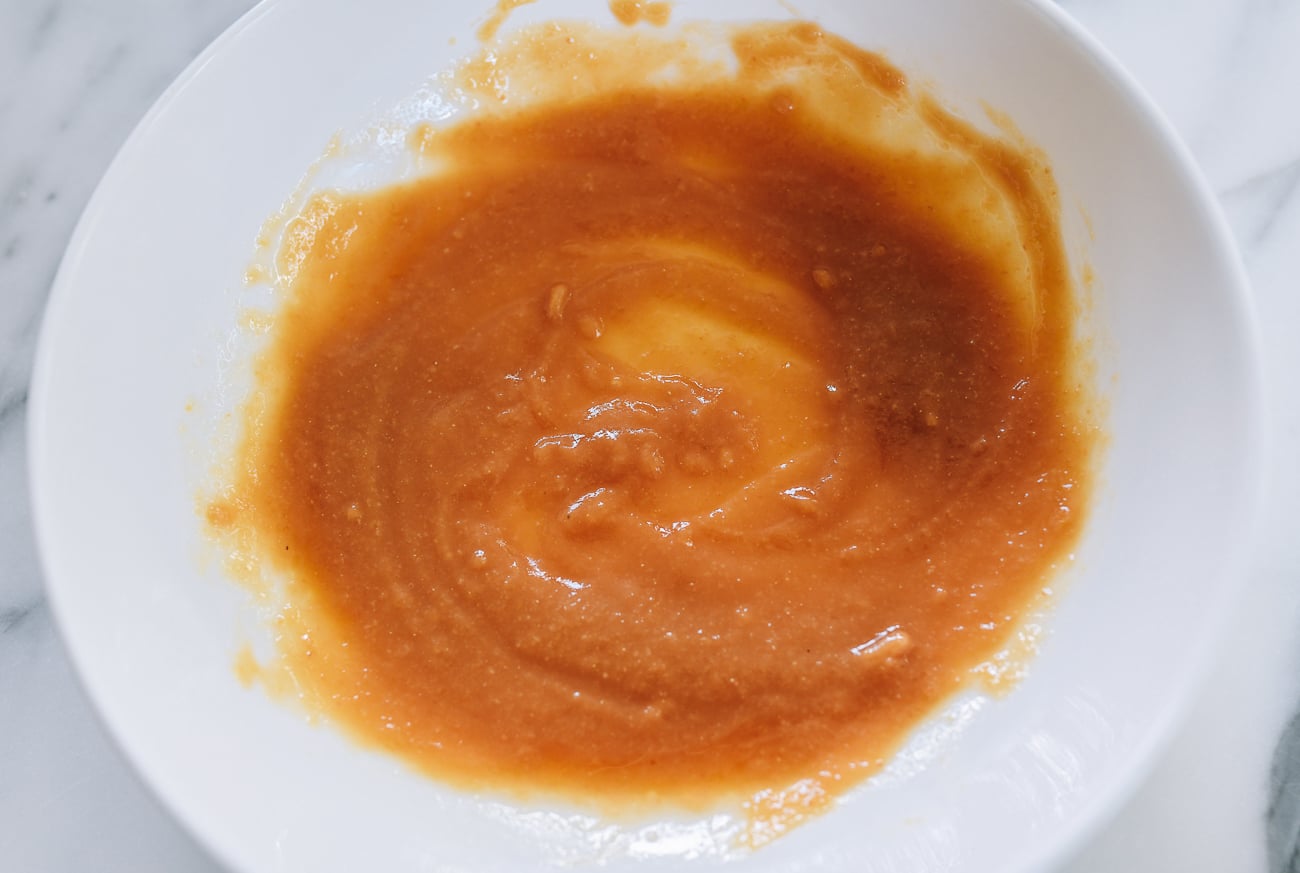
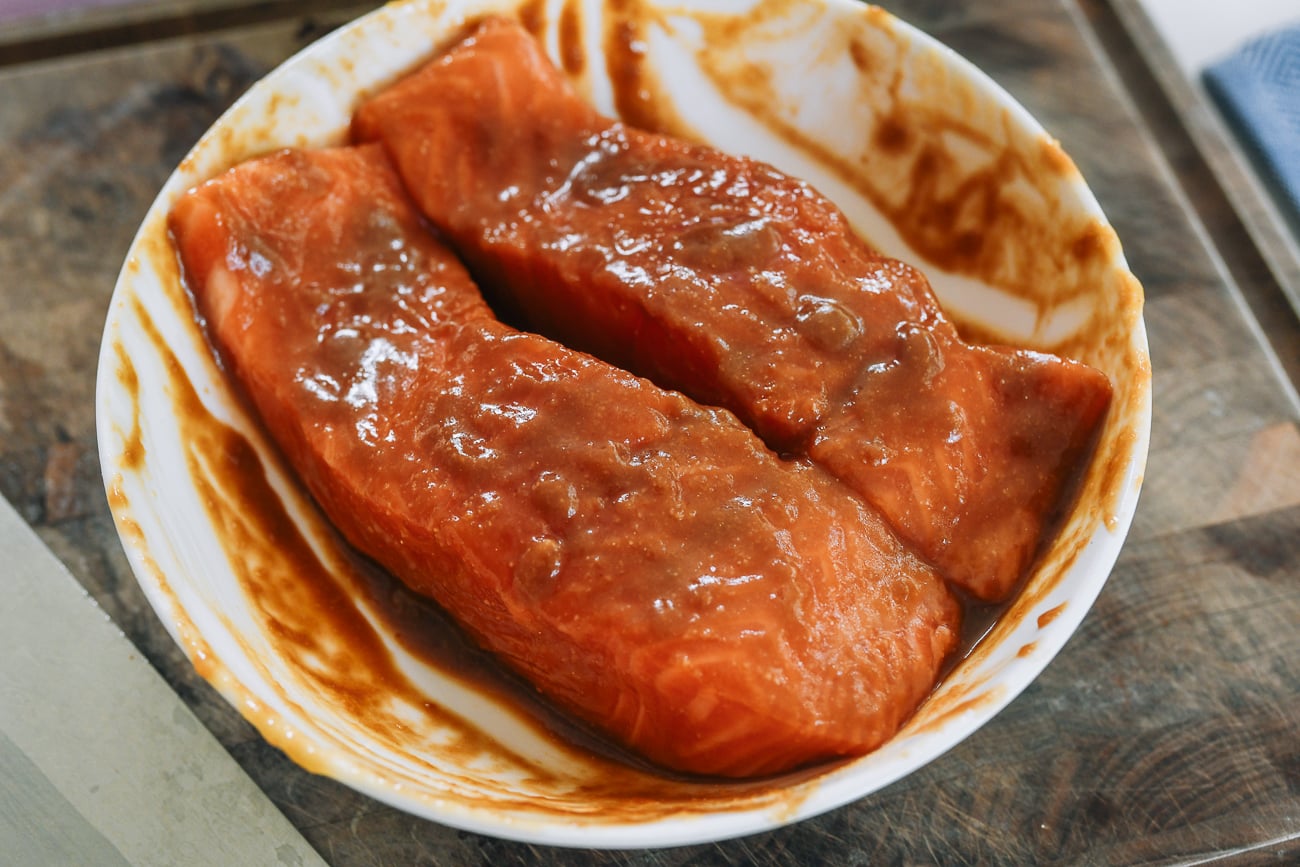
About 15-20 minutes before you’re ready to cook the salmon, position a rack in the upper third of your oven and preheat it to 400°F/200°C. Use your hands to wipe excess marinade from the salmon, as too thick a layer will be harder to brown. Transfer the salmon to a baking sheet lined with non-stick foil or parchment paper.
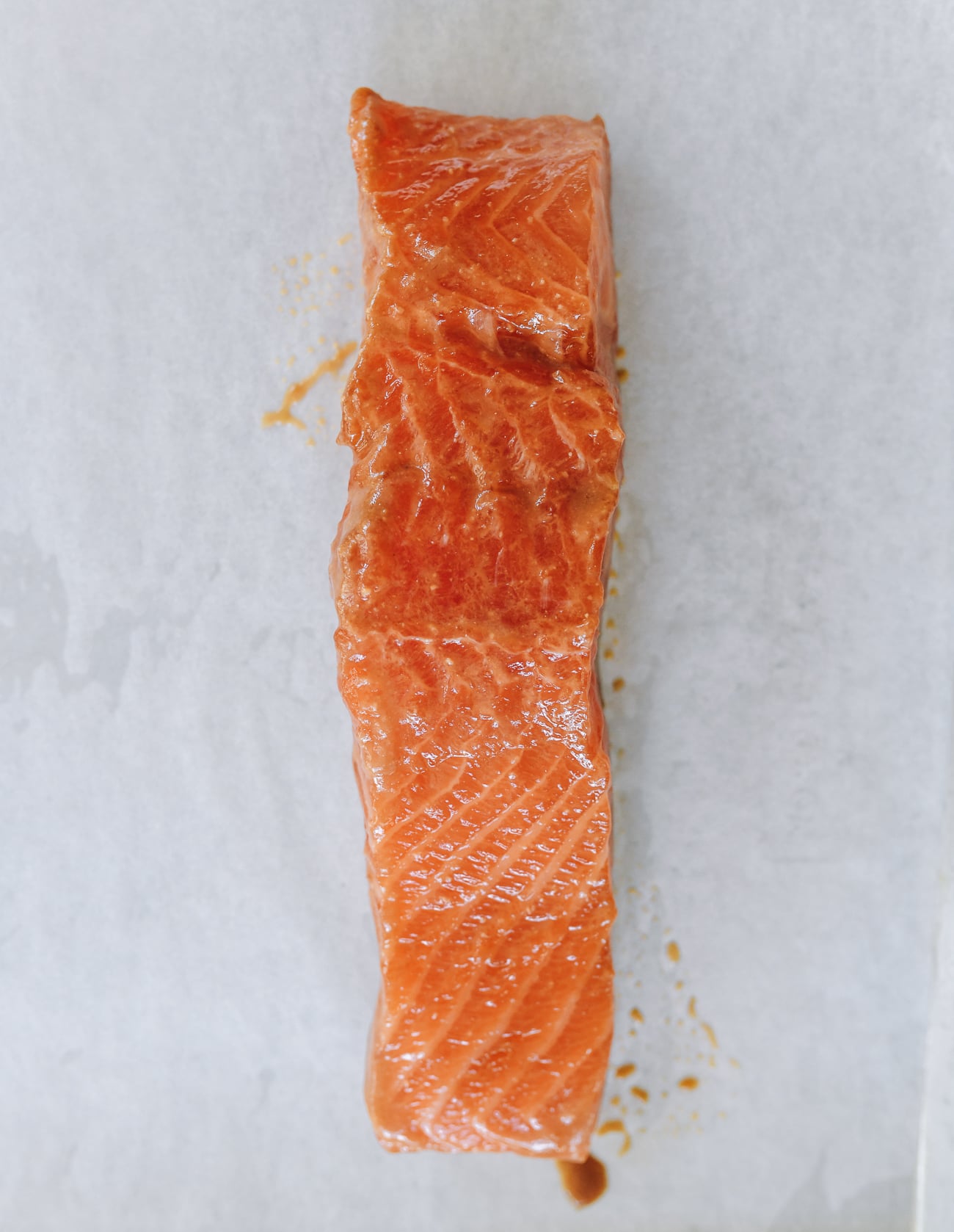
For 1-inch thick salmon fillets, bake for about 7-9 minutes. For 1.5-inch thick fillets, bake for a total of 10-12 minutes. Then switch on your oven’s max broiler setting. Let the salmon get burnished and golden, another 2-3 minutes. Watch it constantly to make sure it doesn’t burn.
Reduce the total cooking time by 1-2 minutes if you like rarer salmon.
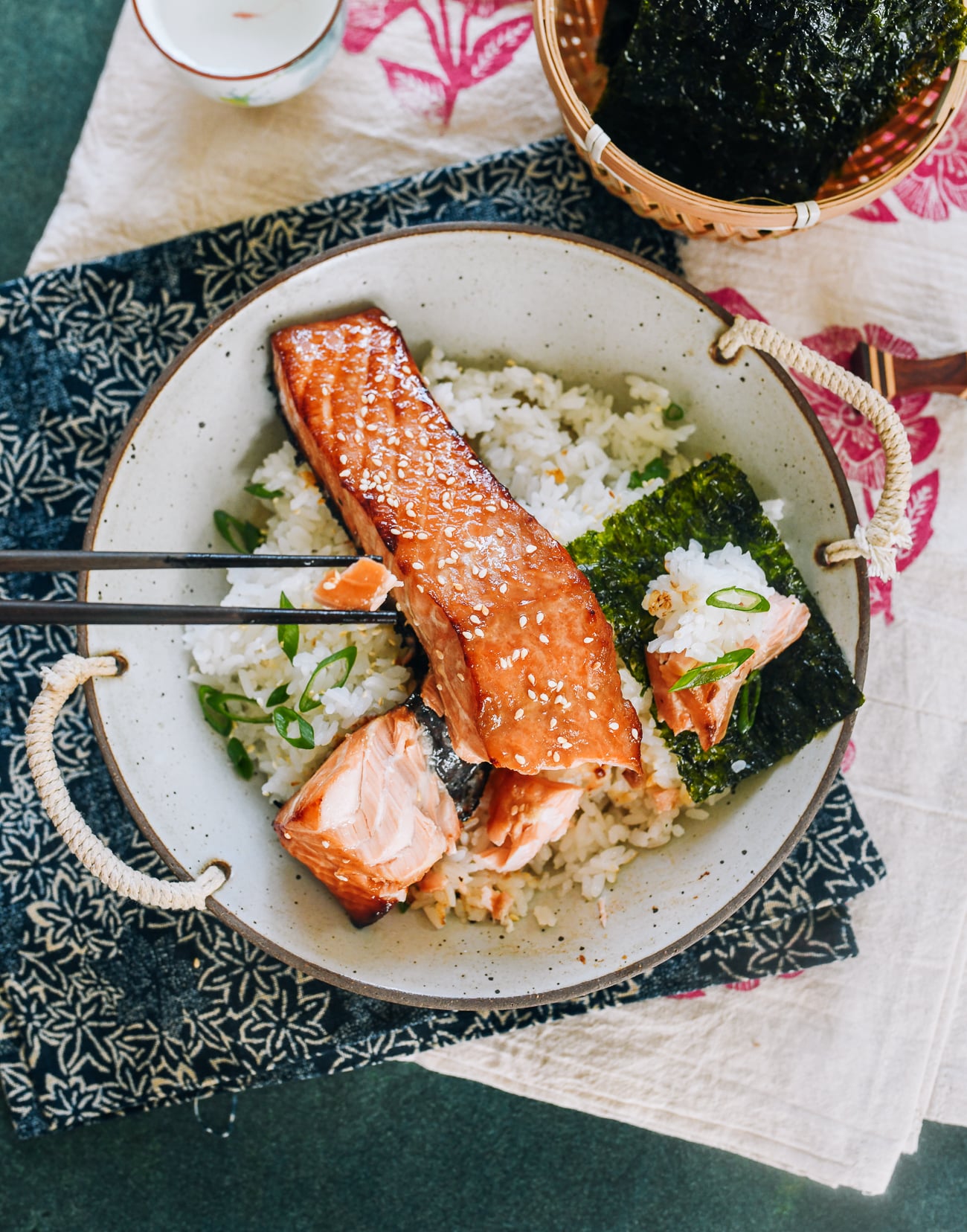
If you like, you can sprinkle a little chopped scallion and/or sesame seeds over the top. Serve with steamed rice. We enjoy miso salmon with roasted seaweed sheets and fresh shiso leaves as well!
You could also serve it on a salad, like our Miso Caesar!
Looking for more authentic recipes? Subscribe to our email list and be sure to follow us on Pinterest, Facebook, Instagram, and Youtube!
Recipe
Miso Salmon
Ingredients
- 1 ½-2 lb salmon fillet (we prefer skin-on salmon)
- 2 tablespoons white miso paste
- 2 tablespoons mirin
- 1 tablespoon soy sauce
- 1 teaspoon sesame oil
- 1 teaspoon honey
- 2 teaspoons neutral oil (such as canola, vegetable, or avocado oil)
Instructions
- Pat the salmon dry with a paper towel. If you have a single large fillet, cut it into 2-4 smaller pieces to make 6- to 8-ounce fillets. The more surface area for the marinade, the better! For this recipe, we like to leave the skin on.
- In a shallow dish large enough to fit all the salmon comfortably, whisk together the white miso paste, mirin, soy sauce, sesame oil, honey, and oil. Add the salmon filets and use your hands to coat them in the marinade. Cover and marinate in the fridge for 1-4 hours.
- About 15-20 minutes before you’re ready to cook the salmon, position a rack in the upper third of your oven and preheat it to 400°F/200°C. Use your hands to wipe excess marinade from the salmon, as too thick a layer will be harder to brown. Transfer the salmon to a baking sheet lined with non-stick foil or parchment paper.
- For 1-inch thick salmon fillets, bake for about 7-9 minutes. For 1.5-inch thick fillets, bake for a total of 10-12 minutes. Then switch on your oven’s max broiler setting and let the salmon get burnished and golden, another 2-3 minutes, watching constantly to make sure it doesn’t burn. Reduce the total cooking time by 1-2 minutes if you like rarer salmon. Regardless of your preferred doneness, if you’re using a thermometer, remove the salmon when the probe inserted in the center of the salmon filet registers five degrees shy of your target. As soon as it reaches your desired temperature, move it to a serving plate rather than keeping it on the baking sheet.
Tips & Notes:
- If you don’t want to cut the salmon filet into smaller 6-8 ounce portions, and leave it in say 14-16 oz. pieces or 1 larger filet, the salmon will take a couple minutes longer to cook. Depending on your oven, it may not broil as evenly.
- Cold salmon straight out of the refrigerator may take 1-2 minutes longer to cook than salmon that’s been sitting on a sheet pan for 20 minutes while you do other kitchen tasks
- Be aware that salmon will residually cook from the heat of the pan even once it leaves the oven so if it seems like it’s just done, it’s better to take it out of the oven rather than let it go for too long and end up with overcooked salmon.