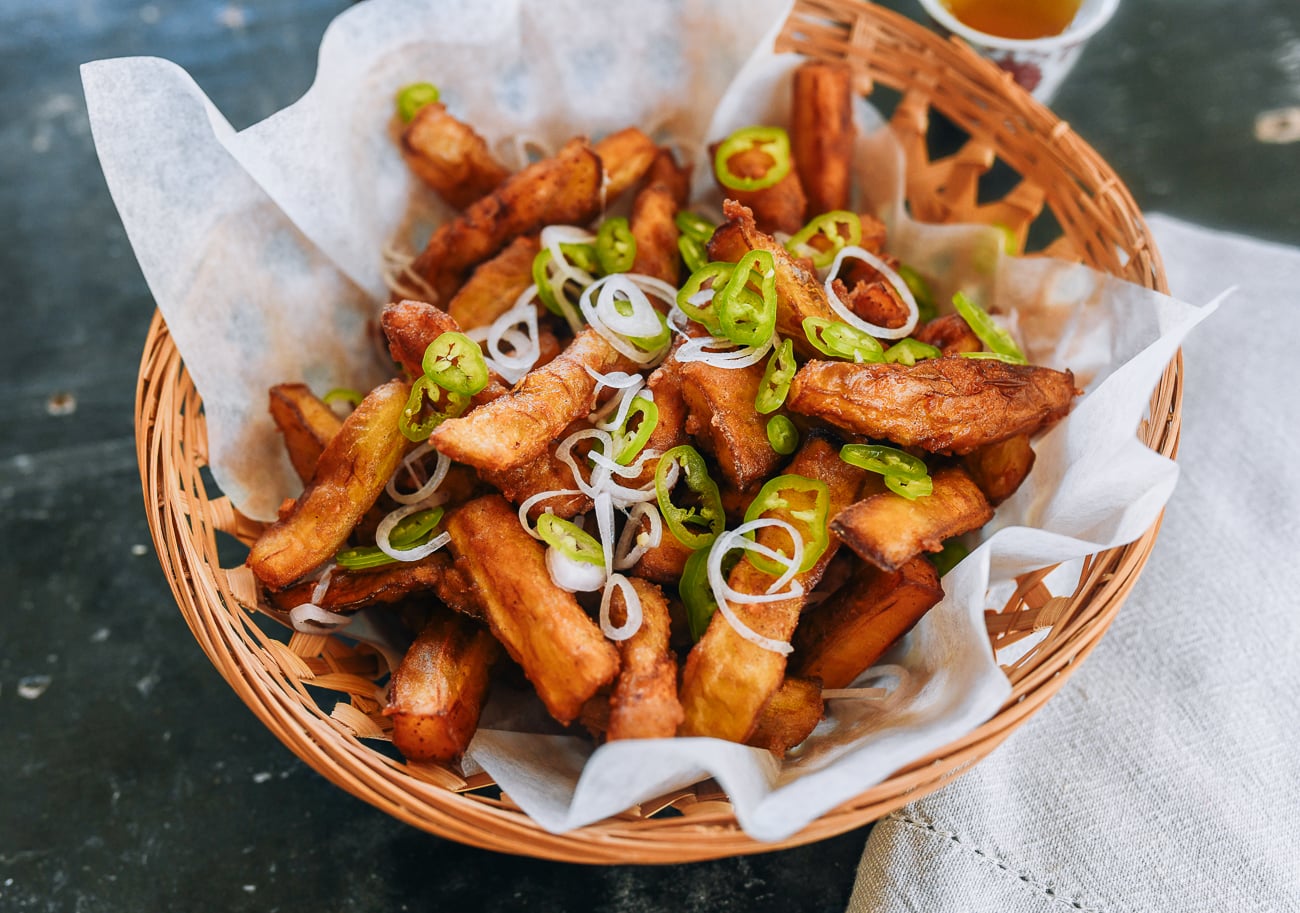
This Fried Eggplant is dangerously easy to eat. Crispy sticks of eggplant are cooked til tender and seasoned with a universally loved savory blend of salt, white pepper, and five spice powder!
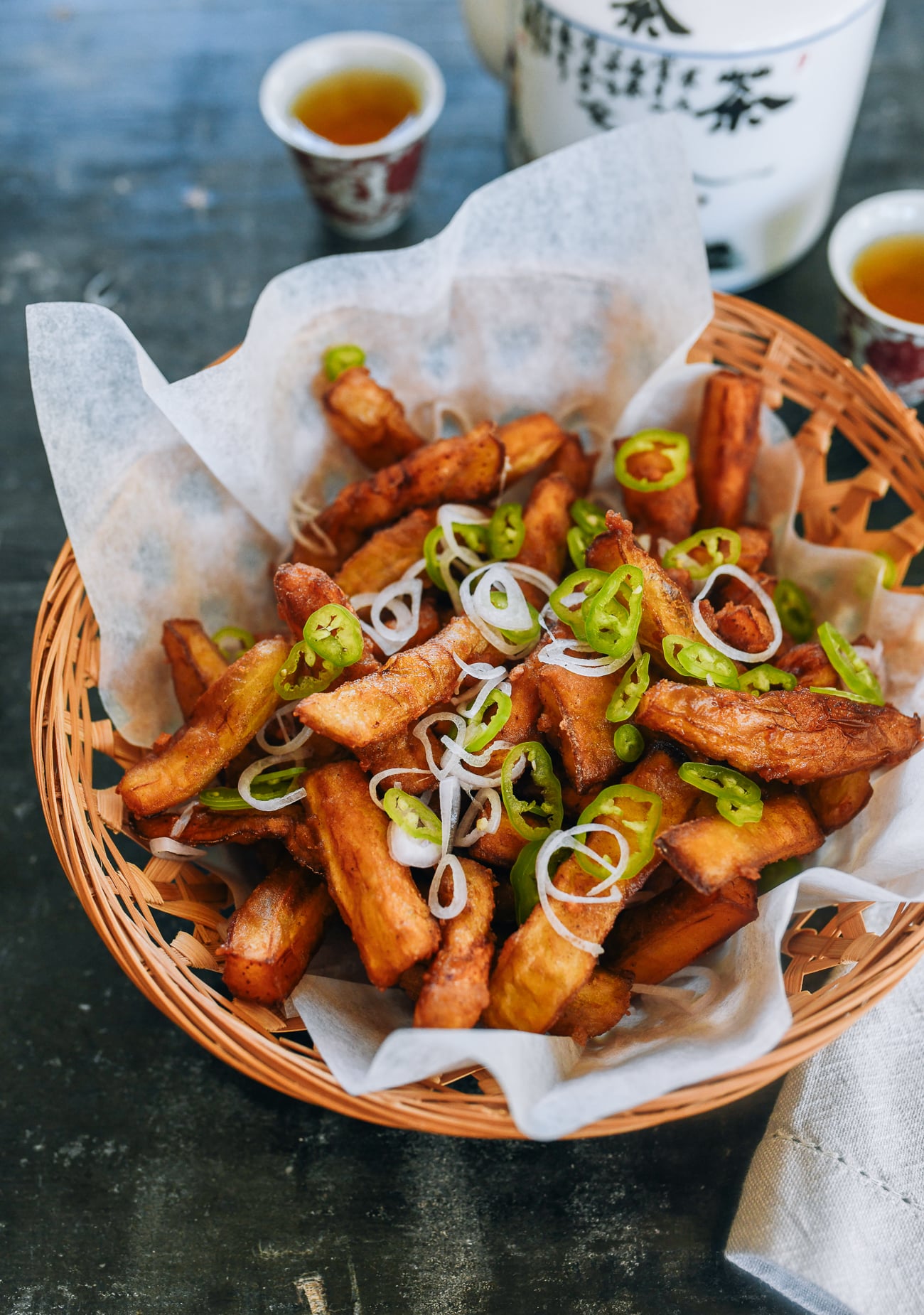
This recipe is best as one of multiple dishes in a meal, or as a delicious appetizer / finger food with an ice cold drink!
Frying Eggplant the Chinese Way
When it comes to fried eggplant, the first thing to come to mind might be a breaded eggplant with marinara, or eggplant parmesan. In this case, however, we are frying them the Chinese way. The result is MUCH crispier!
While you can use regular globe eggplants, we actually prefer using long Chinese eggplants here. We tested the recipe with both varieties, and have found the Chinese eggplants to be more tender, sweeter, and less bitter, due to their thinner skin and fewer seeds.
You won’t believe how crispy this eggplant turns out, and how long it stays crispy on the plate!
Salt and Pepper: A Classic Cantonese Combination!
Before you write off the idea of “salt and pepper” as boring, we’re talking about salt and white pepper, which has a uniquely aromatic, powdery peppery edge that tickles the back of your nose.
It’s different from black pepper, and when you add crispy garlic, shallots, and fresh spicy green peppers—anything tastes incredible.
Over the years, we’ve applied the salt and pepper treatment to many ingredients:
- Salt and Pepper Pork Chops (the classic)
- Salt and Pepper Chicken (if you prefer chicken)
- Salt and Pepper Tofu (worthy of your tofu recipe rotation)
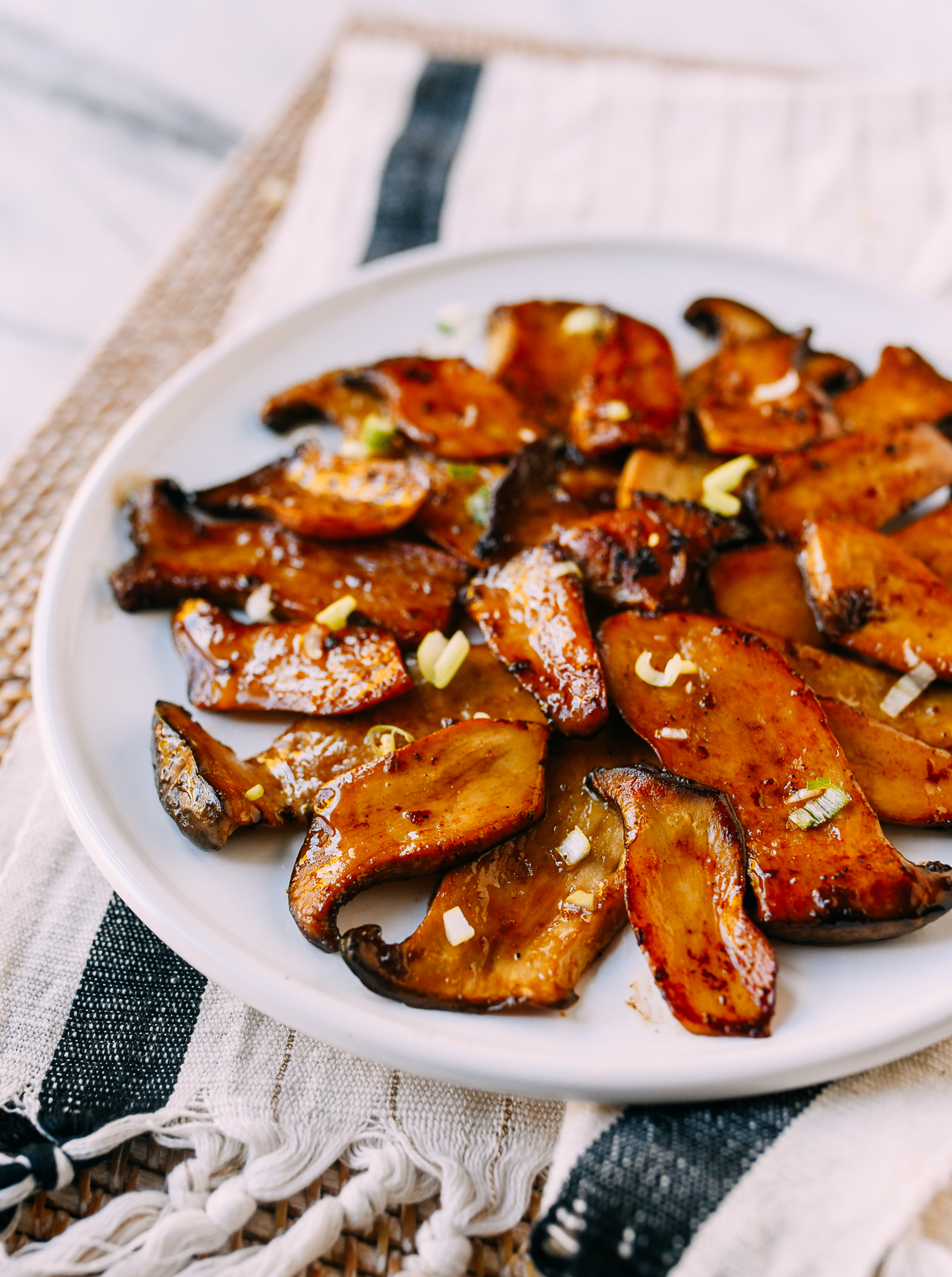
- Salt and Pepper Mushrooms (in our cookbook—and so delicious, they disappear in minutes!)
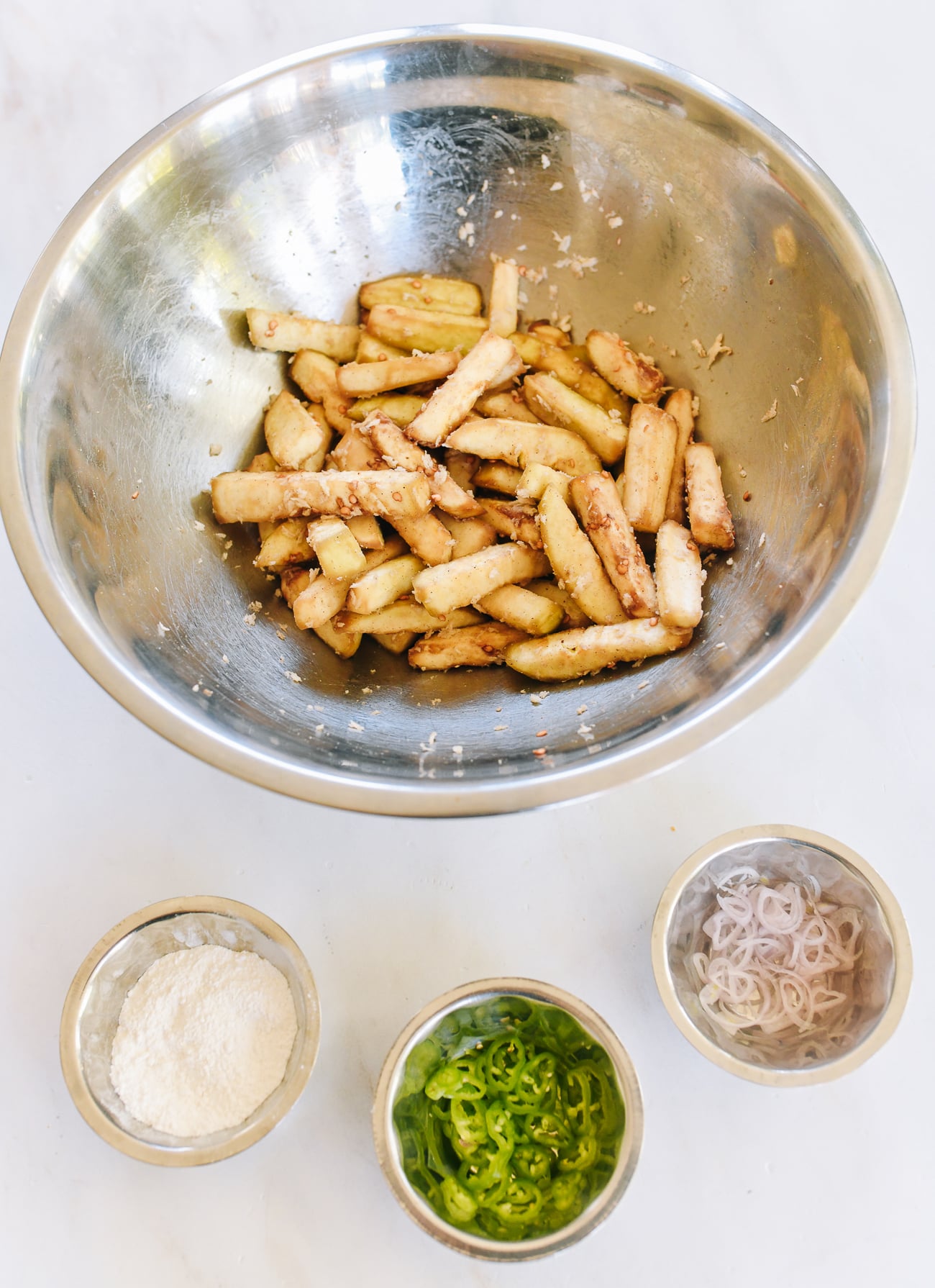
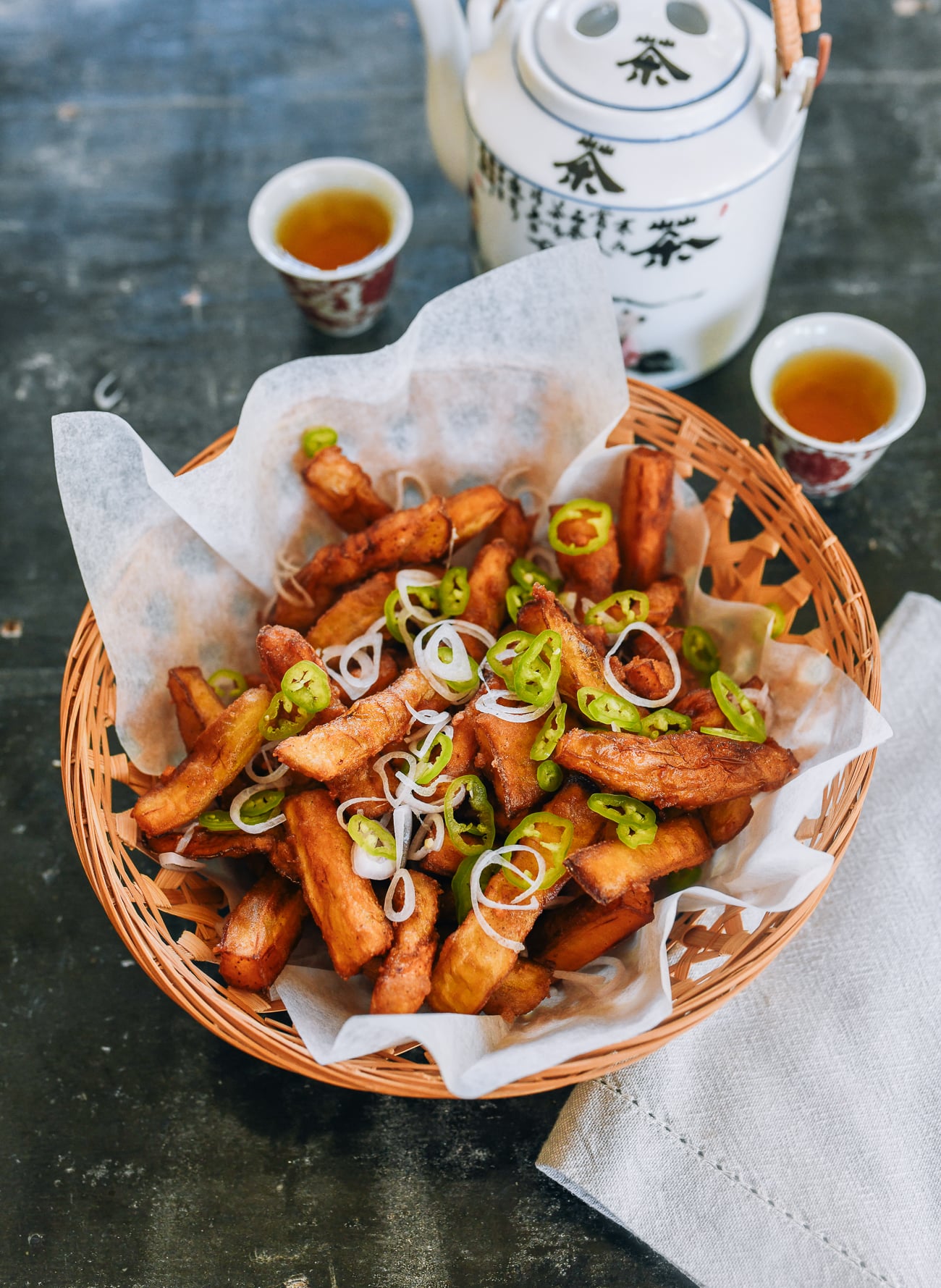
Now, with this recipe, we’re essentially making a salt and pepper eggplant, though you could also serve this fried eggplant recipe unadorned—like eggplant fries.
A Quick Guide to Eggplant
- Chinese eggplants are long, thin, and light purple. They are soft in texture, sweet, have less seeds, and cook very quickly, so try to find them if you can. These eggplants are best for Asian recipes like our Eggplant with Garlic Sauce! If you want to grow your own, check out our post on how to grow Chinese eggplant.
- Japanese eggplants are also long and thin, but they have a darker purple color and denser flesh. We also find that the skin is tougher. We always opt for the Chinese variety, but if you can only find the dark purple Japanese type, you can substitute it. They just take a bit longer to cook than Chinese eggplant. They’re absolutely delicious in Sarah’s clever recipe, Eggplant Unagi, a vegan take on sweet and savory Japanese eel.
- Globe eggplant is the standard dark purple, almost black variety most common in grocery stores. They tend to have more seeds, and the skin can be on the tough side for Asian cooking. We also find they take longer to cook. You can use still it here.
- Fairytale eggplant is a light purple and white “marbled” variety that we’re seeing more and more these days. If you can’t find the Chinese or Japanese eggplant, these are more similar in texture to Chinese eggplant than globe eggplants.
Well-stocked Chinese grocery stores will have Chinese and Japanese eggplants, and we’ve even seen them in some supermarkets, but they are seasonal and may be hard to find in winter.
If using Chinese or Japanese eggplants, skip the peeling, because the skin is tender enough to be enjoyed. Just wash and cut them. If using globe eggplants, peel them. The skins are thick and can be too fibrous even after cooking.
Fried Eggplant Recipe Instructions
Cut the eggplant into sticks that are about ¾-inch (2 cm) thick and 3 inches (7-8 cm) long. Place into a mixing bowl. Sprinkle it with the salt, white pepper, garlic powder, five spice powder, sugar, and sesame oil. Toss to distribute the seasonings, and let the eggplant sit for 10 minutes to marinate and to draw out moisture.
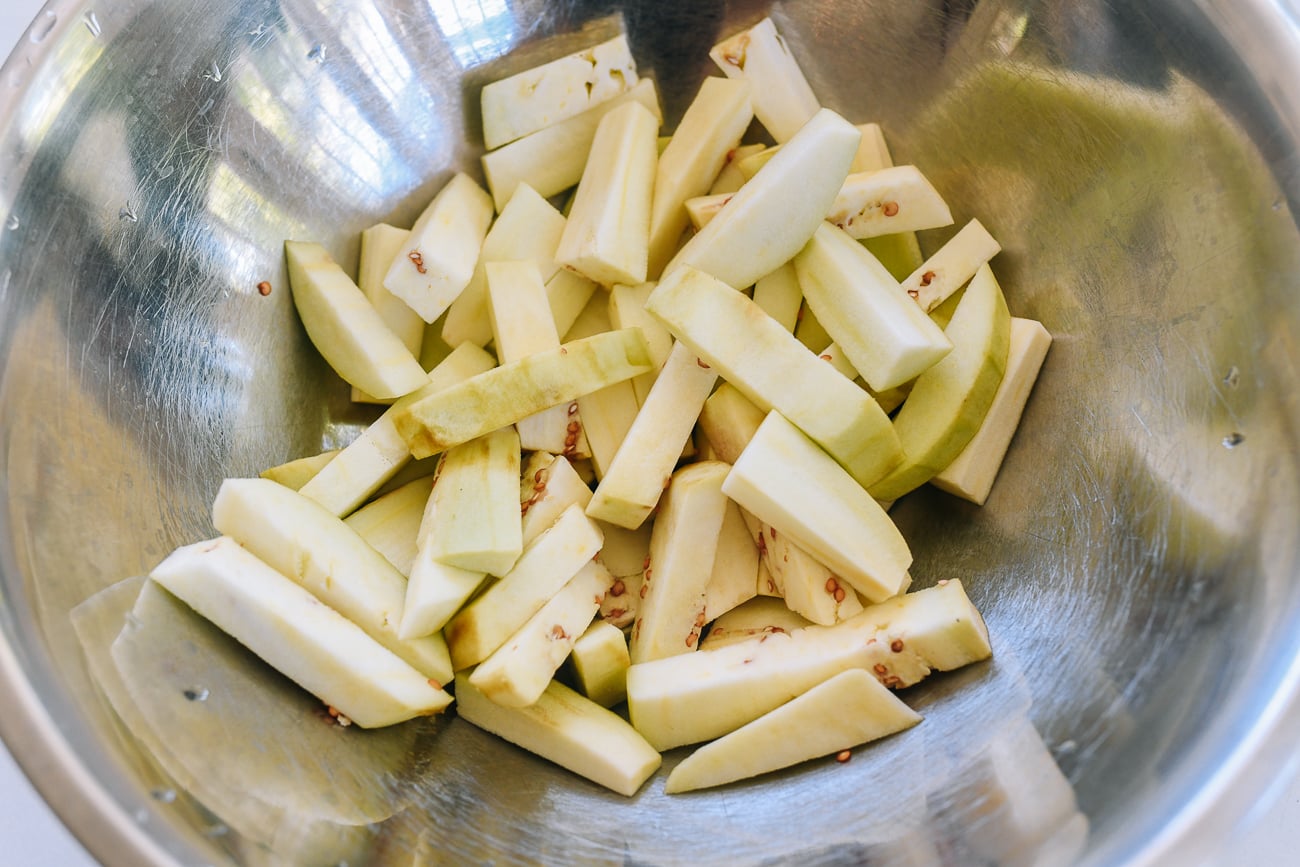
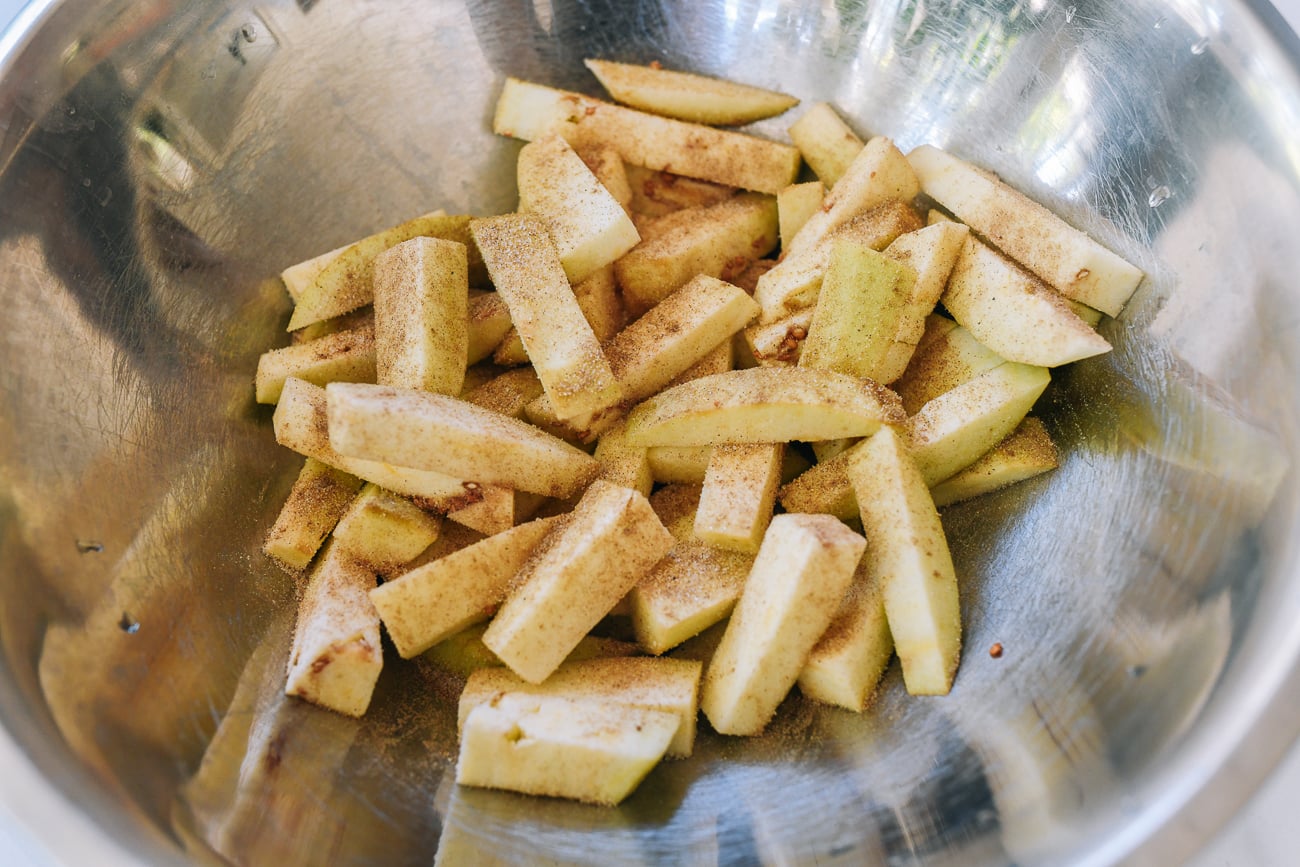
After 10 minutes, sprinkle 2 tablespoons of panko over the eggplant and lightly toss. The panko should stick to the eggplant. Let sit for 5 minutes.
Mix the cornstarch and rice flour together in a small bowl. Add half of the mixture over the top of the eggplant. Toss the eggplant to distribute. Let sit for another 5 minutes. After 5 minutes, the eggplant should continue to sweat, and the rice flour and cornstarch will absorb the moisture. (This is my way of getting the dredge materials to stick without adding egg or other liquids!)
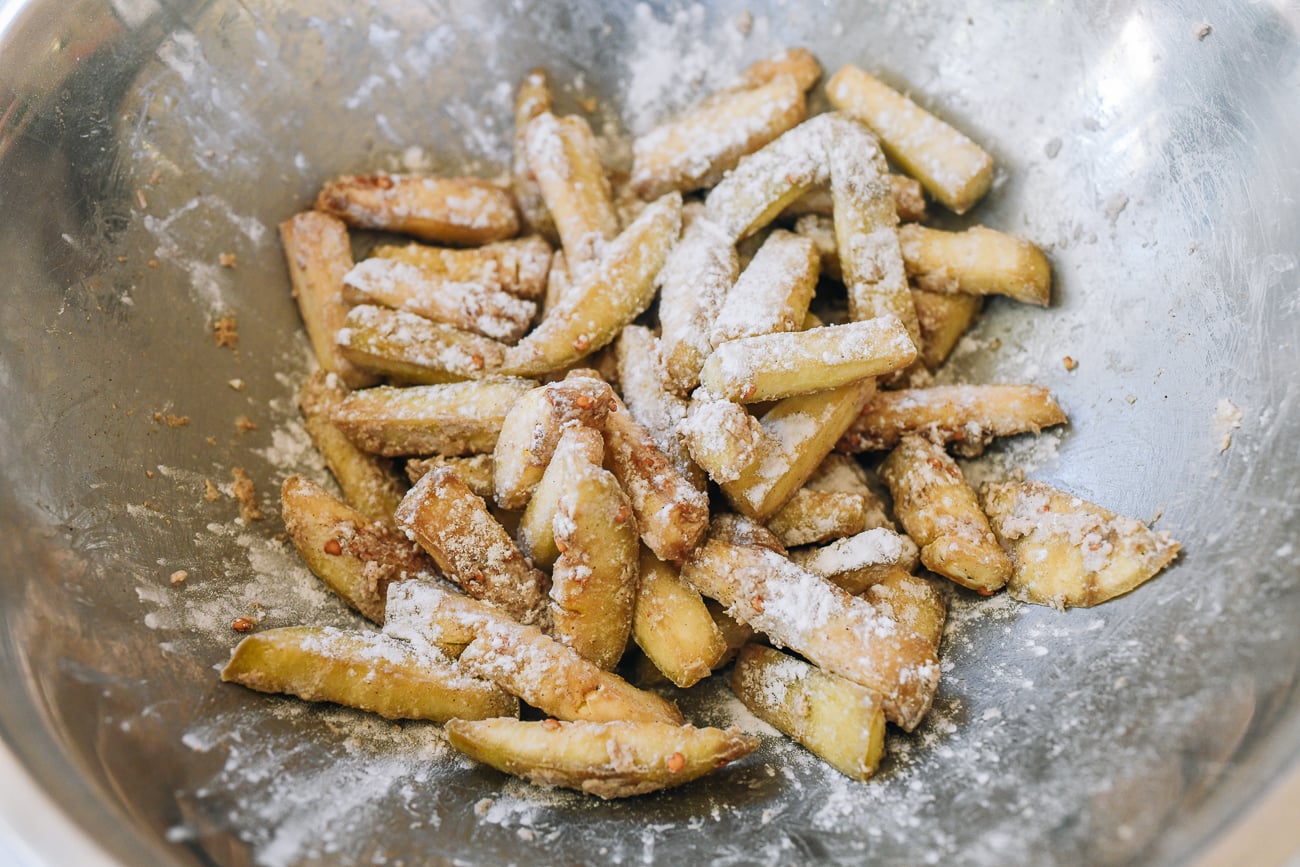
Add 2-3 inches of frying oil to a small pot, and heat it to 325°F/165°C. Toss the remaining cornstarch and rice flour mix with the eggplant.
Deep-fry the eggplant in batches for 4-5 minutes until a light brown crust forms. Use a spider or strainer to remove them, and let the excess oil drain before transferring to a plate lined with paper towels.
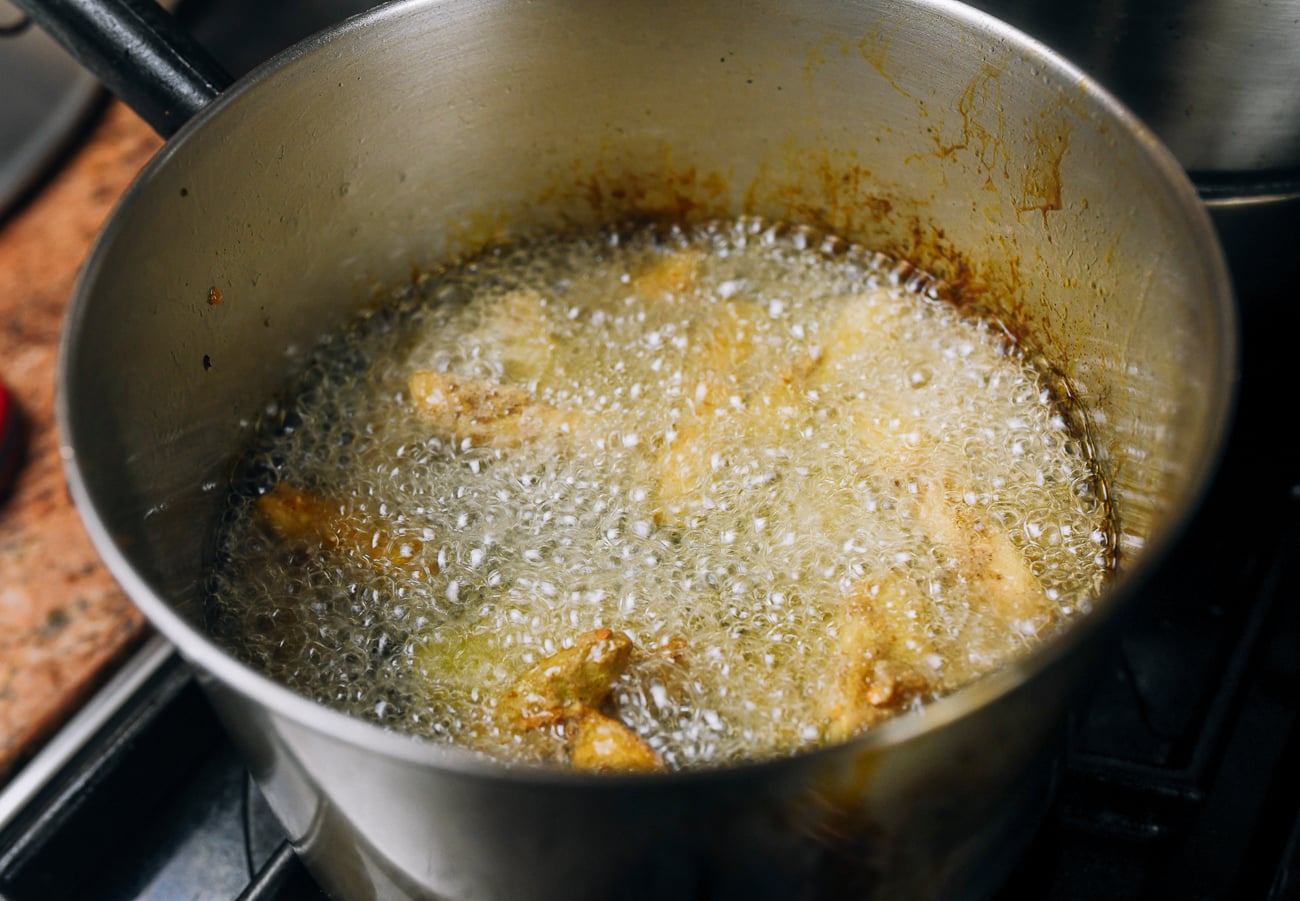
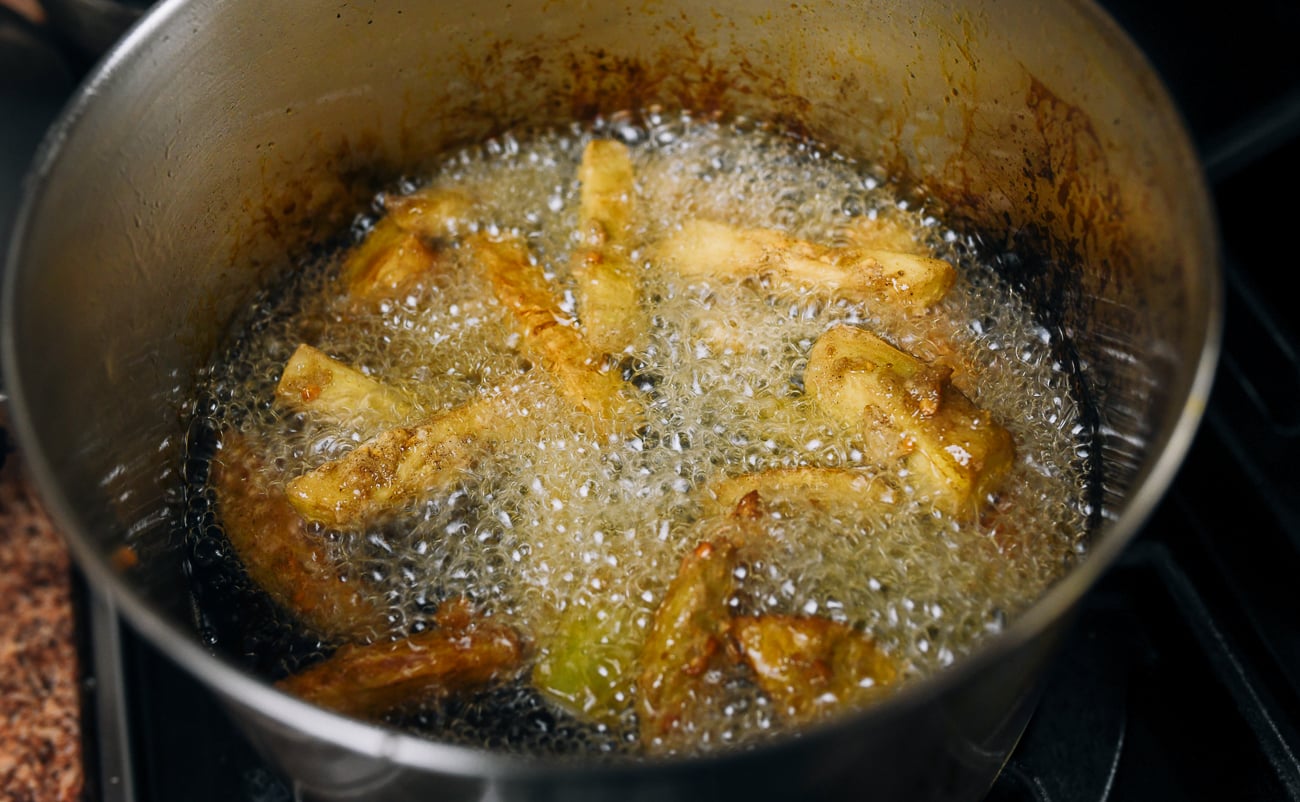
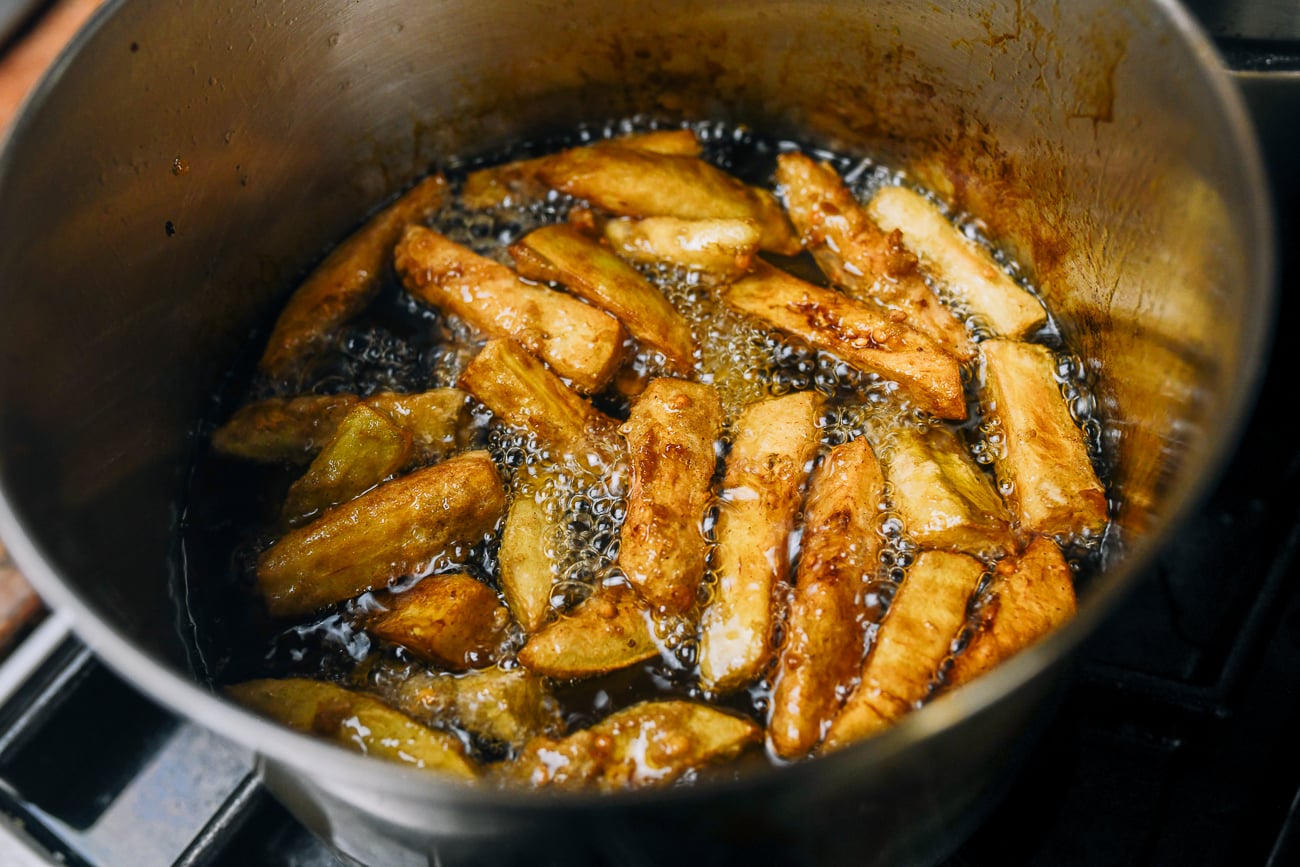
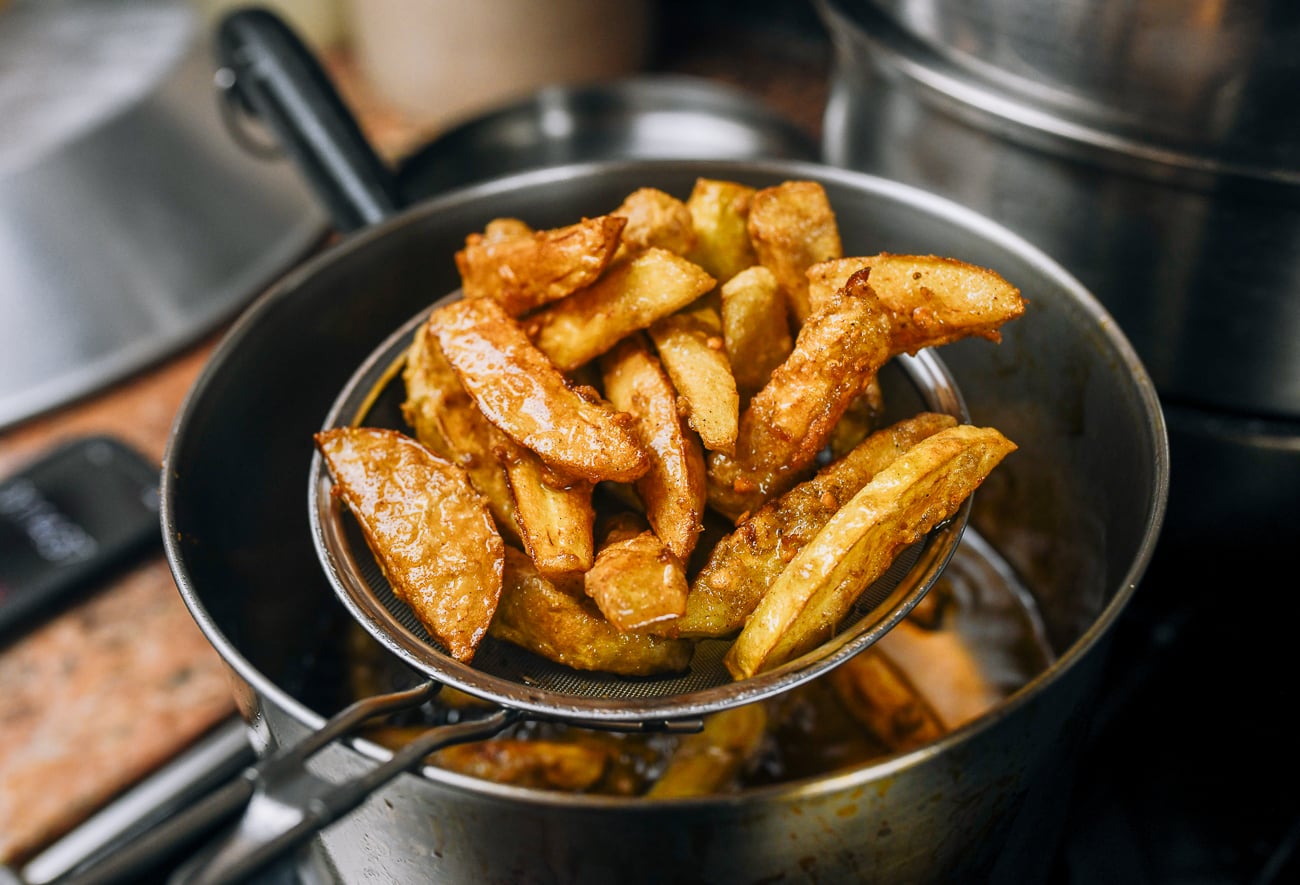
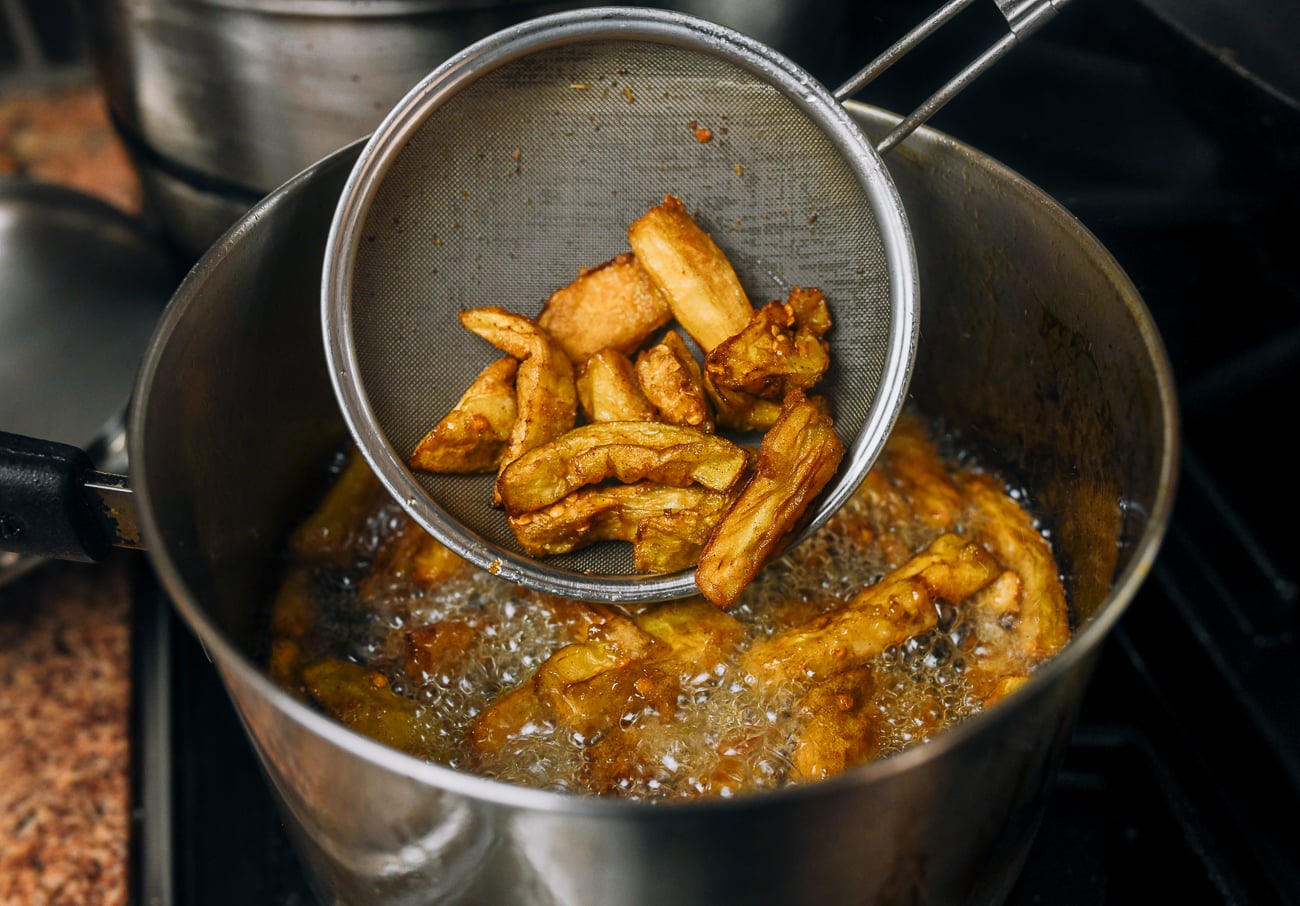
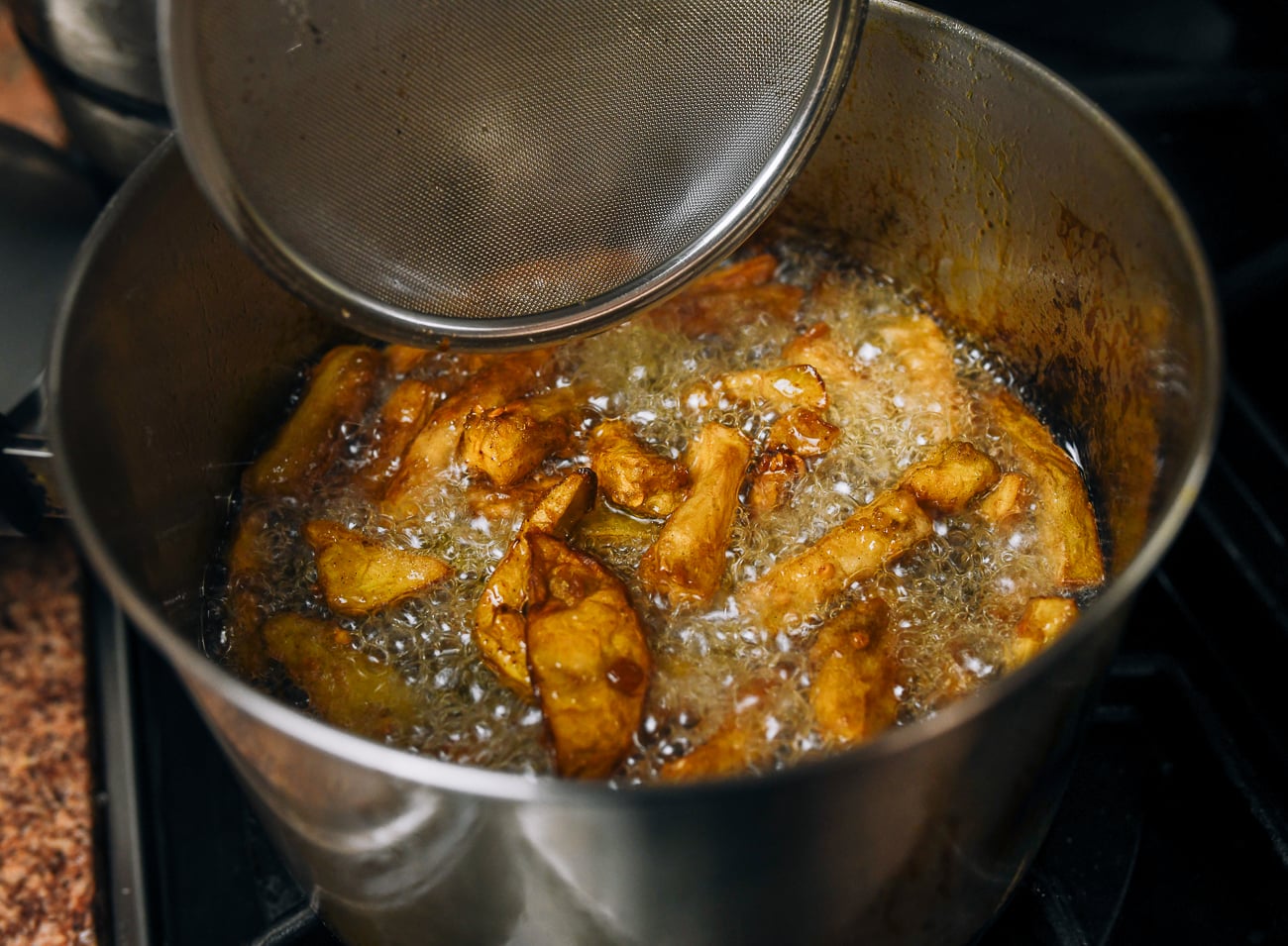
Next, heat the oil to 350°F/180°C, and fry all the eggplant pieces in a single batch for a second time. Fry for 2 minutes, or until golden brown.

The Double-Fry Method: Why It Matters
This recipe uses a two-stage frying process, and it makes a real difference. The first fry at 325°F/165°C cooks the eggplant through and forms an initial crust. The second fry at 350°F/180°C, done quickly right before serving, is what gives you that deep golden color and extra crunch that holds up even after the eggplant hits the plate. When developing frying recipes, we do many tests to determine whether this is a necessary step, so if you see it show up, don’t skip it!
Drain on a plate lined with fresh paper towels. Transfer to a serving plate if desired. If using, sprinkle the raw sliced peppers and shallots on top and serve! If desired, mix together a small pinch each of salt and white pepper, and sprinkle over the top to taste.
Looking for more authentic recipes? Subscribe to our email list and be sure to follow us on Pinterest, Facebook, Instagram, and Youtube!
Recipe
Fried Eggplant, Chinese-Style
Ingredients
For seasoning the eggplant:
- 1 pound Chinese or Japanese eggplant (about 2-3 eggplants; can also substitute globe eggplant in a pinch)
- 1 teaspoon sea salt
- ¼ teaspoon white pepper
- ¼ teaspoon garlic powder
- ¼ teaspoon five spice powder
- ¼ teaspoon granulated sugar
- ¼ teaspoon sesame oil
For the rest of the dish:
- 2 tablespoons panko breadcrumbs (omit if making gluten-free)
- 2 tablespoons cornstarch
- 2 tablespoons rice flour
- Canola or vegetable oil (for frying)
- 2 tablespoons thinly sliced long green hot peppers (de-seeded if you want less spice; optional)
- 2 tablespoons thinly sliced shallot (optional)
Instructions
- Cut the eggplant into sticks that are about ¾-inch (2 cm) thick and 3 inches (7-8 cm) long. Place into a mixing bowl. Sprinkle it with the salt, white pepper, garlic powder, five spice powder, sugar, and sesame oil. Toss to distribute the seasonings, and let the eggplant sit for 10 minutes to marinate and to draw out moisture.
- After 10 minutes, sprinkle 2 tablespoons of panko over the eggplant and lightly toss. The panko should stick to the eggplant. Let sit for 5 minutes.
- Mix the cornstarch and rice flour together in a small bowl. Add half of the mixture over the top of the eggplant. Toss the eggplant to distribute. Let sit for another 5 minutes. After 5 minutes, the eggplant should continue to sweat, and the rice flour and cornstarch will absorb the moisture. (This is my way of getting the dredge materials to stick without adding egg or other liquids!)
- Add 3 inches (8cm) of frying oil to a small pot, and heat it to 325°F/165°C. Toss the remaining cornstarch and rice flour mix with the eggplant.
- Deep-fry the eggplant in batches for 4-5 minutes until a light brown crust forms. Use a spider or strainer to remove them, and let the excess oil drain before transferring to a plate lined with paper towels. Next, heat the oil to 350°F/180°C, and fry all the eggplant pieces in a single batch for a second time. Fry for 2 minutes, or until golden brown.
- Drain on a plate lined with fresh paper towels. Transfer to a serving plate if desired. If using, sprinkle the raw sliced peppers and shallots on top and serve! If desired, mix together a small pinch each of salt and white pepper, and sprinkle over the top to taste.