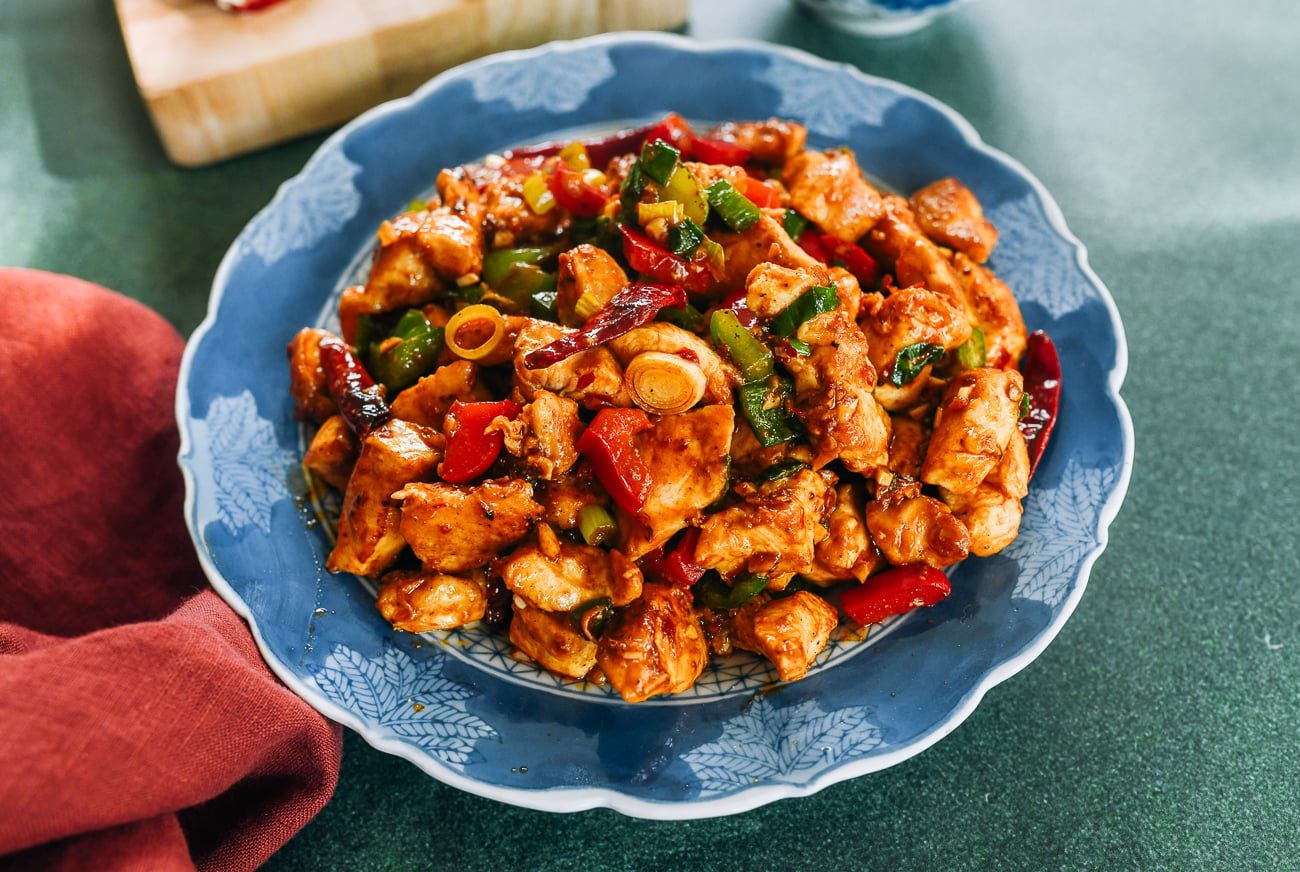
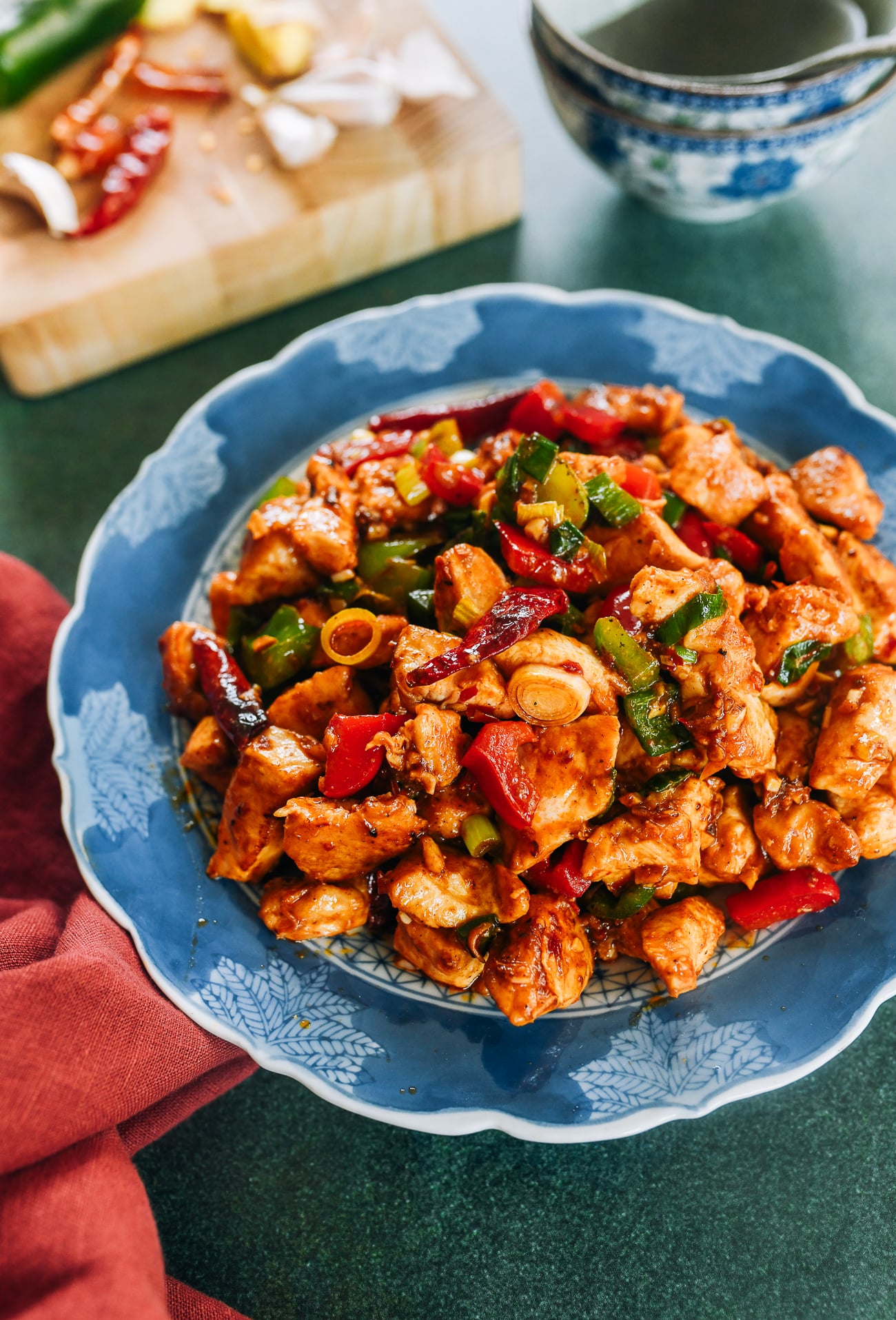
This Szechuan Chicken offers the best of both worlds: Chinese-American takeout style in spirit, with a couple upgrades using authentic ingredients like spicy bean paste (la doubanjiang) and Sichuan peppercorns!
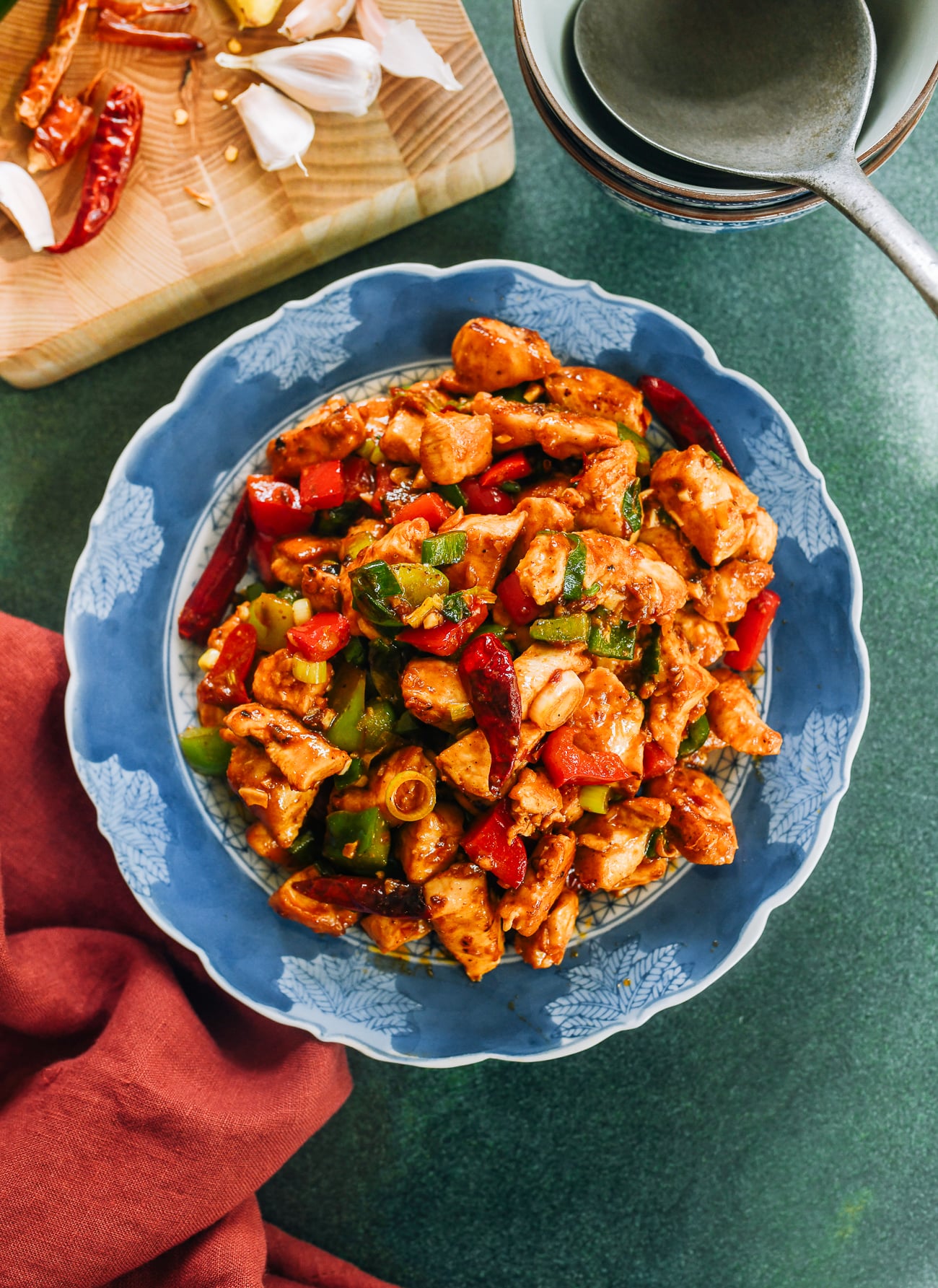
What is Szechuan Chicken?
Depending on who you ask, “Szechuan Chicken” could be a variety of spicy chicken dishes. Case in point, even McDonald’s made a “Szechuan sauce” meant for dipping chicken nuggets. It all depends on who you ask.
If you ask someone from China, they might think of Sichuan Laziji, sometimes called Chongqing chicken, named after the city of the same name which is famous for its spicy food. Or perhaps they’ll think of Three Pepper Chicken, a dish that’s growing in popularity, like Mapo Tofu or Dan Dan Noodles!


Both chicken dishes are quite different from the saucy chicken stir-fry you might expect when ordering “Szechuan chicken” from the American side of a Chinese menu. They’re filled with dried chili peppers, numbing Sichuan peppercorns, garlic, ginger, and deep-fried chicken!
Early Americanized versions of Szechuan Chicken were made with velveted chicken, bell peppers, onions, and other mixed vegetables with some chili or chili garlic sauce mixed into a classic brown sauce.
I wanted to document that Americanized version, with a few upgrades.

“Szechuan” or “Sichuan”?
Kaitlin here for my history buffs and etymology nerds! Here at The Woks of Life, when we use the “Szechuan” spelling, we’re harkening back to a more retro Chinese American restaurant recipe (e.g., our Szechuan Shrimp). It’s why we decided to call this recipe Szechuan Chicken instead of Sichuan Chicken, even though “Sichuan” is technically the correct pinyin spelling of 四川.
Hanyu pinyin is the modern system that romanizes Chinese characters. The “Szechuan” spelling is influenced by the 19th century Wade-Giles romanization system for Chinese, developed by the British. It was officially replaced in 1958 by the Hanyu Pinyin system.
Despite this, the “Szechuan” spelling has persisted for many years. That said, we’ve noticed “Sichuan” is becoming more common as blogs, cookbook authors, other creators, and restaurants have been making the addictively spicy cuisine from this province more recognizable to an American audience!
The 2 Sichuan Ingredients You Should Have On Hand
While these two ingredients technically aren’t part of our 10 Essential Chinese Pantry Ingredients, having them on hand will increase the range of Chinese recipes that you can cook!
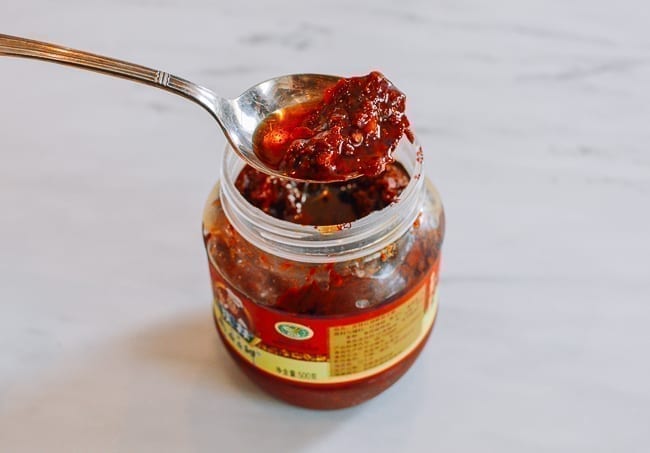
The first is spicy bean paste or là dòubàn jiàng, 辣豆瓣酱. It’s made from fermented broad beans and chilies, mashed into a coarse paste. You may also see it referred to as, “spicy broad bean paste” or “broad bean chili sauce.” There are smooth paste products and the more rustic products with chunks of peppers and beans. We prefer the latter, but either will work! It’s an ingredient that you really cannot substitute or replace. If you have trouble finding it, we recommend just omitting it and having the chili garlic sauce be the main spicy element.
You can read more about it here and see what brands we like to use in our spicy bean paste ingredients post.
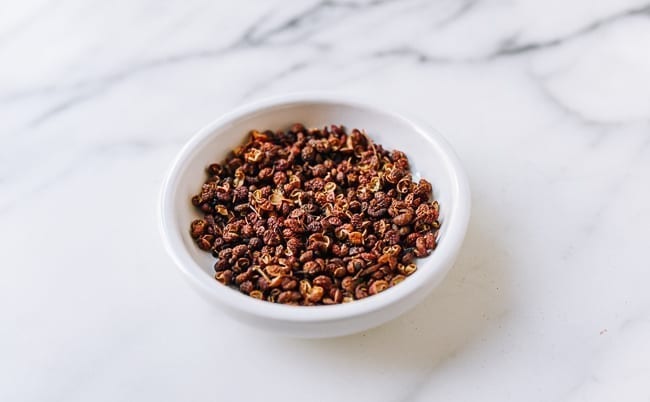
The second is Sichuan peppercorns (huā jiāo, 花椒). They give any dish a fragrant flavor and have a numbing effect on your tongue. The peppercorns and chilies work together, making your tongue just numb enough to enjoy the addictive spice and keep you eating, even as you start sweating!
An alternative to peppercorns is Sichuan peppercorn powder or Sichuan peppercorn oil. Most of the time these days, we use the powder for ease. If you have whole sichuan peppercorns, you can also grind them into a powder using a spice grinder or mortar & pestle.
Keep in mind when buying the peppercorns, you are looking for the hulled husks without the bitter black seed (if you see seeds, it’s an indication of low quality). You can read more about it in our Sichuan peppercorns post.
Adjust the Spice to Your Liking!
This dish has various of sources of heat that you can amplify, reduce, or omit to make it more or less spicy. Breaking open the whole dried chilies will really increase the spice level of the dish. You can also leave them out or reduce the quantity to 2-3. You can also omit the jalapeño pepper.
Szechuan Chicken: Recipe Instructions
Measure out and prep all the ingredients so you have everything ready at the wok. This dish moves quickly and you don’t want to be fumbling for ingredients!
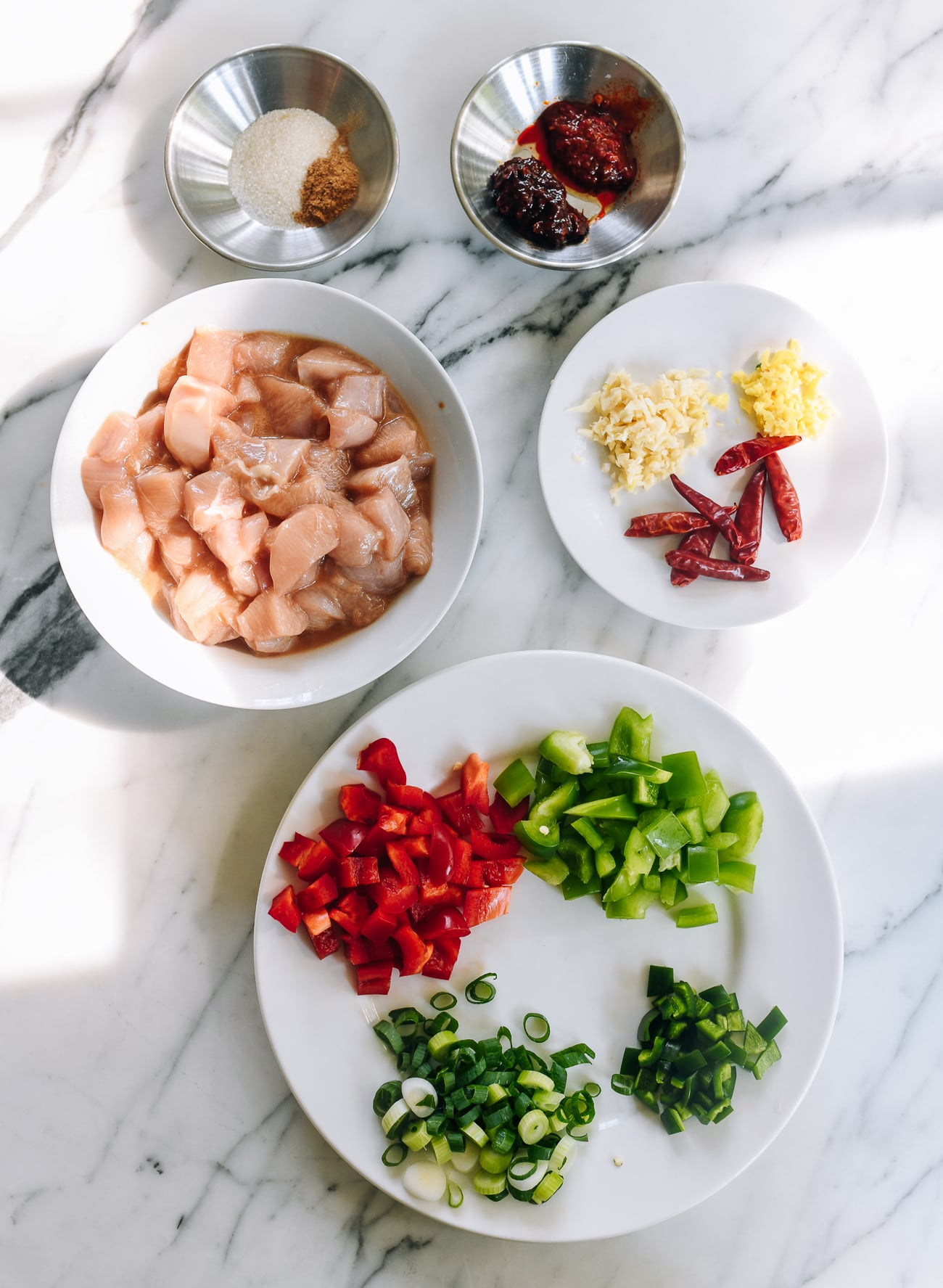
Cut the chicken into small bite-size pieces, about 1-inch/2.5cm chunks. Add the chicken to a bowl with the water, cornstarch, soy sauce, and oil.
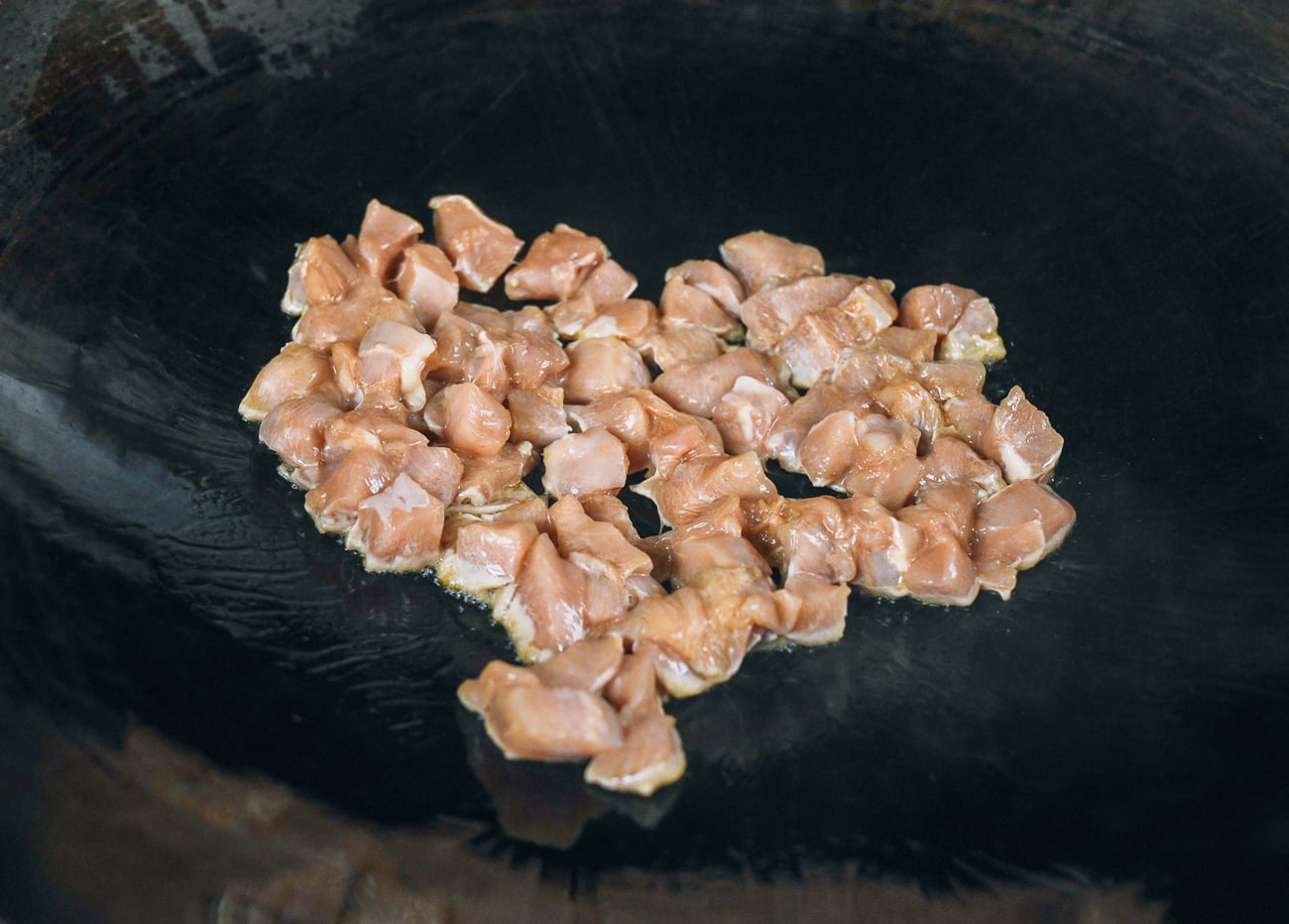
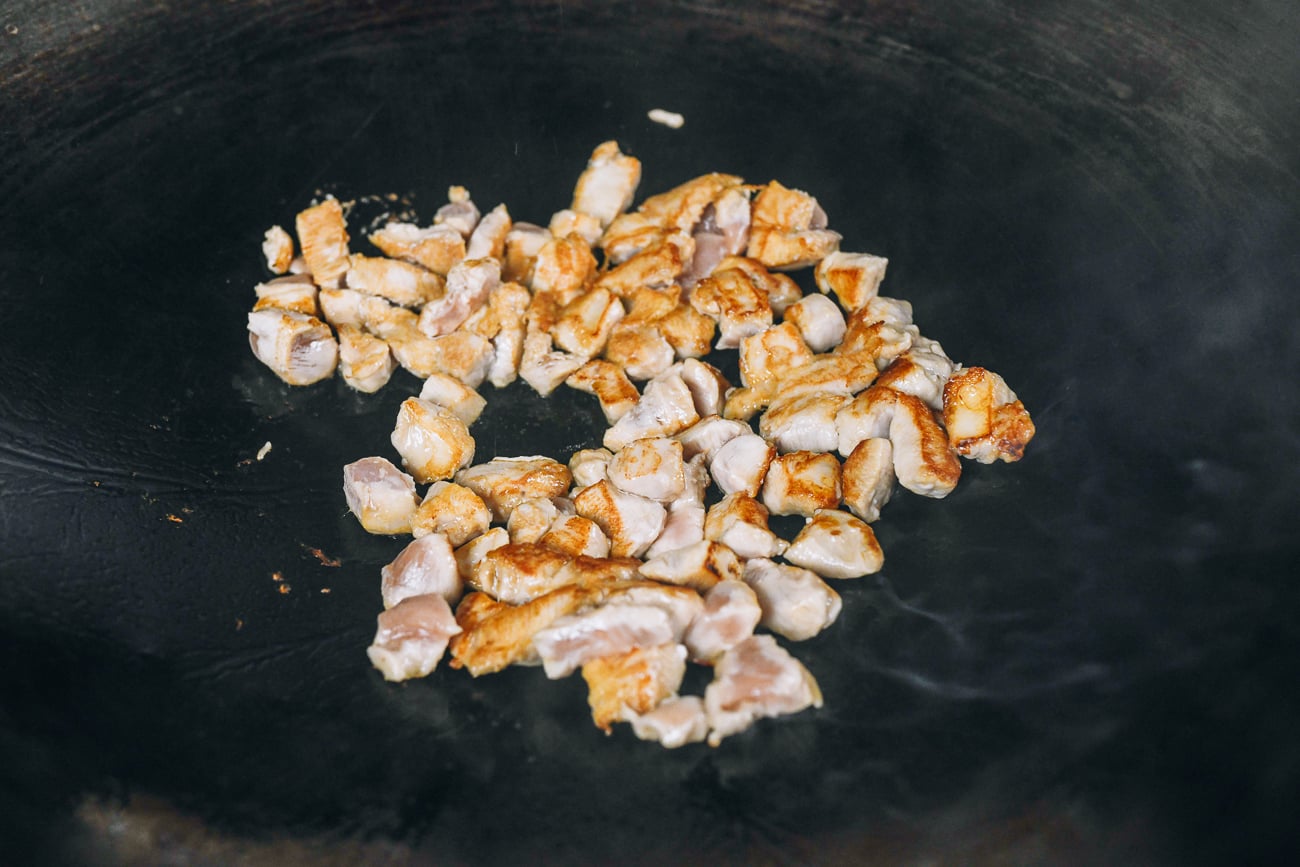
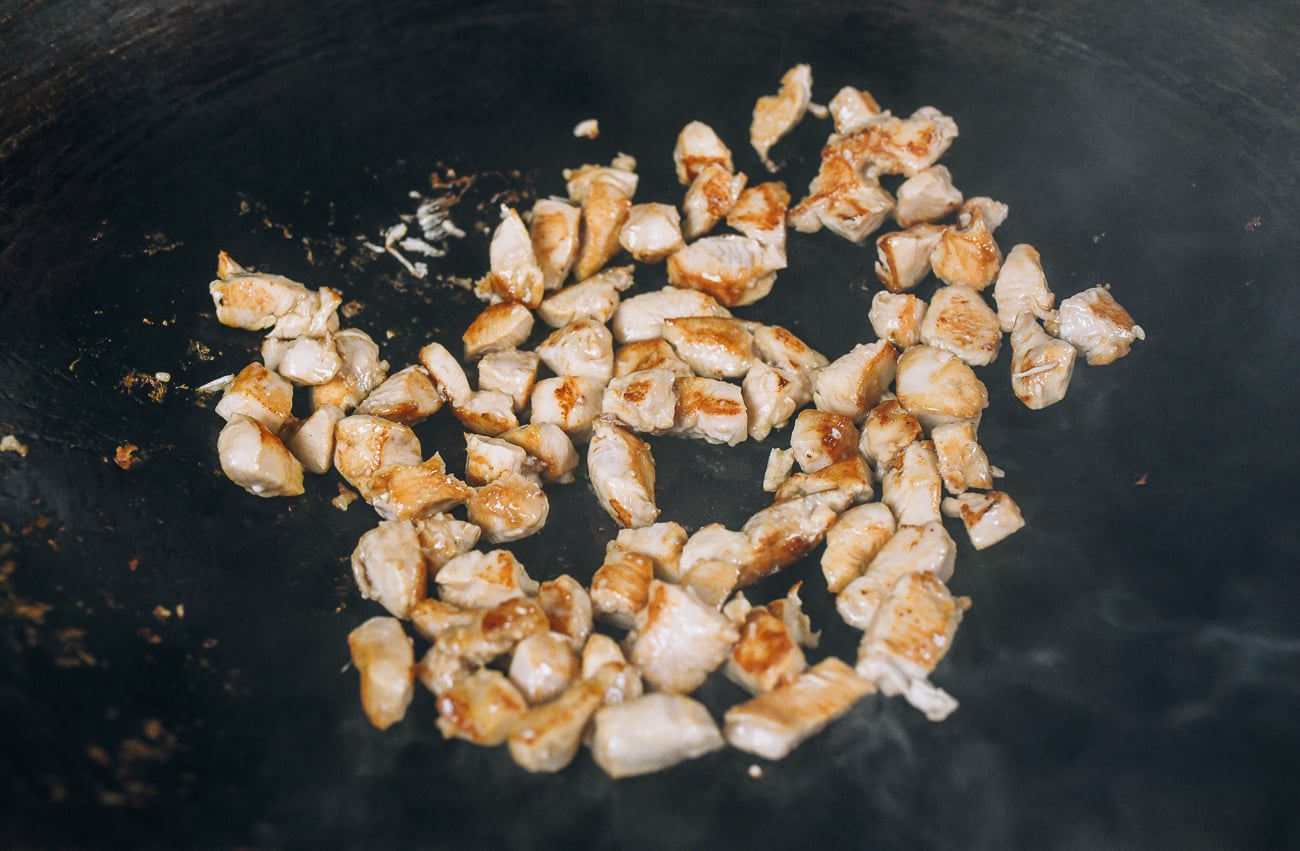
Heat your wok over medium-high heat until it’s just lightly smoking. Add 2 tablespoons of oil and swirl it around to coat. Add the chicken in one layer and sear for 30-60 seconds. Flip the chicken with your wok spatula. It should be nice and brown. Let it sear for another 30-60 seconds, then stir-fry until there are no more visible raw spots. It should be about 80% cooked. Transfer the chicken back to the marinating bowl and reduce the heat to low.
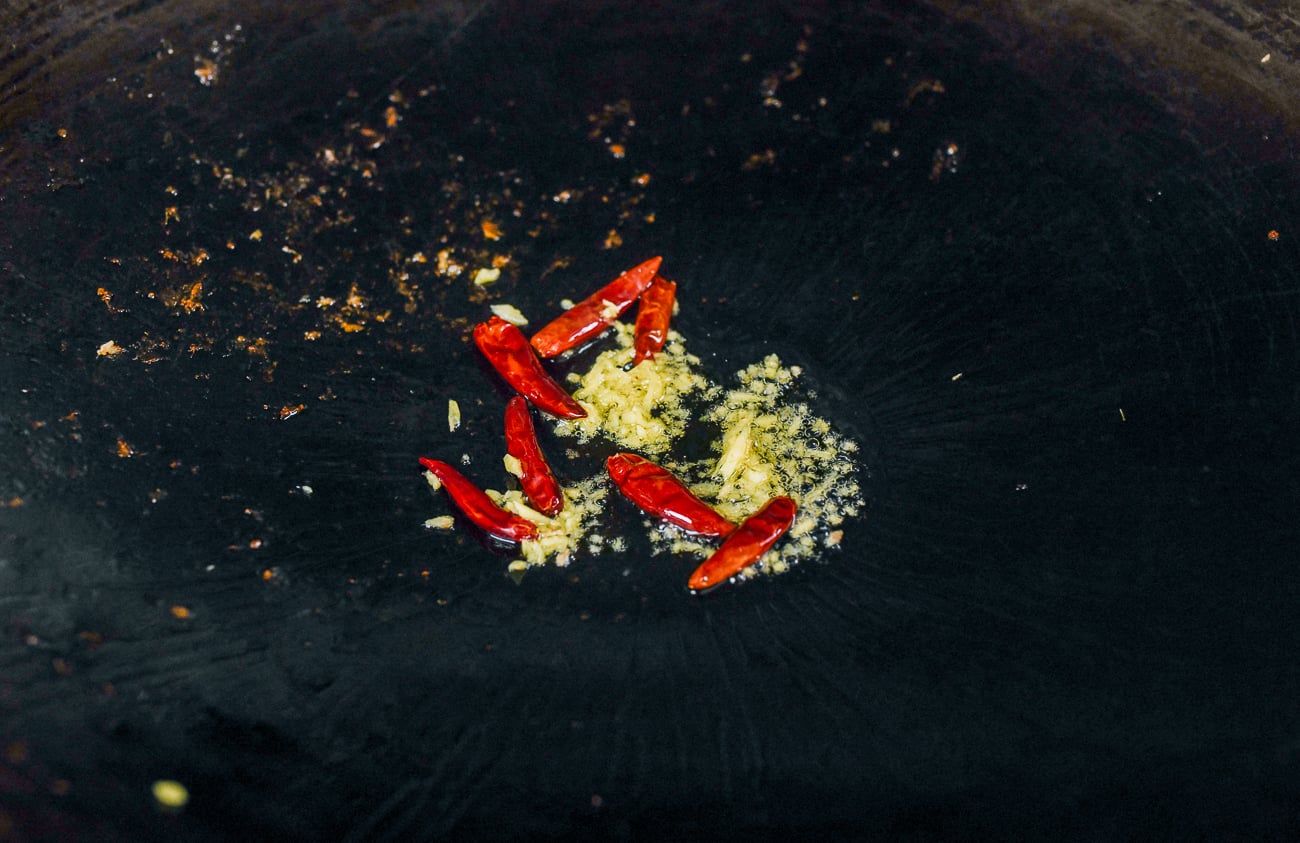
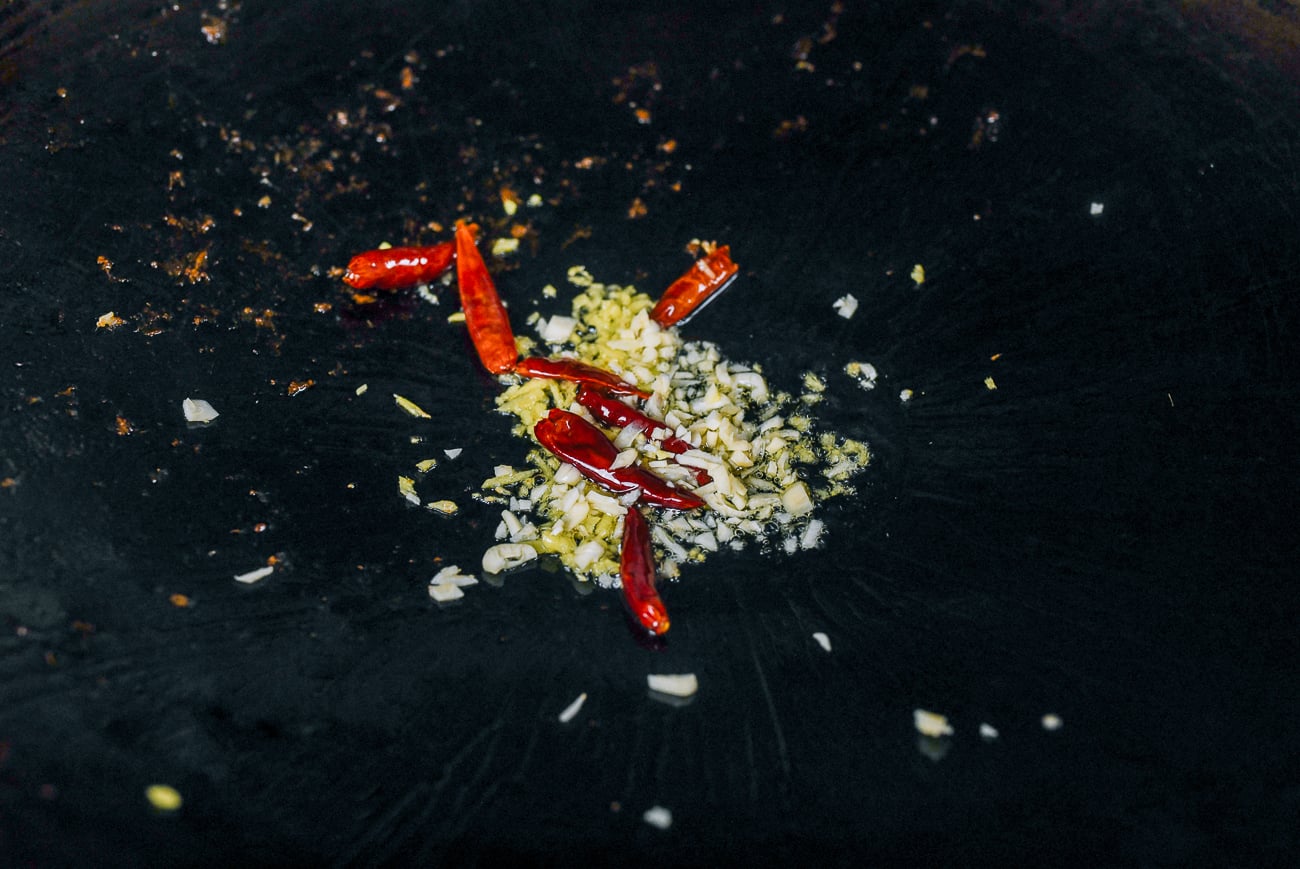
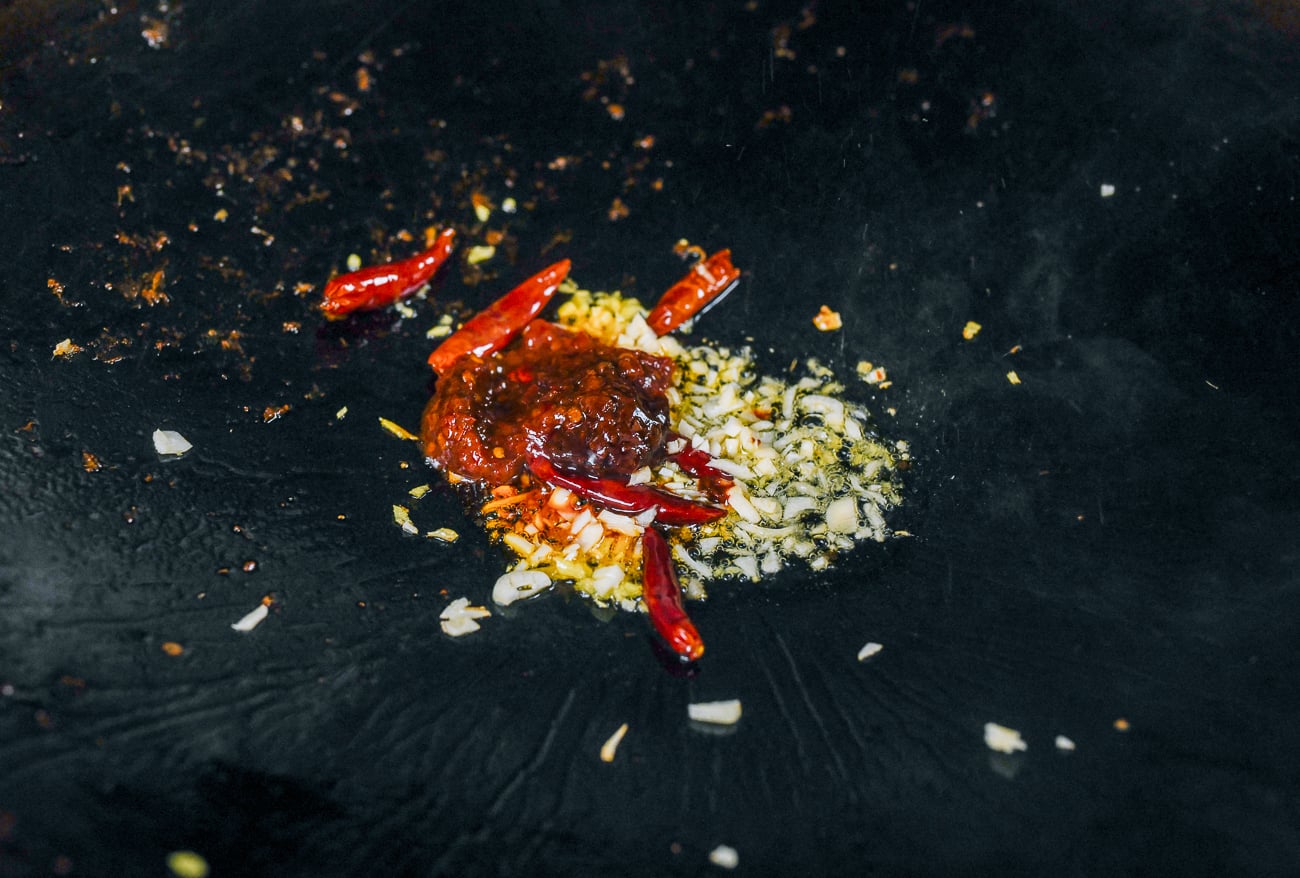
Add the remaining 1½ tablespoons of oil, the dried chili peppers, and ginger. If using whole Sichuan peppercorns instead of powder, add them now. Stir for 10-20 seconds to infuse the oil. Add half the chopped garlic, and cook for 10 seconds or so. Stir in the spicy bean paste and chili garlic sauce until the oil turns bright red, 10-20 seconds. Keep the heat low so the aromatics don’t burn.
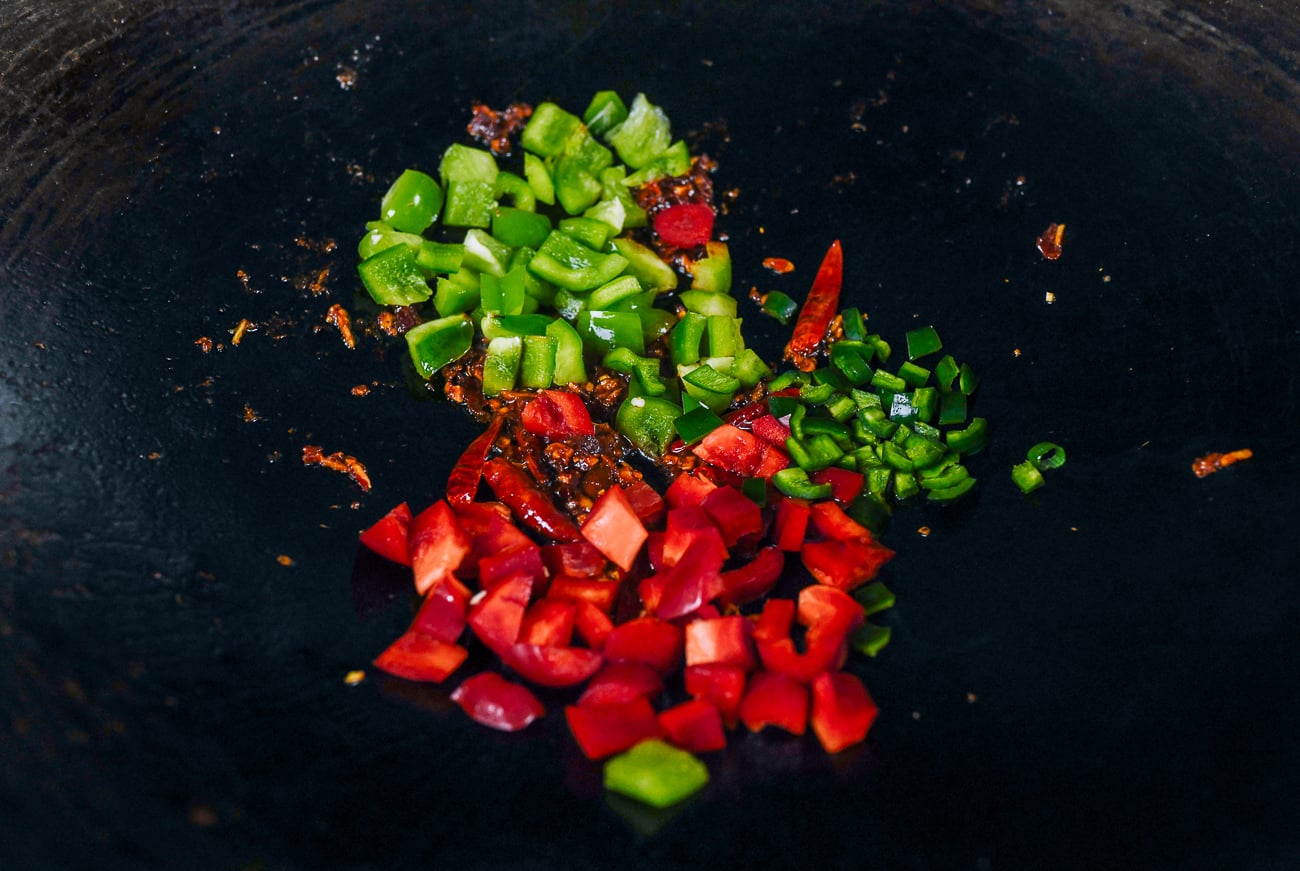
Add the bell peppers and jalapeno (if using). Increase the heat to high and stir fry everything for about 20 seconds. Add the chicken along with any juices from the bowl, the Sichuan peppercorn powder/oil (unless you already added whole peppercorns), and the sugar. Give everything a quick stir. Add the Shaoxing wine around the perimeter of the wok to deglaze it.
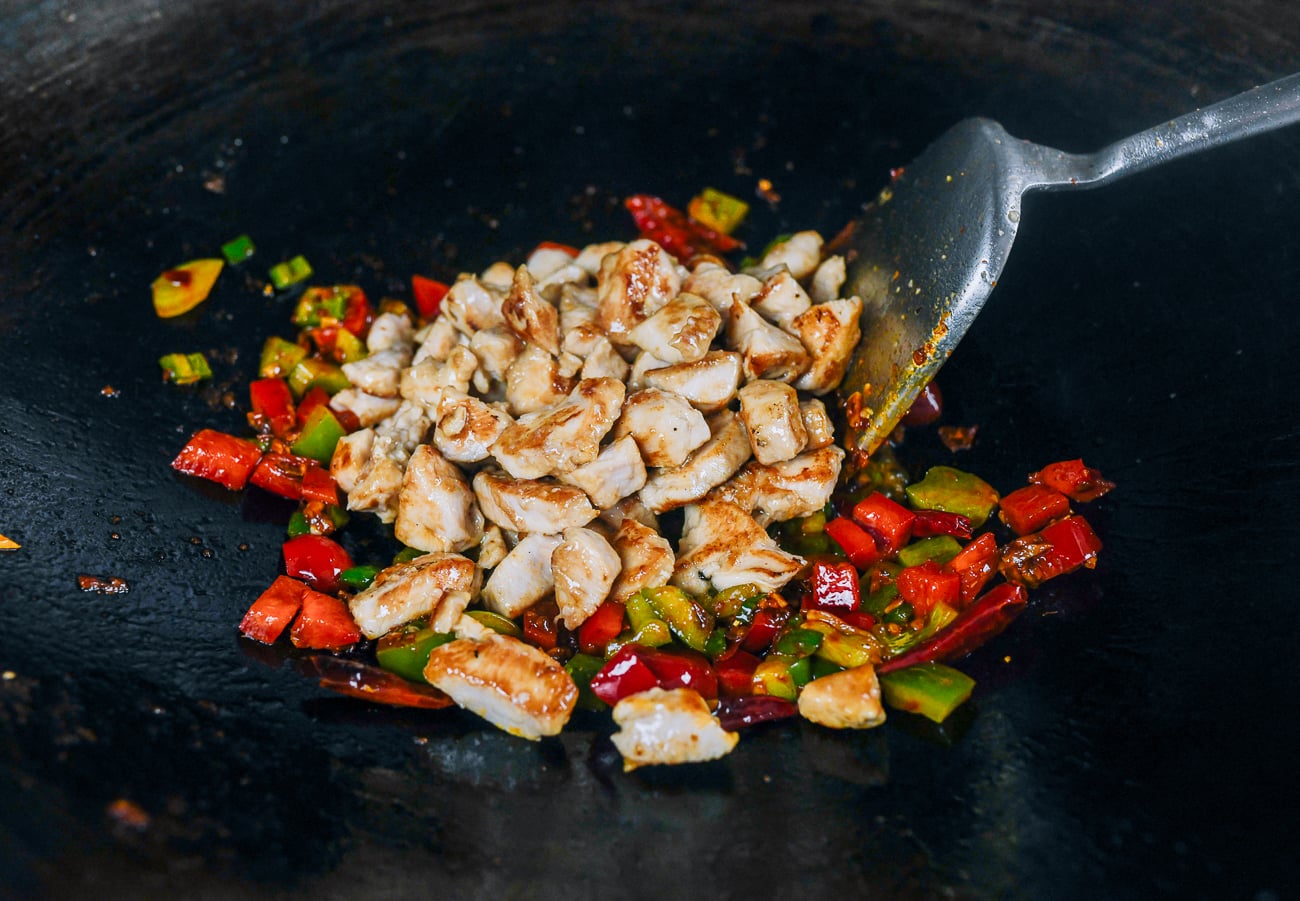
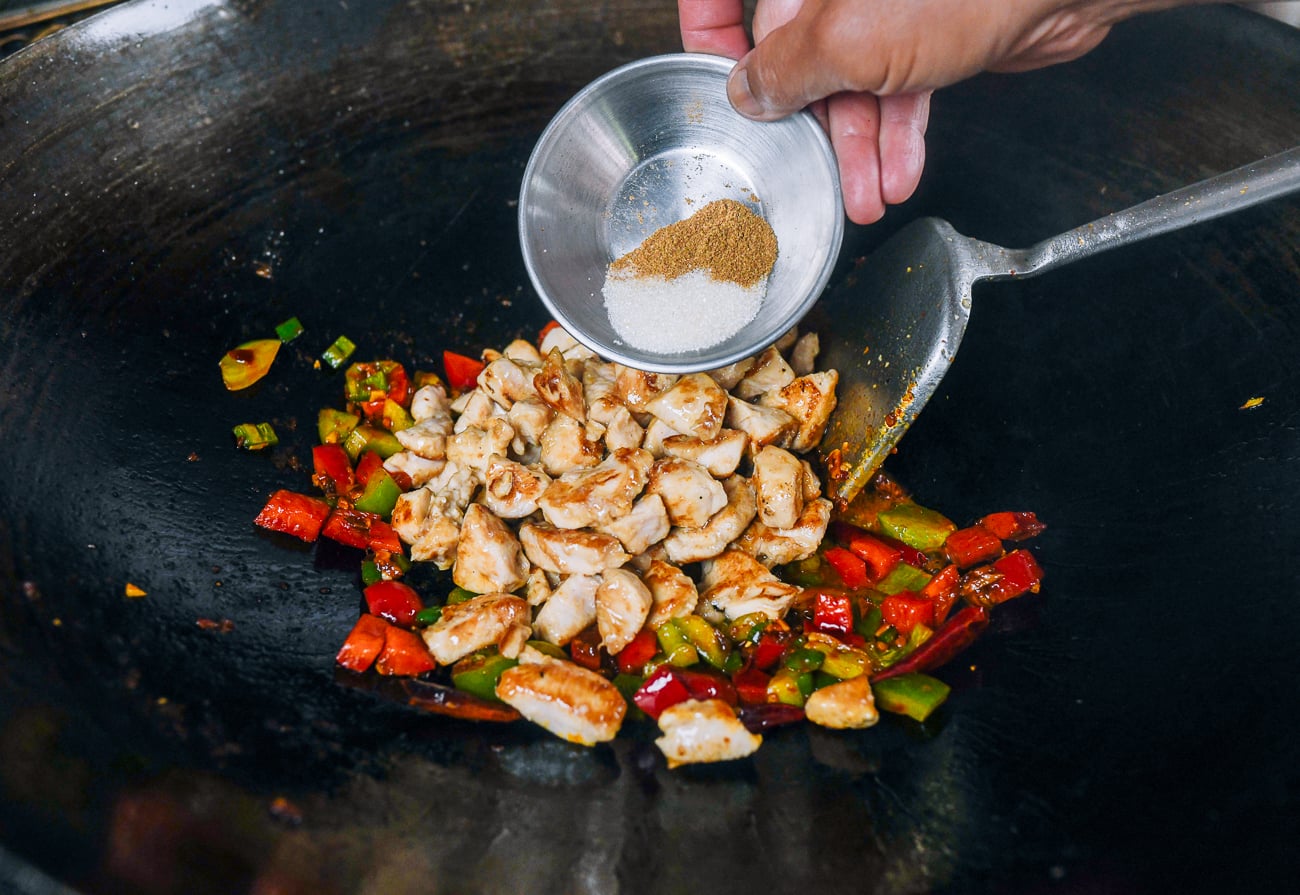
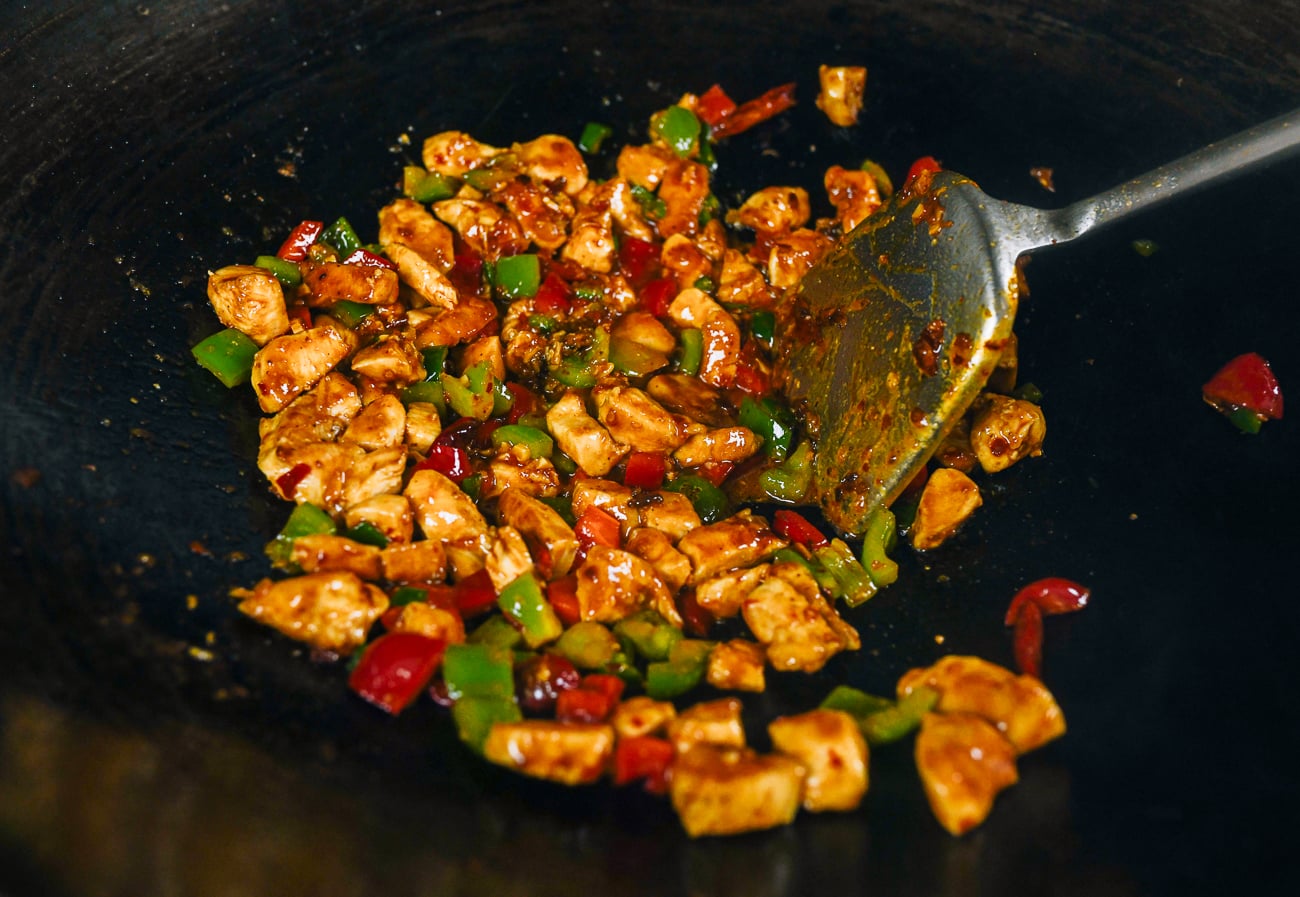
Stir everything together, pushing the ingredients along the sides of the wok to get some good wok hei. Finally, add the remaining garlic and scallion, and stir-fry for another 30 seconds.
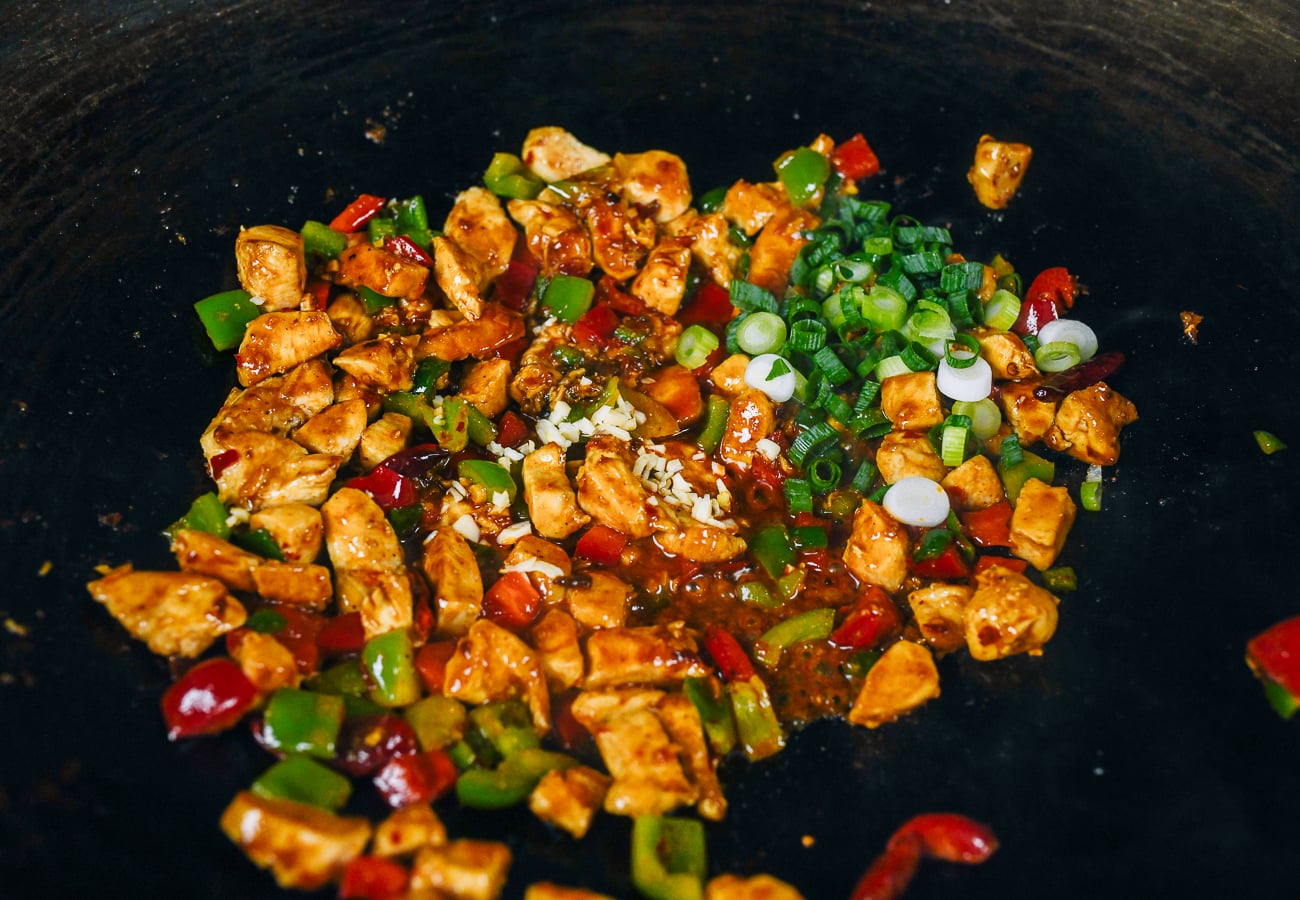
Transfer everything to a plate and serve with plenty of rice!
Looking for more authentic recipes? Subscribe to our email list and be sure to follow us on Pinterest, Facebook, Instagram, and Youtube!
Recipe
Szechuan Chicken
Ingredients
For velveting the chicken:
- 1 pound boneless chicken thighs (or chicken breast)
- 1 tablespoon water
- 2 teaspoons cornstarch
- 2 teaspoons soy sauce
- 2 teaspoons oil
For the rest of the dish:
- 3½ tablespoons neutral oil (divided)
- 7 whole dried chili peppers (optional; break a few of them open to increase the spice level)
- 2 teaspoons minced ginger
- ½ teaspoon Sichuan peppercorn powder (or 1 teaspoon Sichuan peppercorn oil / 1 teaspoon whole Sichuan peppercorns)
- 1 tablespoon chopped garlic (about 3 cloves, divided)
- 2½ teaspoons spicy bean paste (辣豆瓣酱 – là dòubàn jiàng)
- 1 teaspoon chili garlic sauce (can substitute sambal oelek, Sriracha, chili oil, or chili crisp)
- ½ cup red bell peppers (cut into 1-inch/2.5cm pieces)
- ½ cup green bell peppers (cut into 1-inch/2.5cm pieces)
- 1 jalapeno pepper (optional to increase spice level; chopped)
- 1 teaspoon sugar
- 1 tablespoon Shaoxing wine
- 1 scallion (chopped)
Instructions
- Cut the chicken into small bite-size pieces, about 1-inch/2.5cm chunks. Add the chicken to a bowl with the water, cornstarch, soy sauce, and oil.
- Heat your wok over medium-high heat until it’s just lightly smoking. Add 2 tablespoons of oil and swirl it around to coat. Add the chicken in one layer and sear for 30-60 seconds. Flip the chicken with your wok spatula. It should be nicely browned. Let it sear for another 30-60 seconds, then stir-fry until there are no more visible raw spots. It should be about 80% cooked through. Transfer the chicken back to the marinating bowl and reduce the heat to low.
- Add the remaining 1½ tablespoons of oil, the dried chili peppers, and ginger. If using whole Sichuan peppercorns instead of powder, add them now. Stir for 10-20 seconds to infuse the oil. Add half the chopped garlic, and cook for 10 seconds or so. Stir in the spicy bean paste and chili garlic sauce until the oil turns bright red, 10-20 seconds. Keep the heat low so the aromatics don’t burn.
- Add the bell peppers and jalapeno (if using). Increase the heat to high and stir fry everything for about 20 seconds. Add the chicken along with any juices from the bowl, the Sichuan peppercorn powder/oil (unless you already added whole peppercorns), and the sugar. Give everything a quick stir. Add the Shaoxing wine around the perimeter of the wok to deglaze it.
- Stir everything together, pushing the ingredients along the sides of the wok to get some good wok hei. Finally, add the remaining garlic and scallion, and stir-fry for another 30 seconds. Transfer everything to a plate and serve with plenty of rice!