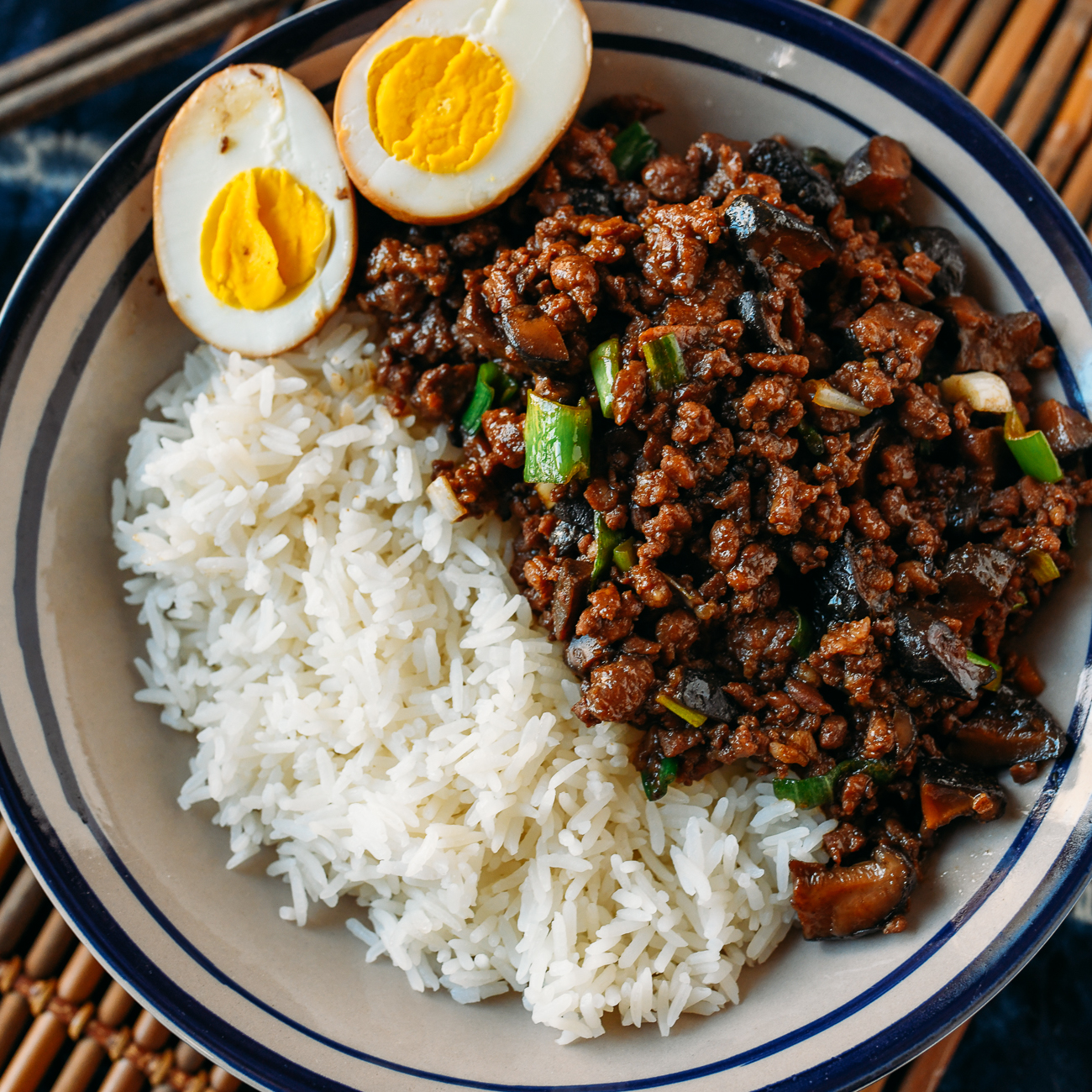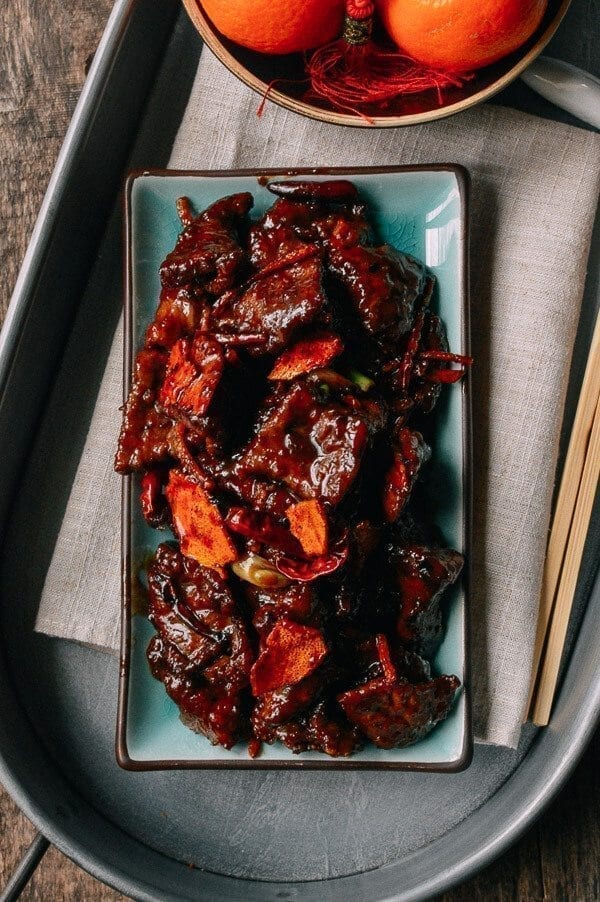
Tangerine beef is a dish with big flavors. By now, you’ve probably seen it in many Chinese restaurants, with different variations, but the tangerine beef I tried for the first time will be the basis of the recipe I am sharing with you today.
It was never a regular in my family’s daily rotation, as we generally ate Cantonese and Hong Kong-style cooking. So my first experience with Tangerine Beef started at the Chinese restaurant my parents and my aunt and uncle started in New Jersey over 30 years ago! A guest requested tangerine beef by the Chinese name (pronounced “chun pi niu” in Mandarin), even though it wasn’t on the menu.
I had heard of the name, but had no idea what it looked or tasted like. When I went into the kitchen to request it, my uncle smiled and said he could make this chun pi niu specialty dish for our guest. It took a while to prepare, but the guest was delighted when he tasted it. I was quite delighted myself after I nicked a small piece of beef before bringing it out–I mean, I had to make sure it was okay, right?
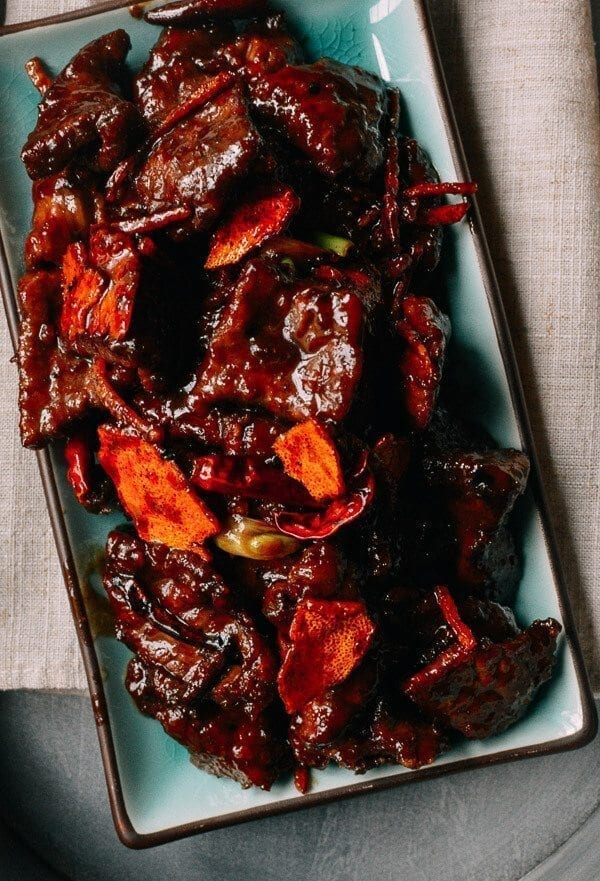
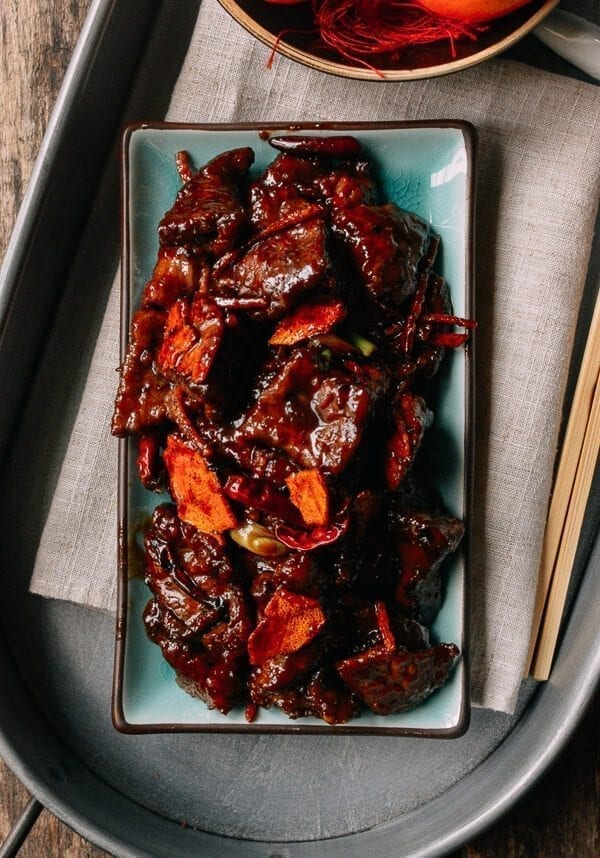
The Tangerine beef dish has a deep, rich color and the overall taste was savory and sweet. The beef was deliciously chewy from being fried (similar to our Mongolian Beef recipe), and of course, the subtly bitter, yet bright tangerine flavors were definitely the highlight! The key to a good plate of tangerine beef is the aromatic dried tangerine peels, as well as the candied slivers of tangerine peel that you should have with every bite of beef.
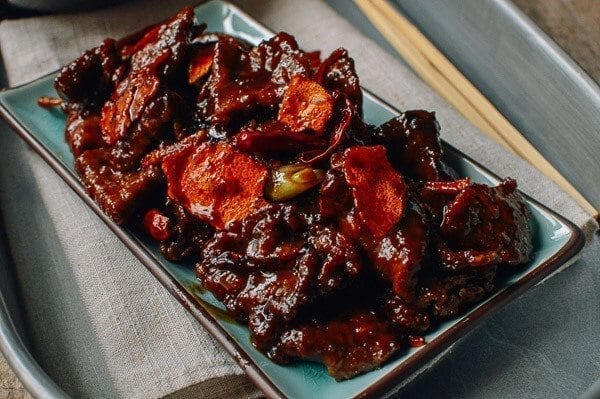
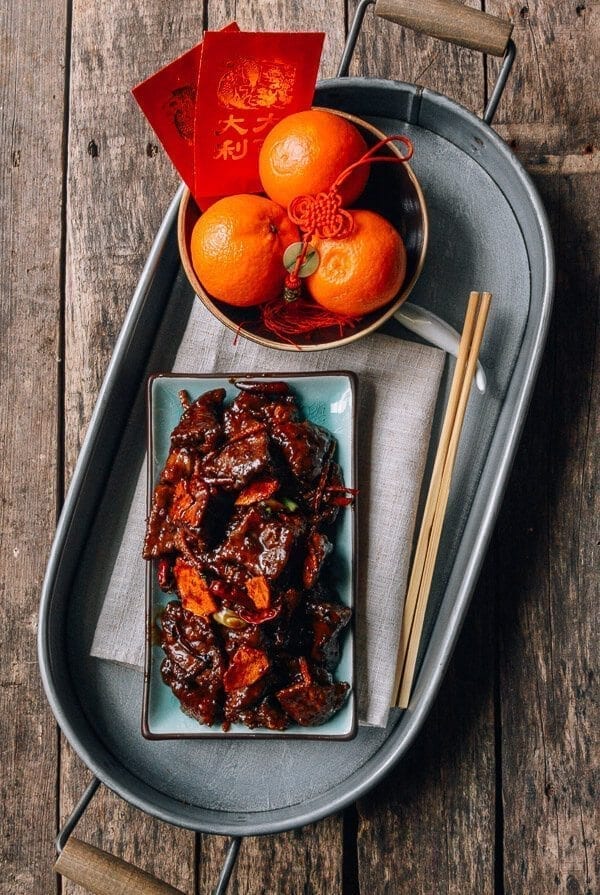
Tangerines symbolize auspiciousness, as the word for “orange” sounds like the word for success in Chinese, and the word for “tangerine” sounds like the word for luck. That’s why you will see oranges, tangerines and citrus everywhere during Chinese New Year. If you didn’t know already, phonetics and language are a huge factor when it comes to Chinese superstitions and traditions. This year, we add this dish to our growing collection of Chinese New Year recipes.
Hope you enjoy this one and have a happy, healthy, and prosperous New Year!
You’ll need:
- 1 pound flank steak, thinly sliced against the grain
- 2 teaspoons vegetable oil, divided
- 1 tablespoon, plus 1/4 cup cornstarch
- 2 fresh tangerines or mandarin oranges
- 1 tablespoon sugar
- 1 tablespoon hot water
- 1/3 cup vegetable oil, for frying the beef
- 1/2 teaspoon minced ginger
- 1 small pod from a whole star anise (if need be, substitute with a pinch of five spice powder)
- 5 pieces dried tangerine or mandarin orange peels
- 5 dried red chili peppers (optional)
- 1 clove garlic, chopped
- 3 tablespoons light soy sauce
- 1 1/2 tablespoons brown sugar
- 1 teaspoon cornstarch, mixed with 1 tablespoon water (cornstarch slurry)
- 2 scallions, cut into 1-inch slices on the diagonal

Marinate the beef for 1 hour in 1 teaspoon oil and 1 tablespoon of cornstarch and set aside. Lightly scrub the tangerines with a vegetable brush under running water to remove wax and/or pesticides and towel dry. Peel the tangerines (reserving the peels) and squeeze 1/3 cup juice from the fruit.
Scrape as much of the white pith from the peels as you can, until you see just the skin ( I used a serrated steak knife), and julienne the peels into thin slivers. Set aside along with the juice. Then make a simple syrup by dissolving 1 tablespoon of sugar into 1 tablespoon of hot water.
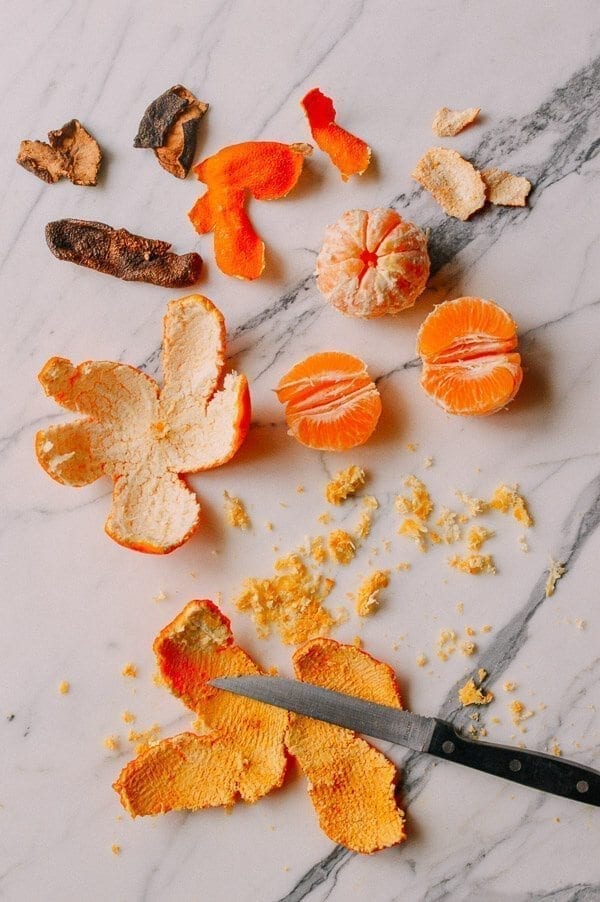
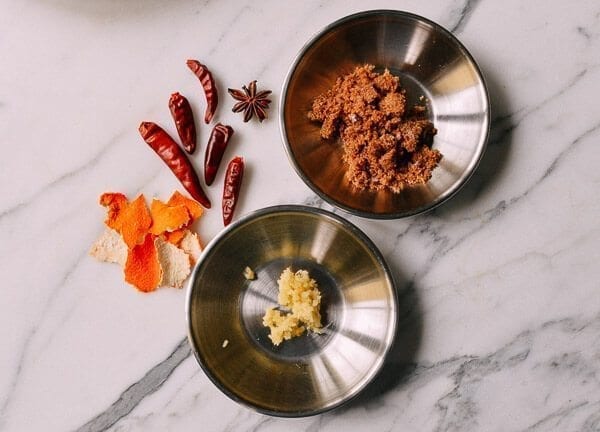
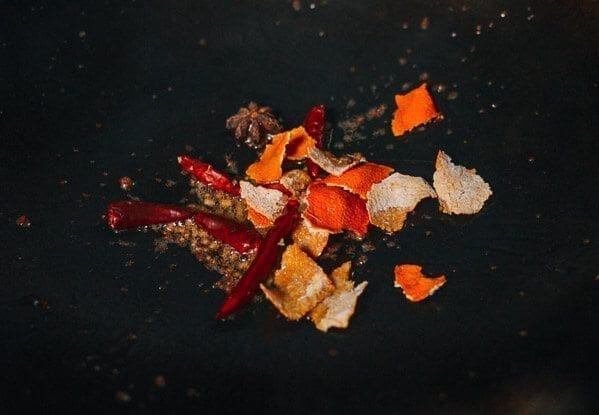
In the picture above on the top left are store-bought tangerine or mandarin orange peels that have darkened over time. If you cannot find the store bought peels, you can dry your own, which is what I did for the brighter colored peels just to the right of the store-bought darker ones. These peels were left to dry for about 4 weeks and can be stored in a glass jar or zip lock bags after they have been dried. They will keep until the next season (about a year) when you can dry more. Be sure to scrape away the pith like I did at the bottom even when drying peels for the longer term.
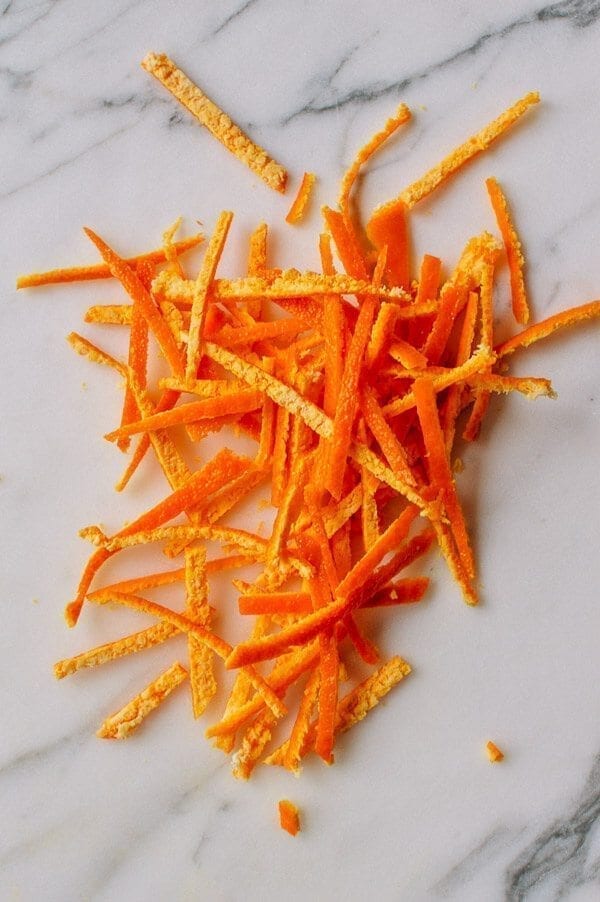
Heat a saucepan or wok over low heat and add 1 teaspoon of oil and the tangerine peel slivers.
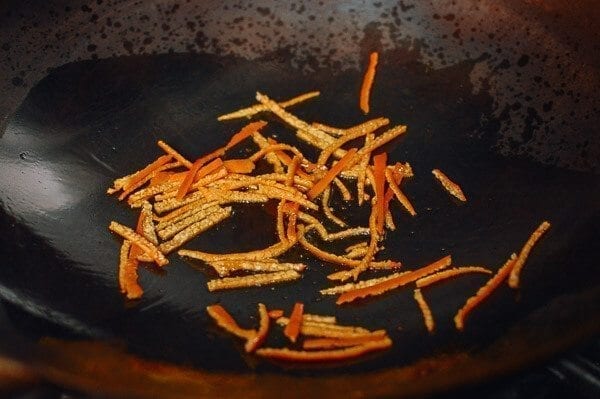
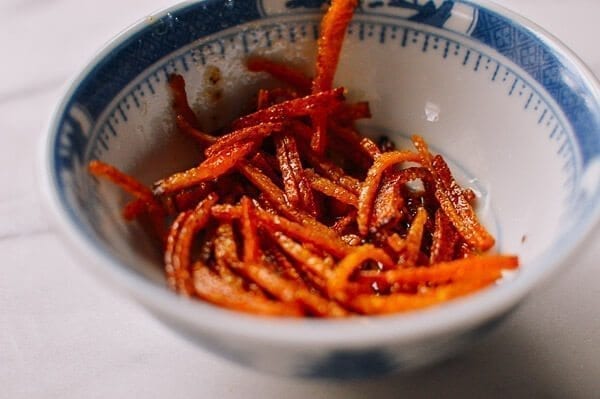
Lightly toast the peels by tossing in the oil for about 30 seconds, and add the simple syrup. Continuing stirring the peels until the simple syrup evaporates and clings to the peels. Transfer the candied peels to a bowl along with any infused oil, and set aside.
Dredge the pieces of meat individually in the remaining ¼ cup of cornstarch until lightly coated, and heat 1/3 cup oil in a clean wok over high heat. Just before the oil starts to smoke, spread the flank steak pieces evenly in the wok, and let sear for 1 minute.
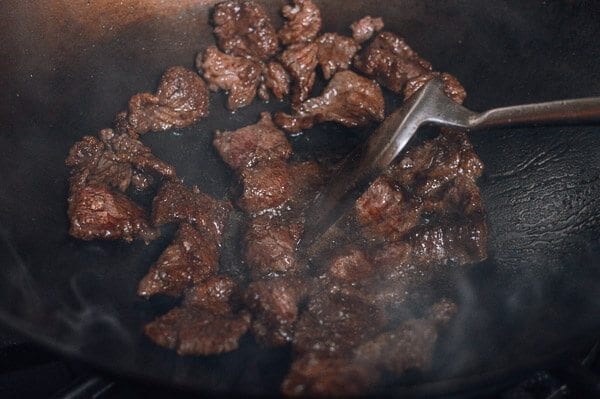
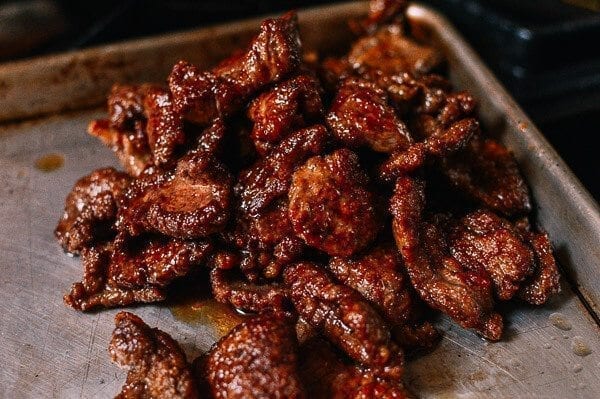
Flip the steak over and let the other side sear for another 30 seconds. Transfer to a sheet pan, and tilt it slightly to let the oil drain to one side (lean it on a cookbook or cutting board). The beef should be seared with a nice crusty coating.
Drain the oil from the wok, leaving about 1 tablespoon behind, and turn the heat to medium-high. Add the ginger, star anise or five spice powder, dried tangerine peels and dried chili peppers, if using. (We have a whole star anise pictured in our photos, but the recipe calls for only one pod (8 pods make up a whole star anise). After tasting the finished product, we felt that a whole star anise may have been too overwhelming for the dish.)
After about 15 seconds, add the garlic. Stir for another 10 seconds, and add the soy sauce, tangerine juice and brown sugar. Bring the sauce to a simmer, stirring occasionally.
Let the sauce simmer for about 2 minutes and slowly stir in the cornstarch and water slurry mixture–until the sauce coats the back of a spoon. Add the beef, candied tangerine slivers with the infused oil, and the scallions. Toss everything for another 30 seconds until all of the beef is well-coated.
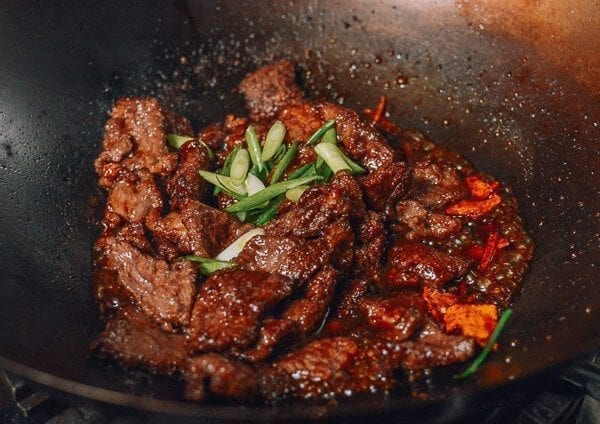
There should be almost no liquid, as the sauce should be clinging to the beef. If you still have too much sauce, increase the heat slightly and stir-fry until thickened. If the sauce is too thick, add a little bit of hot water to thin it out.
Serve hot, and remind your dining companions that the tangerine peels eaten with the beef really make this dish!
- 1 pound flank steak, thinly sliced against the grain
- 2 teaspoons oil, divided
- 1 tablespoon, plus ¼ cup cornstarch
- 2 fresh tangerines or mandarin oranges
- 1 tablespoon sugar
- 1 tablespoon hot water
- ⅓ cup vegetable oil, for frying the beef
- ½ teaspoon minced ginger
- 1 small pod from a whole star anise (if need be, substitute with a pinch of five spice powder)
- 5 pieces dried tangerine or mandarin orange peels
- 5 dried red chili peppers (optional)
- 1 clove garlic, chopped
- 3 tablespoons light soy sauce
- 1½ tablespoons brown sugar
- 1 teaspoon cornstarch, mixed with 1 tablespoon water (cornstarch slurry)
- 2 scallions, cut into 1-inch slices on the diagonal
- Marinate the beef for 1 hour in 1 teaspoon oil and 1 tablespoon of cornstarch and set aside. Lightly scrub the tangerines with a vegetable brush under running water to remove wax and/or pesticides and towel dry. Peel the tangerines (reserving the peels) and squeeze ⅓ cup juice from the fruit.
- Scrape as much of the white pith from the peels as you can, until you see just the skin, and julienne the peels into thin slivers. Set aside along with the juice. Then make a simple syrup by dissolving 1 tablespoon of sugar into 1 tablespoon of hot water.
- Heat a saucepan or wok over low heat and add 1 teaspoon of oil and the tangerine peel slivers. Lightly toast the peels by tossing in the oil for about 30 seconds, and add the simple syrup. Continuing stirring the peels until the simple syrup evaporates and clings to the peels. Transfer the candied peels to a bowl along with any infused oil, and set aside.
- Dredge the pieces of meat individually in the remaining ¼ cup of cornstarch until lightly coated, and heat ⅓ cup oil in a clean wok over high heat. Just before the oil starts to smoke, spread the flank steak pieces evenly in the wok, and let sear for 1 minute. Flip the steak over and let the other side sear for another 30 seconds. Transfer to a sheet pan, and tilt it slightly to let the oil drain to one side (lean it on a cookbook or cutting board). The beef should be seared with a nice crusty coating.
- Drain the oil from the wok, leaving about 1 tablespoon behind, and turn the heat to medium-high. Add the ginger, star anise or five spice powder, dried tangerine peels and dried chili peppers, if using. (We have a whole star anise pictured in our photos, but the recipe calls for only one pod. After tasting the finished product, we felt that a whole star anise may have been too overwhelming for the dish.)
- After about 15 seconds, add the garlic. Stir for another 10 seconds, and add the soy sauce, tangerine juice and brown sugar. Bring the sauce to a simmer, stirring occasionally.
- Let the sauce simmer for about 2 minutes and slowly stir in the cornstarch slurry mixture–until the sauce coats the back of a spoon. Add the beef, candied tangerine slivers with the infused oil, and the scallions. Toss everything for another 30 seconds until all of the beef is well-coated.
- There should be almost no liquid, as the sauce should be clinging to the beef. If you still have too much sauce, increase the heat slightly and stir-fry until thickened. If the sauce is too thick, add a little bit of hot water to thin it out.


Jim Watts says
This recipe looks fantastic. I’d like to try it, but can’t find dried tangerine peels anywhere. Are they an absolute must?
Judy says
Hi Jim, dried tangerine peels are necessary for this dish. You should try our Mongolian Beef, you will love it.
Jim Watts says
I’ll check it out. Thanks for the quick response.
Donovan's Dad says
I have made several of the recipes from thewoksoflife.com and I am usually quite pleased. I have not made this recipe yet, but am chomping at the bit to try it! After reading the comments of 2-20-2018 from maripaz, I’m also confused about how much mandarin peel (as that is what I will be using) to use; but, I am sure that personal taste has something to do with how much or little to use. However, with that said, using both the candied AND the dried peel seems like a lot to me. Also, it would seem that the “slivers” of candied peel will blend (disperse?) evenly throughout the finished recipe and be very easy to eat; but that would not seem to be the case with the large pieces of dried peel. If both are used, and I can certainly fathom doing that, are the larger pieces of peel removed and not eaten? The recipe does not say. BTW, in theory (because I have not used citrus peel in a recipe), I would think that scraping the pith from the peel, as you suggest, would produce a more palatable or mellow flavor than not removing the bitter pith. Maybe that is the issue with the experience maripaz had. I anxiously look forward to your reply.
I will rate the recipe after trying it.
Bill says
Personal preference is indeed a factor on how much dried and fresh peel to use. The authentic version of this recipe uses the dried peel from a special variety of citrus tree from China that produces a signature taste. It is softened after cooking and does have a bitter note – the pith is left on during harvest. I like scraping the pith from the tangerine peel to minimize bitterness. Hope these points help!
Leanne Noble says
Do you do an Authentic recipe for Scheuan Beef. The Mandarin Taste restuarant in Diamond Bar makes a great Scheuan Beef but I can’t seem to duplicate the recipe. Going to take a look at your Tangerine Beef now.
Thanks.
Bill says
Hi Leanne, Szechuan beef has many variations, but generally it is made with strips of beef, carrot, and celery with a slightly sweet and spicy flavor. We’ll put it on our list!
maripaz says
Lol, another great hit. I halved the recipe and followed it pretty closely. We found the peels from a whole tangerine to be too much. Next time I will make the candied peels but eyeball how many to put in. I also really appreciated the picture of what the candied peels were supposed to look like. “Cooking until the syrup sticks to the peels” didn’t make much sense to me, and I ended up cooking it for quite some time before I got that darker, translucent color. I also had to add some more sugar and water periodically. Method of cooking beef was great though and yielded a soft but chewy texture.
Bill says
Hi Maripaz, glad you liked the recipe! What I meant was to reduce the syrup until the peels were glazed :)
Matthew says
We made a vegetarian version of this last weekend using seitan, which is fake meat made from wheat gluten. IT WAS AMAZING! The technique of coating it in corn starch made it so crispy, we’ll be using that in other seitan recipes as well. Thank you so much for your wonderful site, it’s taught us so much about chinese cooking, and it’s so well done.
Bill says
Hi Matthew, you’re welcome and thanks for sharing your vegetarian version with us!
Katie says
Does the 1 hour of prep just mean marinating? Or does it take 1 hour and 20 minutes to actively prepare this?
It looks delicious and seems to be quick!
Also, would clementines work instead of tangerine?
Bill says
Hi Katie, mostly because I specified 1 hour of marinating time. Active prep is probably around 20 minutes!
Katie says
Tonight I made this for the second time. Last week, I forgot the cornstarch slurry and it was still delicious. This time, I followed all directions except adding steamed carrot medallions at the end with the scallions. My family literally gave me a round of applause at the table! The cornstarch slurry really makes a difference! Thank you for a wonderful recipe and clear directions!
Bill says
Excellent to hear Katie! I would applaud you too if you made me tangerine beef for dinner :)
adriana says
hi,
thank you for this beautiful recipe. I was curious is chestnut flour ever used on orange beef? I saw a recipe that ¾ cup Pure water chestnut flour…. but I am not clear what this ingredient is.
any recommendations are greatly appreciated.
many many thanks,
adriana
Bill says
Hi Adriana, water chestnut flour was used in many fried dishes (for dredging) in the past, but it is difficult to get. So recipes changed to use more common ingredients like cornstarch and potato starch. I remember seeing it used in a restaurant for General Tso’s chicken. I have a bag in my pantry that I bought to try, so I will include it in our ingredients page once I have done some research and experimenting. :)
margie says
did not stick should read
Bill says
Hi Margie, I understand your comment now! If you did not add the cornstarch and water mixture to your sauce, then it was not thickened and would not cling to the beef. The next time you make it, add the cornstarch mixture, and the sauce will thicken nicely as you see in the photos. The sauce will cling nicely to––and become “one” with––the beef. Thanks again for your question and comment and happy cooking!
margie says
where does the corn starch slurry come from? Sorry having trouble following directions. Create sauce with soy, sugar etc and add cornstarch slurry From where?
Meat was delicious, thoroughly coated with corn starch, but sauce did not much
Bill says
Hi Margie, thanks for your question! The cornstarch slurry is the water and cornstarch mixture. I added the term to the ingredients list to be more clear.
Lance says
It took five try’s to get this dish right. It is one of my favorites at my favorite very good Chinese restaurant. My goal was to make it as well as they do on their best nights. Finally, I got it.
So here is my advice, based on the good and not great attempts I have made.
Use really good beef. Experiment using flank steak, but when you have it down, use a good rib eye steak, cutting the pieces a bit thicker.
The beef needs that coat of corn starch. And I was not using enough on my first efforts. I pour the corn starch onto a plate, and coat the beef. Also note that the beef really needs to be deep fried, so put a third of cup or more oil into the wok. Get it hot, it cooks quickly.
Instead of sugar or orange juice, I mix about three TBS of orange sweet marmalade with hot water. I use this to candy the orange peels, and use the remainder for the sauce.
Last night the results were superb. Thanks for sharing this one.
Lance says
Forgot to add: I cut my hot red peppers in half, and remove most of the seeds. That way, one can eat them without pain. They give all the flavor, without causing distress to those inexperienced eaters who pop a pepper into their mouth.
Bill says
Hi Lance, agree that the peppers are less spicy without the seeds :)
Bill says
Hi Lance, thanks for sharing your experience and your tips!
Lance says
I have found that using orange marmalade instead of juice and brown sugar works really well . One can skip the step of candying the pealings… they are there in the marmalade. You do something like that in your orange beef recipe. Getting the amount of marmalade to use adjusted is a matter of cook choice and taste. About 3 big tbs works for me. Well, this is one of my special favorites, so every time I do it is an experience of trial and refining.
Bill says
Hi Lance, I agree orange marmalade is a great substitute or addition, as it is readily available. I sometimes find that the orange peels in the marmalade can be somewhat bitter. I also wanted to elevate the quality of this tangerine beef over the regular Orange beef. Thanks again for sharing and keep up the great cooking!
TruBro says
I just wanted to say this dish is not in The Woks of Life collection of Beef Dishes.
Sarah says
Hey, I looked into this and it does appear to be there: https://thewoksoflife.com/category/recipes/beef-recipes/. Thanks!
Isabelle says
Just made this on a Monday night, and it was really great. We lived in Singapore for a few years, and now that we’re in France, we’re on our own when we crave Asian food. I’m super happy that I found your website, I will be trying a lot more (if I can find the ingredients somehow). Really looking forward to a 水煮魚 recipe! Thanks so much!
Bill says
Hi Isabelle, Awesome to hear you liked one of my favorites. Tangerine beef is really good! As for the Shuǐ zhǔ yú, Judy has been working on that one for some time so stay tuned. Meanwhile, I would suggest trying Judy’s Easy Fish Tofu Soup as the weather gets colder. It really hits the spot on a cold day!
James says
Honestly one of my favourite recipes at the moment! Made it a second time yesterday. I still can’t get the beef that wonderful deep colour you guys have — I feel like I’m not cooking the steak correctly. First time I tried in a wok and the oil just pooled at the bottom, making it hard to cook evenly — last night used a flatter saucepan but the “searing” didn’t really take. Any tips?
The candied peel is bloody inspired — thank you so much for this! :)
Bill says
Hi James, the high temperature of the oil (1/3 cup) in the wok sears the beef dredged in cornstarch to a dark rich color. The oil will definitely pool on the bottom, so it is best to use your wok spatula and tilt the wok or pan to spread the oil evenly over the wok surface. Start with heating the wok first for a minute and add the oil. Heat until it is nearly smoking before you add the beef. The beef should be at room temp so it does not cool the wok too fast. A hot wok or pan and then constant high heat is the key.
Agree that the candied tangerine peel really does make the dish!
Lance says
I have found that cooking the meat in batches, half at tIme, also helps…. keep the oil hot, get that crisp coating on the beef, but don’t overcook it. It is best if still a bit pink inside. It will cook more in final dish with sauce.
Lance says
I believe most restaurants do the beef quickly in a hot deep fryer.
Filofilo says
Although a little sweet for my pallet, I really liked this recipe; will cut back on the sugar next time. Crispy beef is fantastic.
Bill says
Hi Filofilo, glad you enjoyed it and yes, it’s always best to adjust to your own taste!
Little Cooking Tips says
Believe it or not, we never had used tangerine peels in our kitchen before, even in sweets. So this recipe and the combination with beef is a really fantastic way to try them. Thank you for the beautiful memories from the restaurant Bill, we always appreciate them.
Another great thing is, we already have ALL the ingredients needed, so we’ll be trying this over the weekend (cross your fingers we won’t mess it up) :) :)
Thank you guys!
Bill says
Hi Panos and Mirella, hope you enjoy this one!
Jana says
This was fantastic. The fresh peel made all the difference. I love your blog. Thanks so much.
Bill says
Hi Jana, Agree on the fresh peel and thanks for your kind comments!
firegirl says
This looks amazing! I like keeping dried tangerine peel handy as it is so handy in so many cuisines. And the Chinese supermarket is the cheapest place to get them I have found.
Bill says
Thanks firegirl!
Chip says
OK, now I see, it uses both dried peels and the fresh peels…sorry for not reading more carefully the first time around.
Bill says
:) I added the clarification from your first comment so thank you and hope you enjoy this one!
Chip says
Also on the tangerine, in the recipe it refers to “dried tangerine peels”. What is meant by that….should the tangerines be purchased ahead of time and allowed to dry out for a few days?
Thanks..looks fantastic!
Bill says
Hi Chip, The recipe calls for fresh and dried tangerine peels and I have now added some clarification to the post. Dry your tangerine peels while the citrus season (at least here in the US) is at its height!
Kathleen | Hapa Nom Nom says
Oh my, look at the gorgeous lacquer on that beef! I may just have to skip the eating utensils and go full-on sticky fingers with this dish! Such a fan :)
Bill says
Thanks Kathleen! :)
Sonja says
Hello Bill
Another delicious looking receipe.
I just saw this receipe and definately want to try it out. But I have one question about the tangerine peel. With “5 pieces of tangerine peel” do you mean the peels of 5 tangerines (because in your receipe only 2 tangerine are being used)?
Thank you to you and family for sharing all these great tasting receipes.
Bill says
Hi Sonja! The 5 pieces of tangerine peel are 5 small pieces of dried peels that can be store-bought or dried for a few weeks. They are shown in the upper left hand corner of the picture of the dismantled tangerines. Feel free to adjust the amounts you use depending upon your own tastes. Thanks for your kind comments and you are quite welcome. We are more than happy to share our love of food!