When fall and winter roll around, one big treat tends to pop into our minds—Chinese hot pot. It’s a warm, comforting, and social meal to have with a close-knit group of family or friends. Plus, because all the food gets cooked at the table, it’s an easy meal to boot.
Hot pot is also a great at-home dining “event.” It’s a welcome break from routine, and a delicious one! We’ve eaten many different styles of hot pot in our days living in China, and hosted many a hot pot dinner party. In this post, we’ll talk about how to make hot pot at home like a pro.
What Is Chinese Hot Pot?
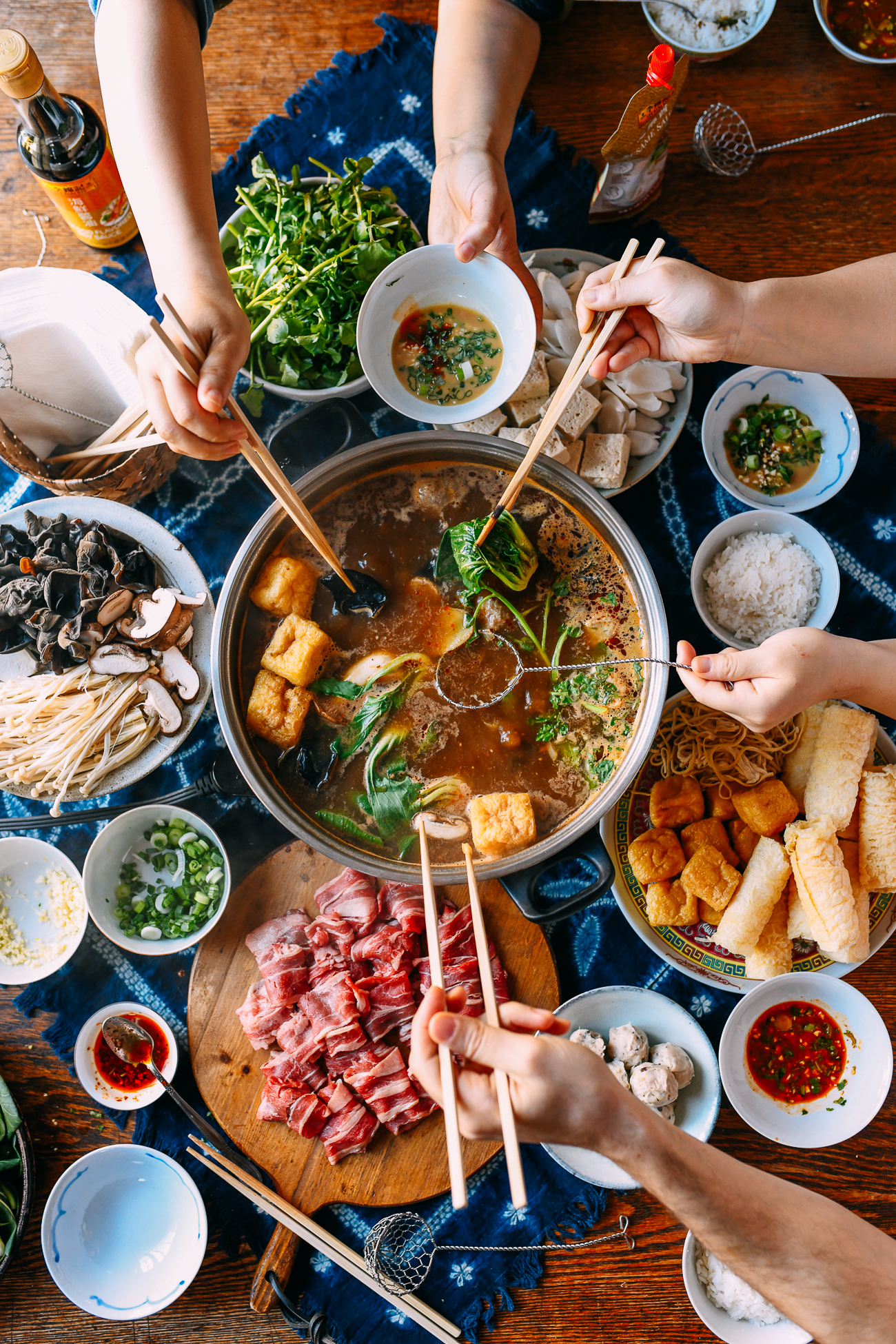
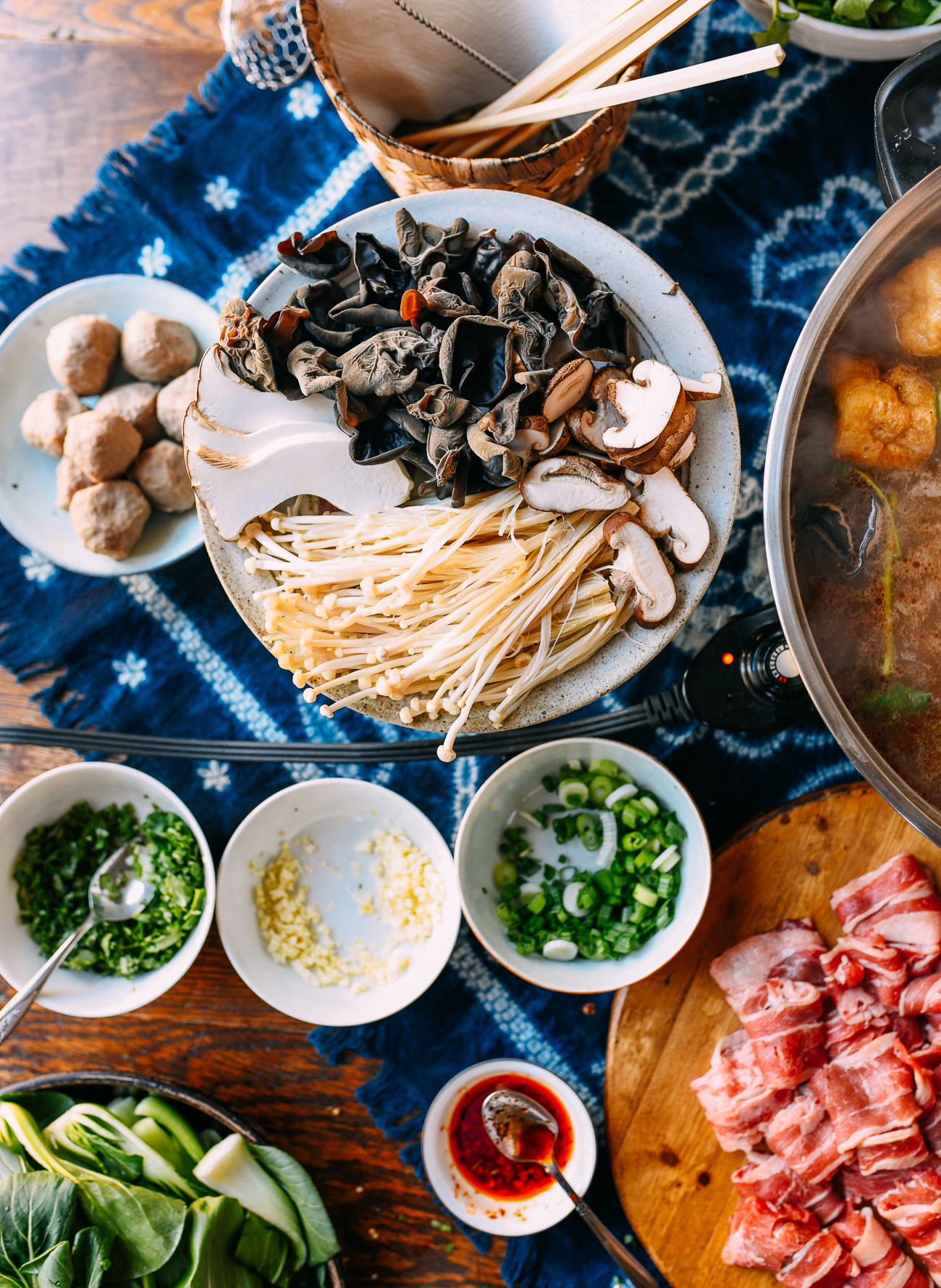
There are many types of hot pot across China, but at its most basic, Chinese Hot Pot is an interactive meal in which diners sit around a simmering pot of soup at the center of the table with various raw ingredients—meat, seafood, vegetables, tofu, and starches—in thin slices or small pieces for quick cooking.
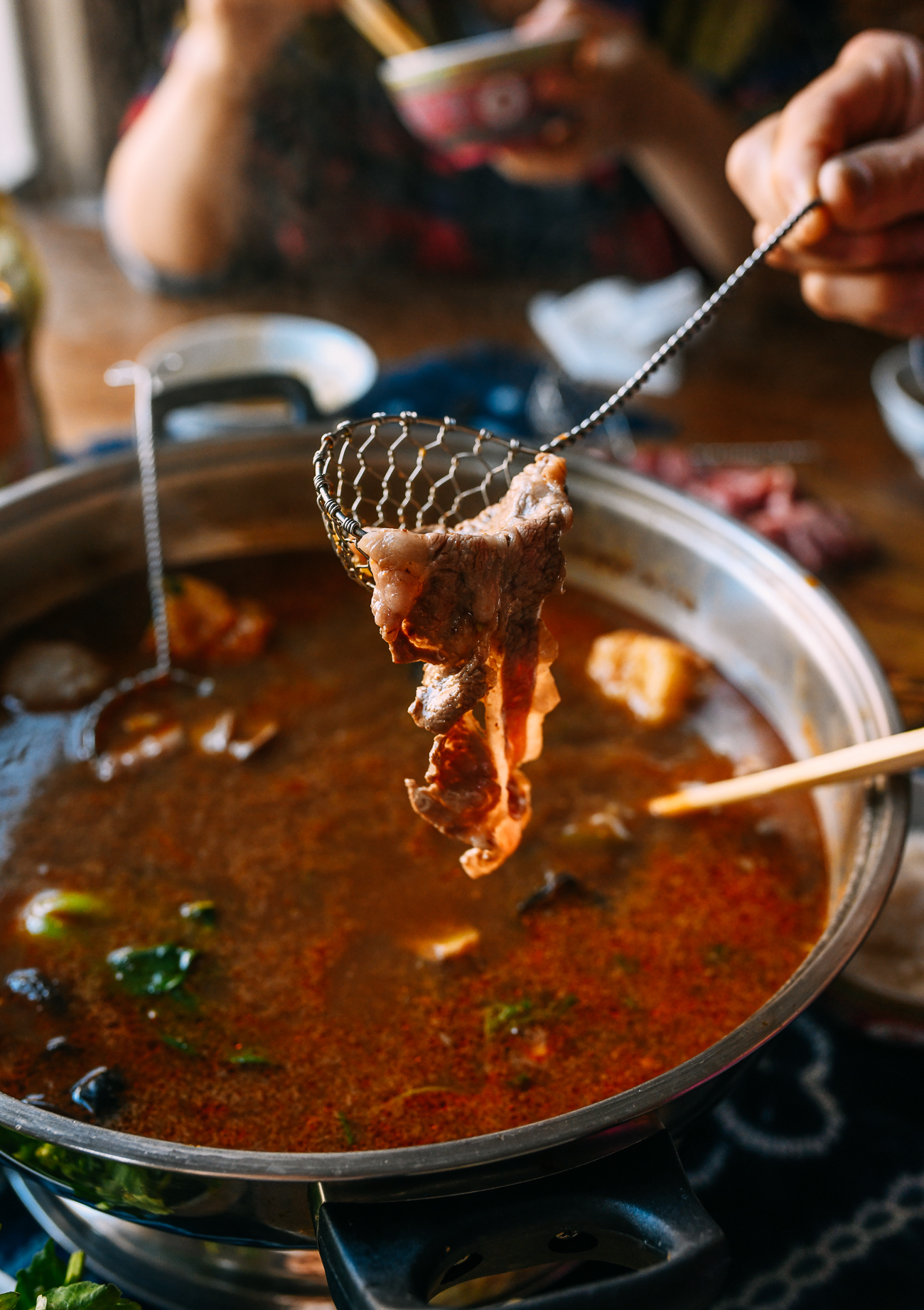
Diners can add whatever they like to the boiling liquid. They can then retrieve cooked food items from the pot with wire ladles, and flavor them with individual dipping sauces.
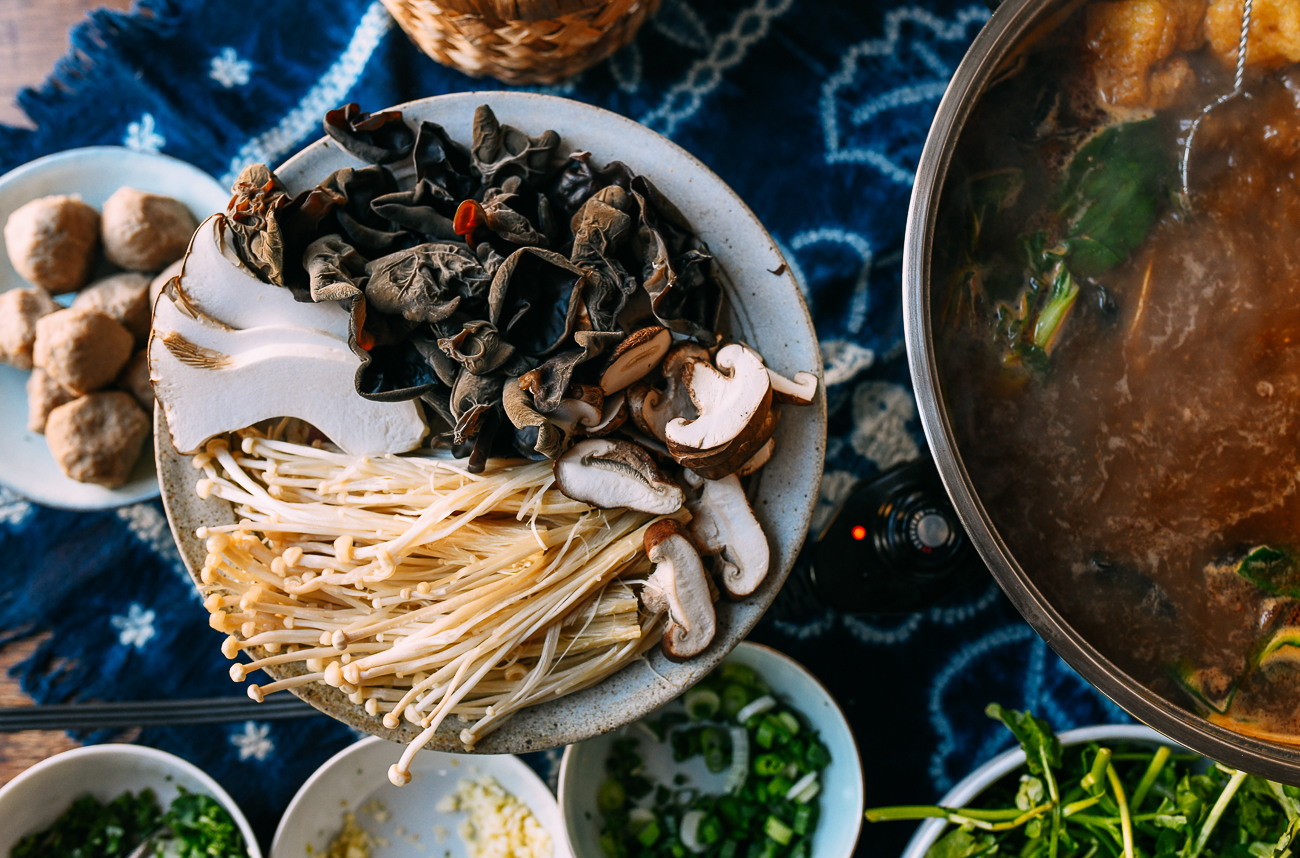
Hot pot can be a deeply personalized meal! Each individual can mix their own dipping sauce, and choose exactly what they want to eat.
If that sounds right up your alley (how could it not be?!), keep reading!
How They Do Hot Pot In China
In China, hot pot is a cold weather staple. Hot pot restaurants range from casual to upscale. Some offer individual small pots with rotating conveyor belts of ingredients, similar to conveyor belt sushi restaurants. Others focus on the more traditional communal dining experience.
Many offer specialized regional hot pot experiences. There are restaurants specializing in Yunnan hot pot, Sichuan hot pot, Mongolian lamb hot pot, and even Japanese shabu-shabu.
Some have special pre-mixed dipping sauces you can order off the menu, while others offer a buffet-style sauce bar.
One of our favorite hot pot chains in China is called Haidilao Hot Pot Restaurant (海底捞火锅), known for their superior service and dancing noodle pullers. Haidilao roughly translates to “scooping the bottom of the ocean,” which is a pretty good metaphor for scooping your ladle through the pot for a fish ball or tofu puff!
We have hot pot restaurants here in the U.S. as well, but we find them to be relatively pricey, and the quality varies widely. That’s why we prefer to make our hot pot at home.

Is Hot Pot Healthy?
It certainly can be! You’re essentially poaching all of the ingredients, and if your broth has little fat, it is a healthy way to cook them!
It of course depends on what you’re dipping into that pot. We find it’s a great way to get a wide variety of vegetables into one meal without as much prep as a stir-fry. Some of our favorite hot pot items are actually vegetables, different types of tofu, and various mushrooms (wood ears and enokis in particular!) More vegetables will obviously be better for you than a lot of meat/starch or processed meats like Spam (popular, nonetheless) or processed meat/fish balls.
Equipment Needed to Have Hot Pot at Home
You do need some special equipment to have a hot pot meal at home. Let’s start with the essential gear.
Necessary Equipment for Hot Pot:
- Heat Source: We have a specialized electric hot pot burner that comes with a pot. However, any portable heat source will work. You could use an electric burner (coil or induction) or a tabletop gas burner. You could in theory use an Instant Pot too, on the Sauteé setting. An instant pot is rather deep, making it a bit less convenient (we imagine a lot of standing at the table to peer into the pot). That said, if hot pot is only a one-time or once-a-year occurrence, it’s not a bad option. If you plan on making hot pot a regular event, we recommend getting a hot pot set with a built-in electrical heating element—the pot is removable for easy cleaning.
- Pot: Chinese stainless steel hot pots are ideal because of their round shape and depth—wide and deep enough to hold a good amount of food, while not being so deep that the food gets lost at the bottom. The metal is rather thin, which allows the simmering soup to heat up quickly as additional ingredients are added. Some designs even have a “yin-yang” feature, where you can have two soup flavors simmering at the same time. However, any wide, relatively shallow pot will work.
- Chopsticks: Chopsticks offer superior dexterity when it comes to retrieving food items. Hot Pot is best eaten with bamboo chopsticks or wooden chopsticks, which are heat resistant and cool off quickly. Plastic and metal chopsticks aren’t ideal. Plastic can melt at high temperatures, and metal conducts heat. Wouldn’t want to burn yourself on them!
Additional Equipment:
- Sauce Bowls: You’ll need small bowls (Chinese rice bowls work great) for each person to assemble their own dipping sauce.
- Metal hot pot baskets/wire ladles: It’s not completely necessary, but metal hot pot ladles are basically wire sieves with wide holes. You nestle the food in the small wire cup, and the boiling liquid circulates around the food to cook it through. Then you simply lift it up to tip the food tidily into your bowl. It also acts as a sort of “net” to catch other tasty morsels from the pot.
How to Make Hot Pot Broth:
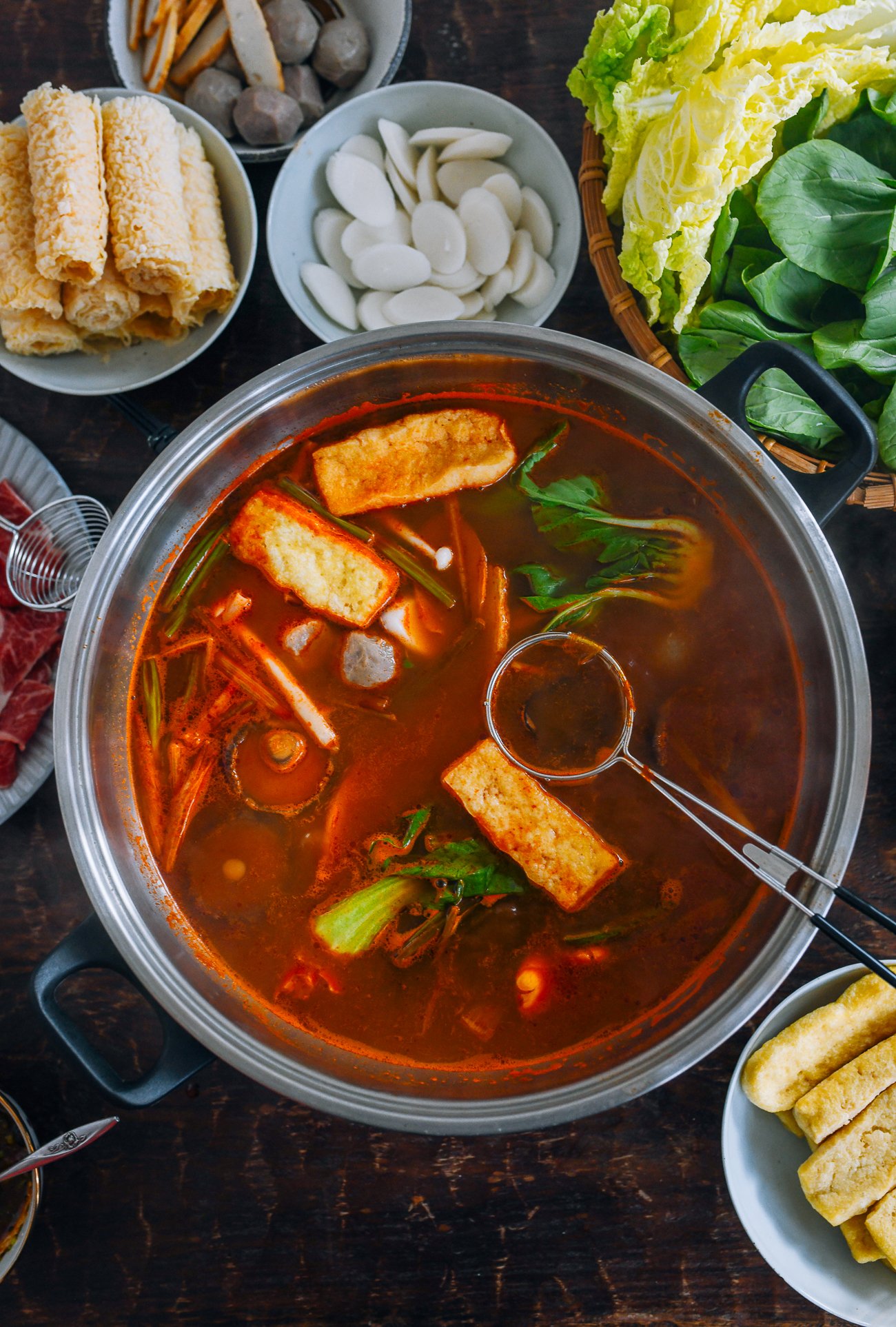
When it comes to broth, there’s a lot of variation out there! For a super simple version, we’ll take out some chicken soup and throw in a handful of goji berries, ginger, and sliced scallions.
However, sometimes you’re looking for a particular flavor profile. Most hot pot restaurants offer different broth flavors, which really elevates the experience.
Some people like very clean-tasting plain broths that are either meat or mushroom-based. Others like a tomato soup base, while others like fiery, oily Sichuan hot pot.

The process has become even easier with the advent of packaged hot pot soup bases. You just add the packet, along with water.
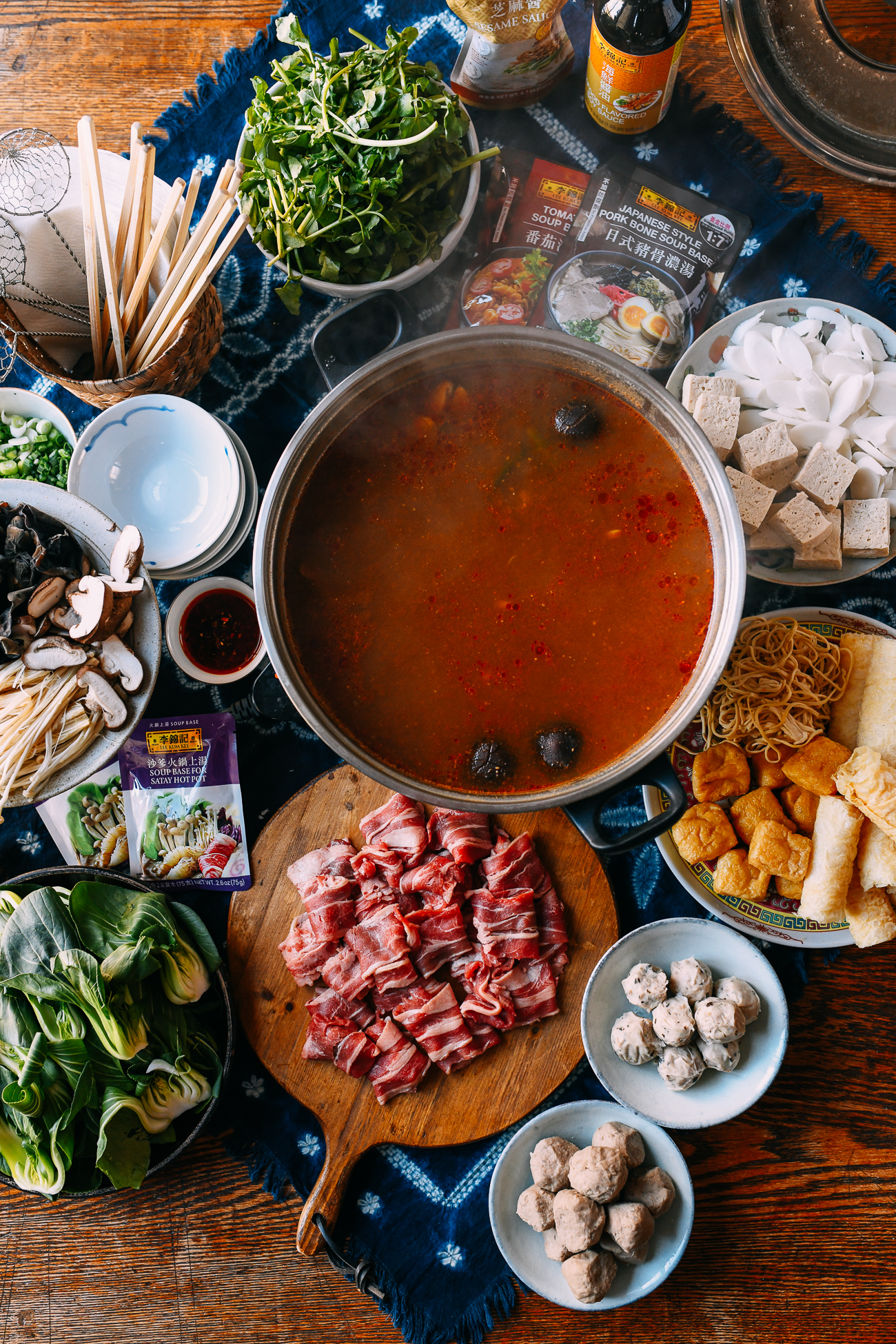
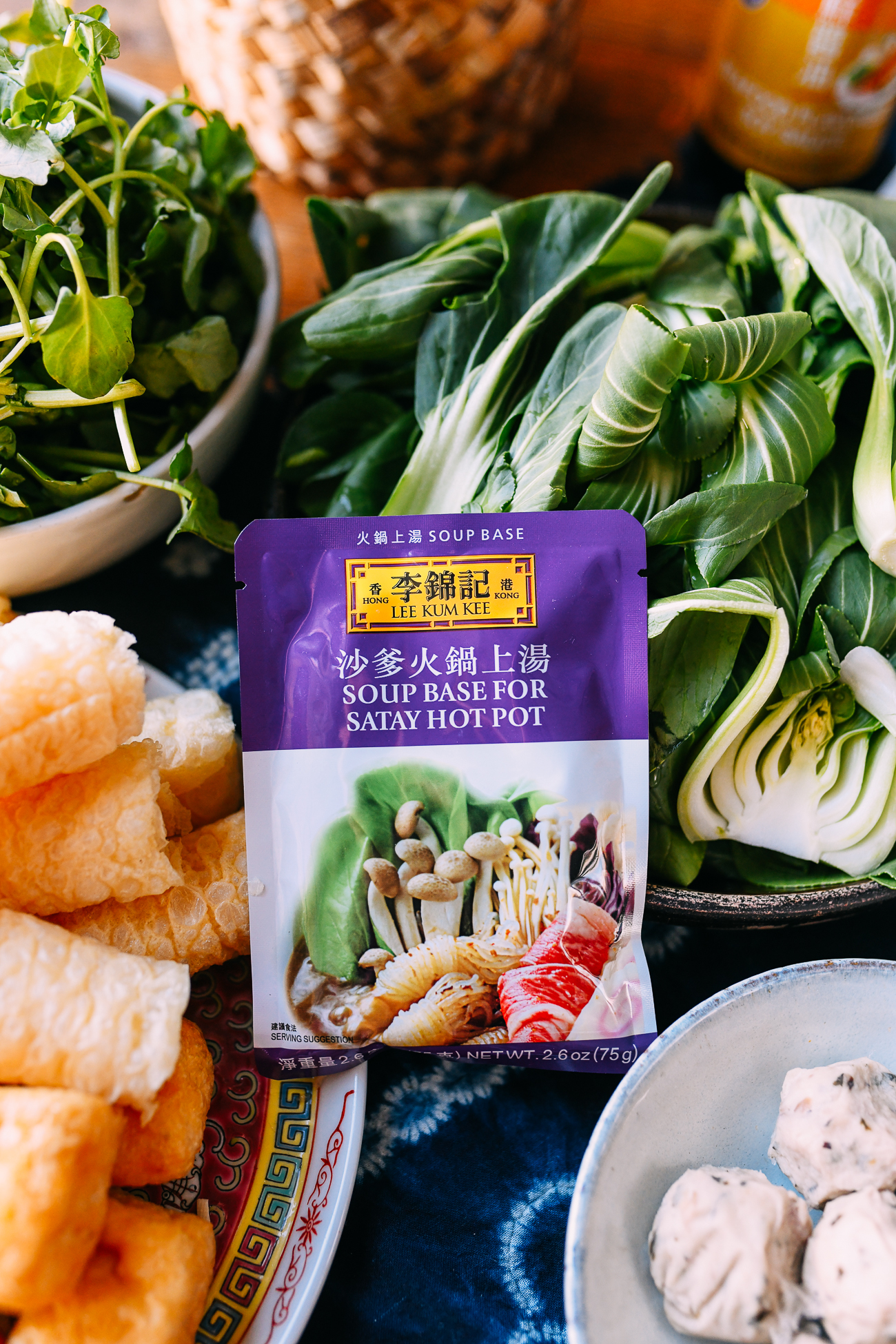
We really enjoyed Lee Kum Kee’s Soup Base for Satay Hot Pot, which had a light seafood flavor and gave everything a rich umami boost. If seafood isn’t your thing, they also make a Japanese-style pork soup base, a tomato soup base, and a spicy Sichuan one as well.
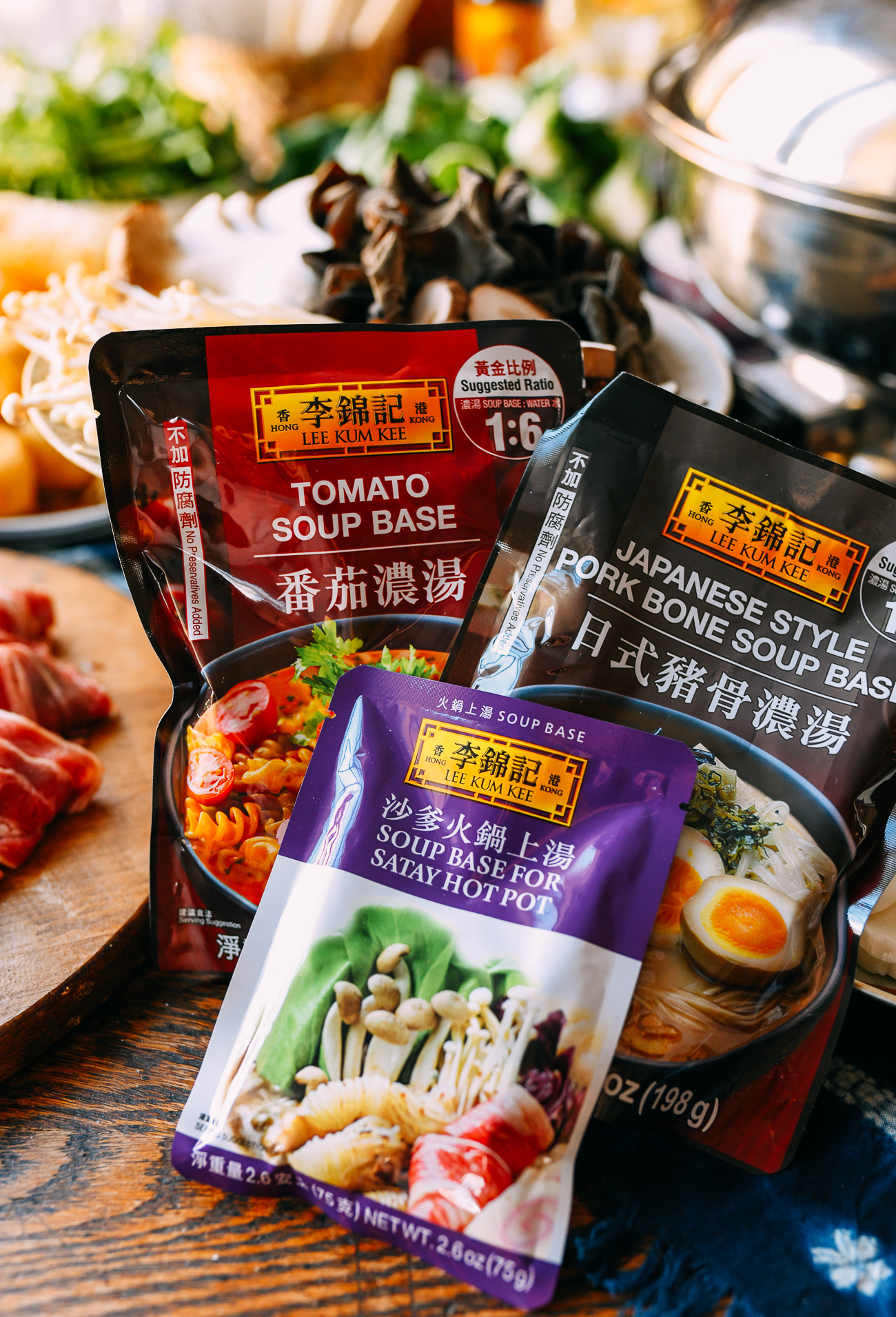
These soup bases can also be used to make other dishes. For instance, hot pot soup base is a key ingredient in our Ma La Xiang Guo (Spicy Numbing Stir-fry Pot) recipe.
These pre-packaged options definitely make the meal much easier to throw together anytime you feel like surrounding yourself with plates of raw veggies, noodles, tofu, and proteins to settle in for a nice long feast.
What is in a hot Pot?
Okay, now is the time to talk hot pot ingredients! One of the most common questions we get is, “What is usually in hot pot?” With all the possible options, it can be overwhelming to to start thinking about what you might want to put out on the table. The name of the game is: Balance.
There are a few categories of hot pot dippables, and the key is to have a good balance of 3-5 items from each category for a varied hot pot meal.
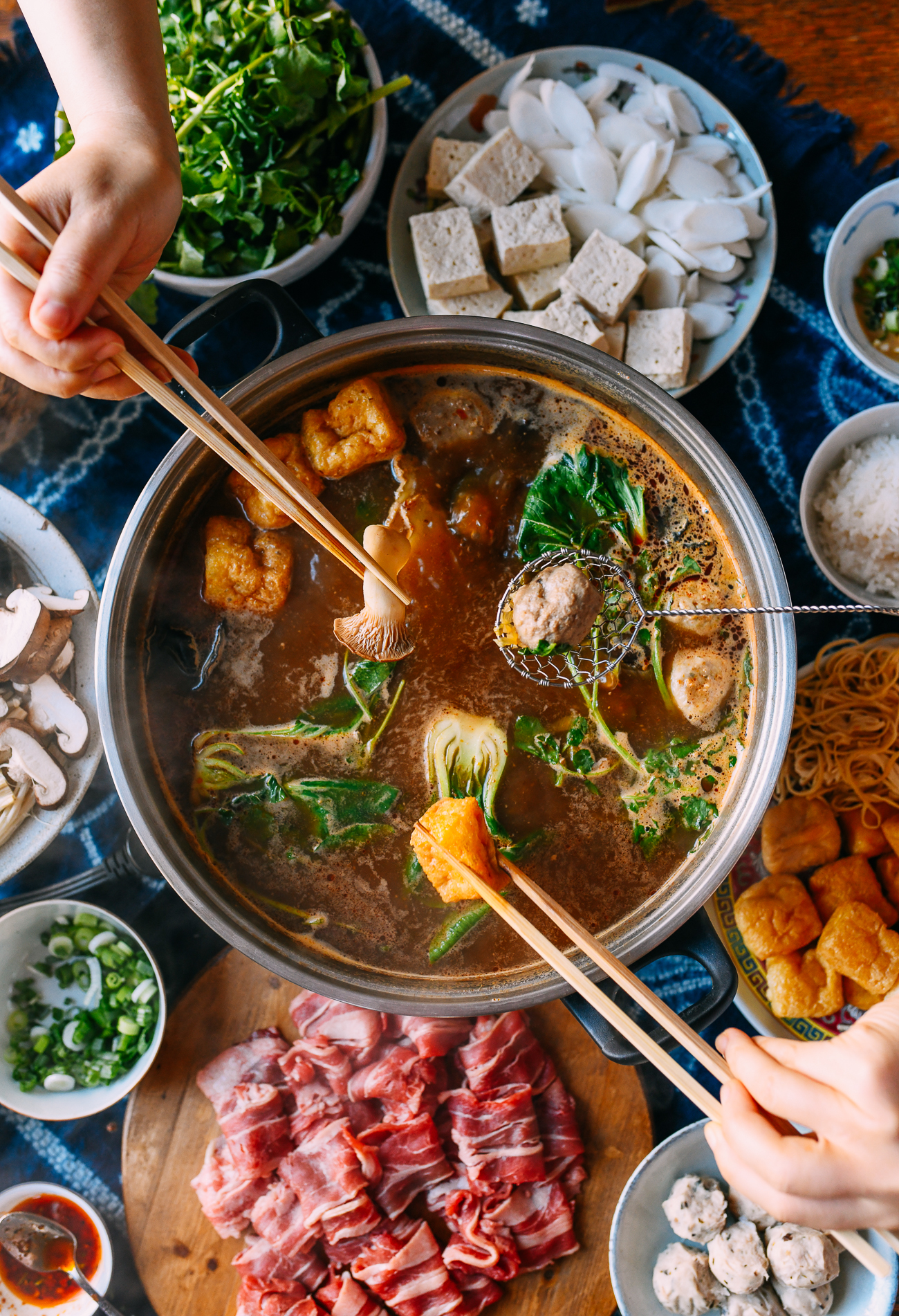
Here are some of your options:
Vegetables & Fungi
A good mix of vegetables (including Chinese leafy greens as well as harder root vegetables) and fungi is important to a balanced hot pot experience. Here are some options:
Leafy Greens: To prepare leafy greens, simply wash them thoroughly and cut them into manageable pieces. Baby leafy greens (suck as baby bok choy) can be left whole, while larger leaves (like napa cabbage) should be cut into smaller (1-2 inch) pieces.
- Baby bok choy
- Napa cabbage
- Choy sum
- Spinach
- Pea Tips
- Watercress
- AA Choy/Cai
- Chrysanthemum Leaves (tongho)
- Tatsoi
Other Vegetables: Most of these vegetables should be peeled and sliced into 1/4-1/8 inch slices. You can also cut them into small 1-inch chunks, but the thicker they are, the longer they’ll take to cook through.
- Lotus root
- Potato
- Sweet potato
- Pumpkin/Kabocha squash
- Daikon radish
- Tomatoes (cut into wedges)
- Corn (cut whole ears of corn into 1-inch pieces)
- Winter melon
Mushrooms:
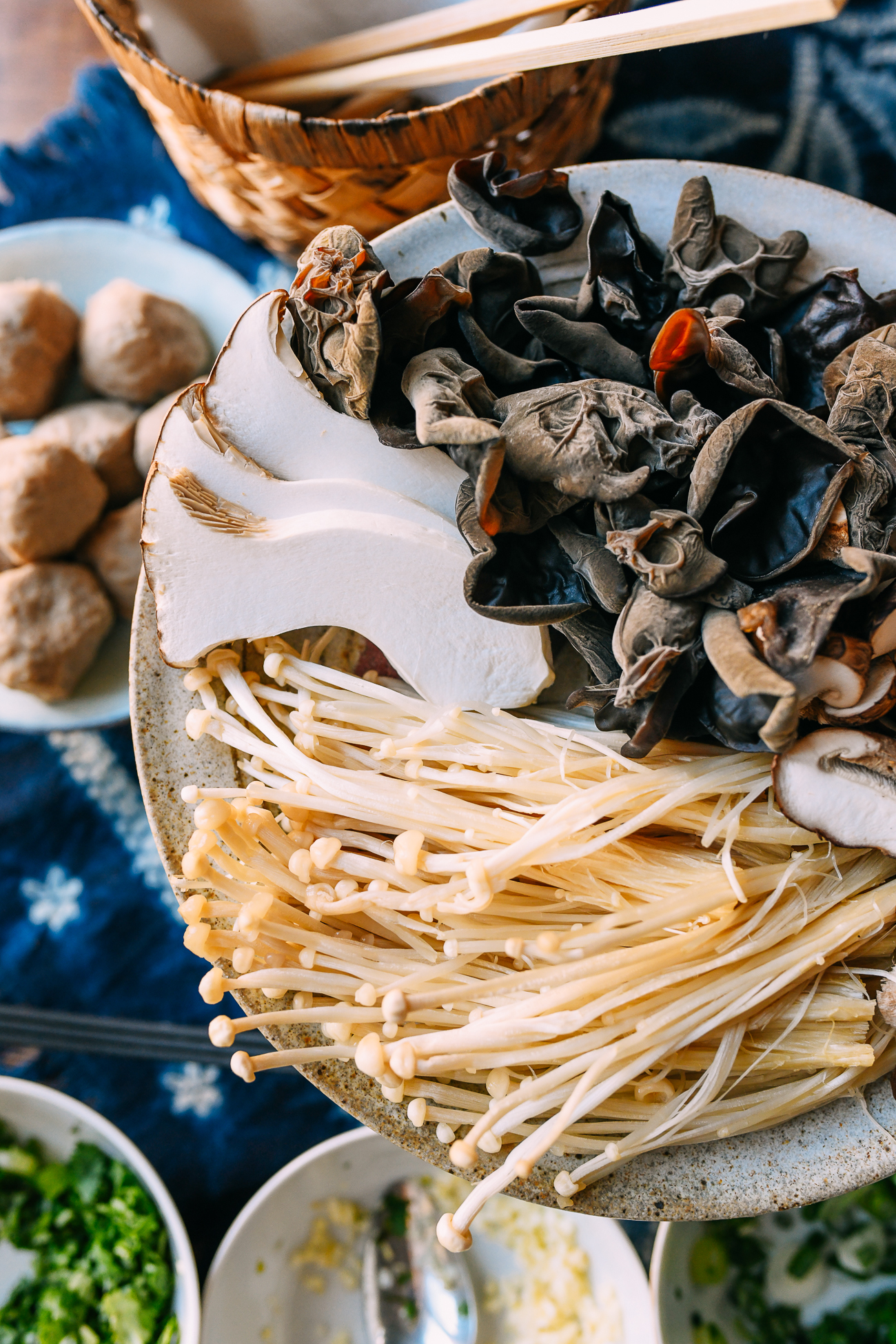
- Enoki mushrooms (slice 1/2-1 inch of the base off, and separate the larger bundle of enoki into smaller more manageable bundles. Cook until wilted; cook time: 30-45 seconds)
- Wood ears (soak to reconstitute, rinse any dirt or sand off, and remove any woody ends; cook time: 2-3 minutes)
- King mushrooms (Trim the ends, thinly slice; cook time: 2 minutes)
- Shiitake mushrooms (Trim woody stems, slice, and add to the pot early, as they will flavor the broth; cook time: 2-3 minutes)
- Oyster mushrooms (Clean thoroughly; cook time: 2-3 minutes)
- Shimeji mushrooms (Separate into individual mushrooms; cook time: 2-3 minutes)
Meat & Seafood
Asian grocery stores sell thinly sliced meat (usually beef, lamb, and pork) intended specifically for hot pot. They are more expensive than buying whole cuts, but we think it’s worth the convenience!
Very well-marbled cuts, like ribeye, are preferred. The féi niú (肥牛) sold for hot pot in Asian markets often have streaks of fat—almost like bacon!
If you can’t find pre-sliced meats, you can thinly slice cuts like ribeye, flank steak, sirloin, lamb shoulder, pork belly, and pork shoulder while they’re partially frozen. Freezing the meat makes it much easier to get paper thin slices.
You can even bring them to the table while partially frozen, as long as they are sliced thinly enough to cook quickly once added to the simmering pot.
Seafood items are also popular—whole shrimp, thinly sliced fish fillets, shrimp balls, squid, and scallops.
Other meat & seafood items include pre-cooked beef balls, pork balls, fish balls, squid balls, and mixed seafood balls. These are pre-cooked, and just need to be heated through in the hot pot.
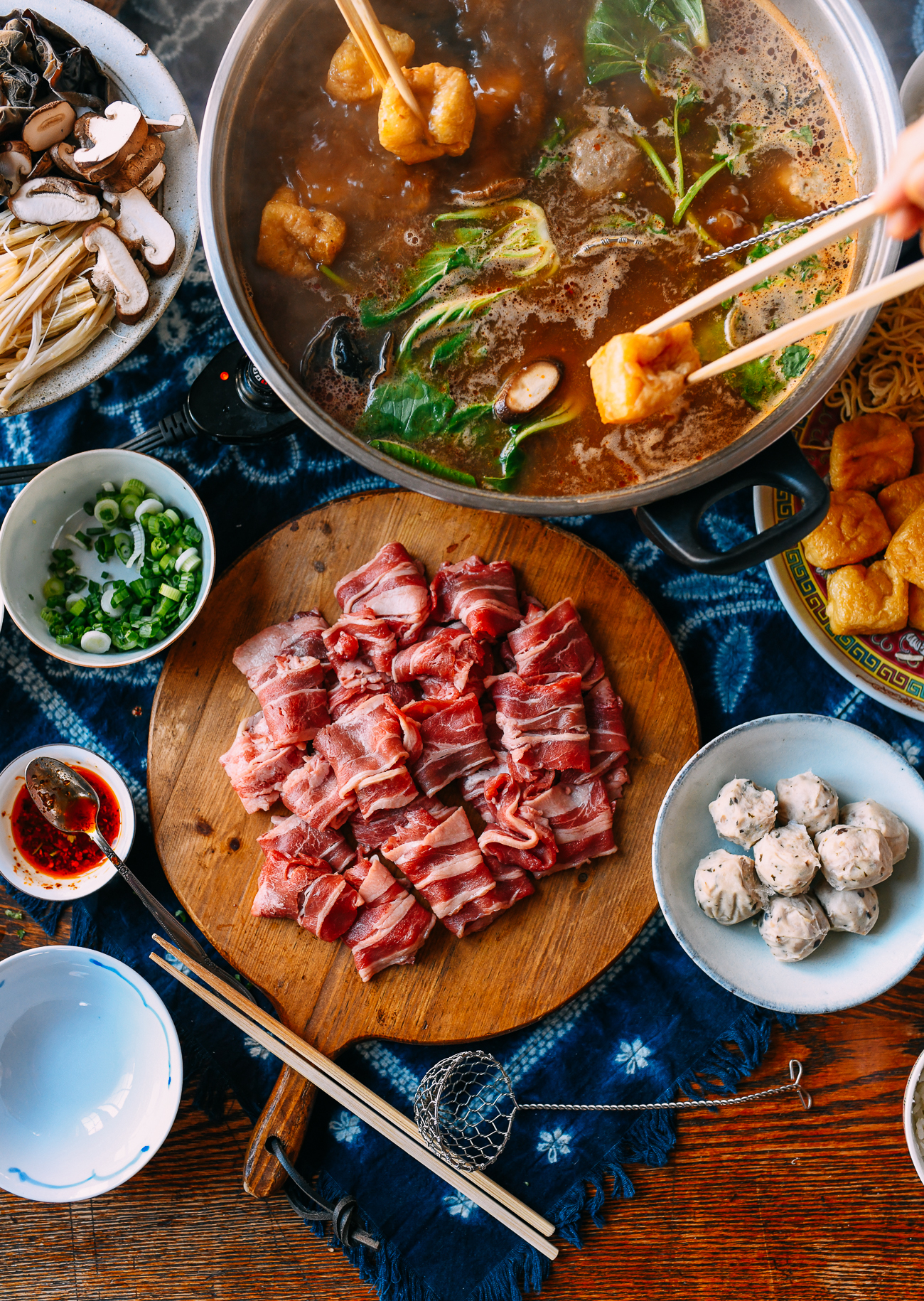
You could do a completely vegetarian hot pot, but adding meats requires additional attention to food safety. Always make sure your broth is boiling, and don’t add too many ingredients to the pot at once. This could lower your broth temperature and result in undercooked food.
Make sure your meats are completely cooked through. After adding raw meat, allow the broth to boil for at least 30 seconds to 1 minute before removing any other items from the pot.
- Beef (brisket, short rib, ribeye, sirloin, flank steak, thinly sliced against the grain)
- Pork shoulder or loin (thinly sliced)
- Pork belly (thinly sliced)
- Lamb shoulder or leg (thinly sliced
- Chicken (boneless breast or thighs, thinly sliced)
- Sliced fish fillets (such as tilapia, bass, fluke/flounder; marinate the fish for best results. For 8 ounces of sliced fillets, add 1 teaspoon each cornstarch, oil, and Shaoxing wine, 1/4 tsp salt, and a pinch of white pepper)
- Shrimp
- Scallops
- Squid or cuttlefish
- Beef Balls
- Pork Balls
- Fish Balls
- Squid Balls
- Mixed seafood balls
- Fish Cakes
- Fish Tofu
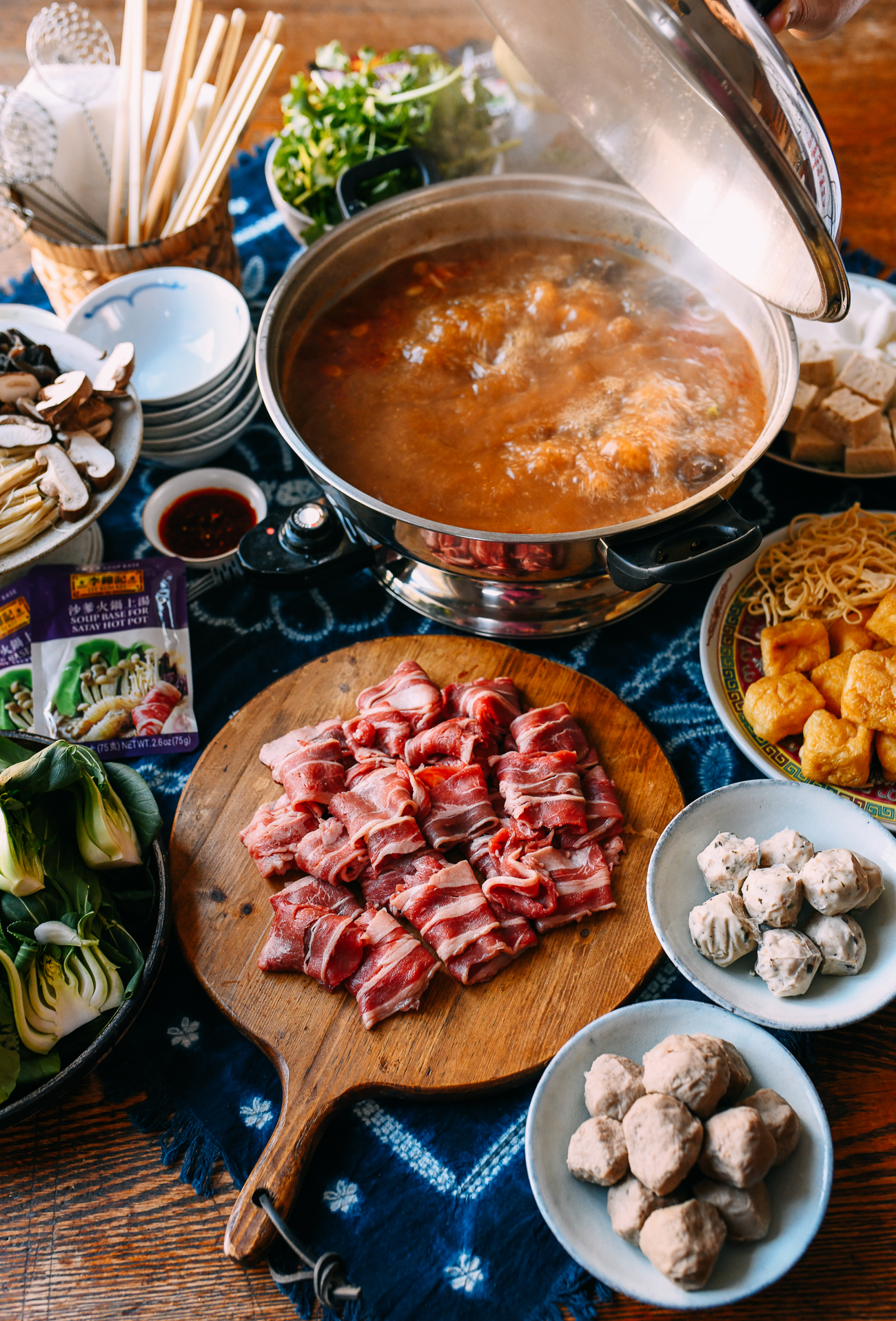
Staple Starches
Every meal needs a few carbs!
We like to have our hot pot with a side of white rice, but eating rice with hot pot isn’t the norm. Many prefer to cook their starches right in the pot along with everything else.
Look for thin/small items (like thin noodles, small dumplings) that cook quickly and won’t add too much additional starch to your soup base. Here are some options:
- Mung bean vermicelli (soak in warm water for 10 minutes)
- Rice noodles (boil according to package instructions to par-cook, rinse in cold water, drain)
- Thin fresh white noodles
- Fresh spinach noodles
- Shirataki noodles (add directly to boiling broth, cooks in seconds)
- Rice cakes (the thin ovals are best; the thick Korean-style rice cake logs take too long to cook)
- Frozen Dumplings (smaller is better; cook time 5-10 minutes, depending on size)
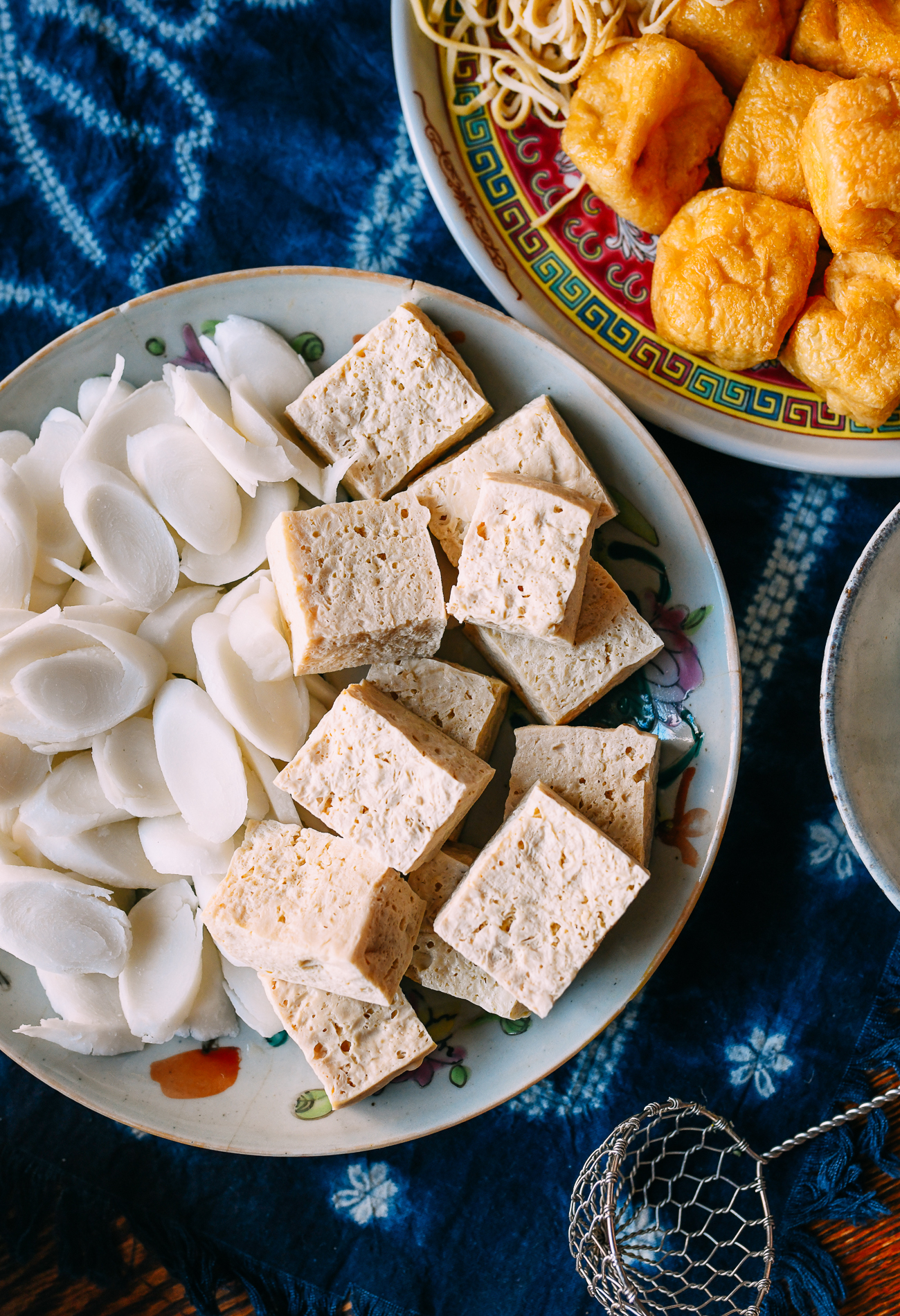
Tofu & Bean Curd
Soy products are a must-have in our family for any hot-pot meal. You’d be surprised at just how much variety there is! Most of these products are already cooked; they just need to be fully reheated in the pot.
- Bean threads (AKA dried bean curd sticks; soak in warm water for 3-4 hours, cut into 2-inch pieces)
- Soy puffs (can leave whole or slice in half for quicker cooking)
- Frozen tofu (cut into small 1-inch chunks)
- Firm tofu (cut into small 1-inch chunks)
- Dried bean curd rolls (cooks in 20-30 seconds)
- Dried tofu sheets
- Fresh tofu sheets/skin
- Pressed tofu
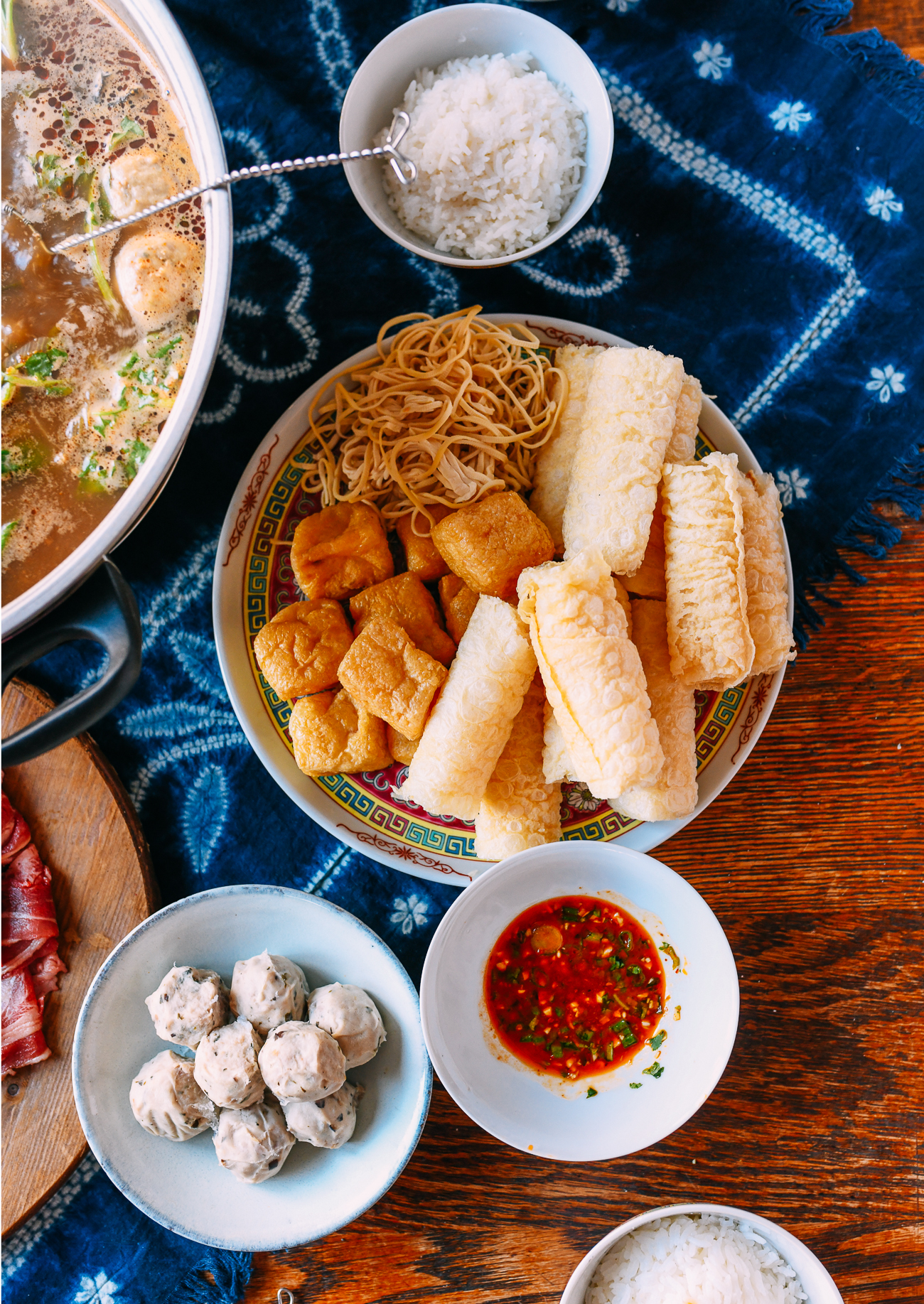
Hot Pot Dipping Sauce Ingredients
Ok, on to our last hot pot element—the dipping sauce. Your dipping sauce is a very personal thing.
I like a sesame paste-based sauce, while my sister and dad prefer Sha Cha (Chinese BBQ sauce) to be the primary flavor. My mom’s dipping sauce is more soy sauce-based.
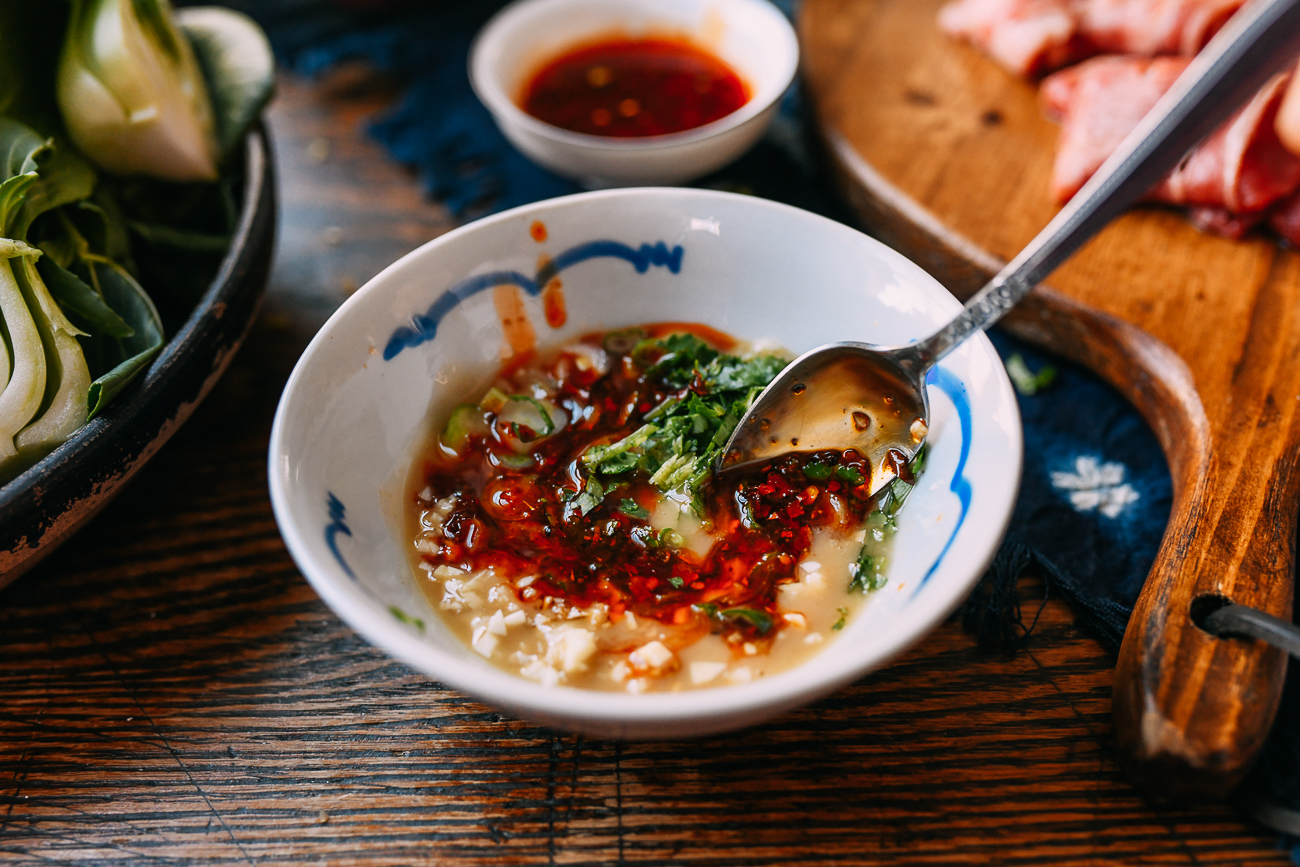
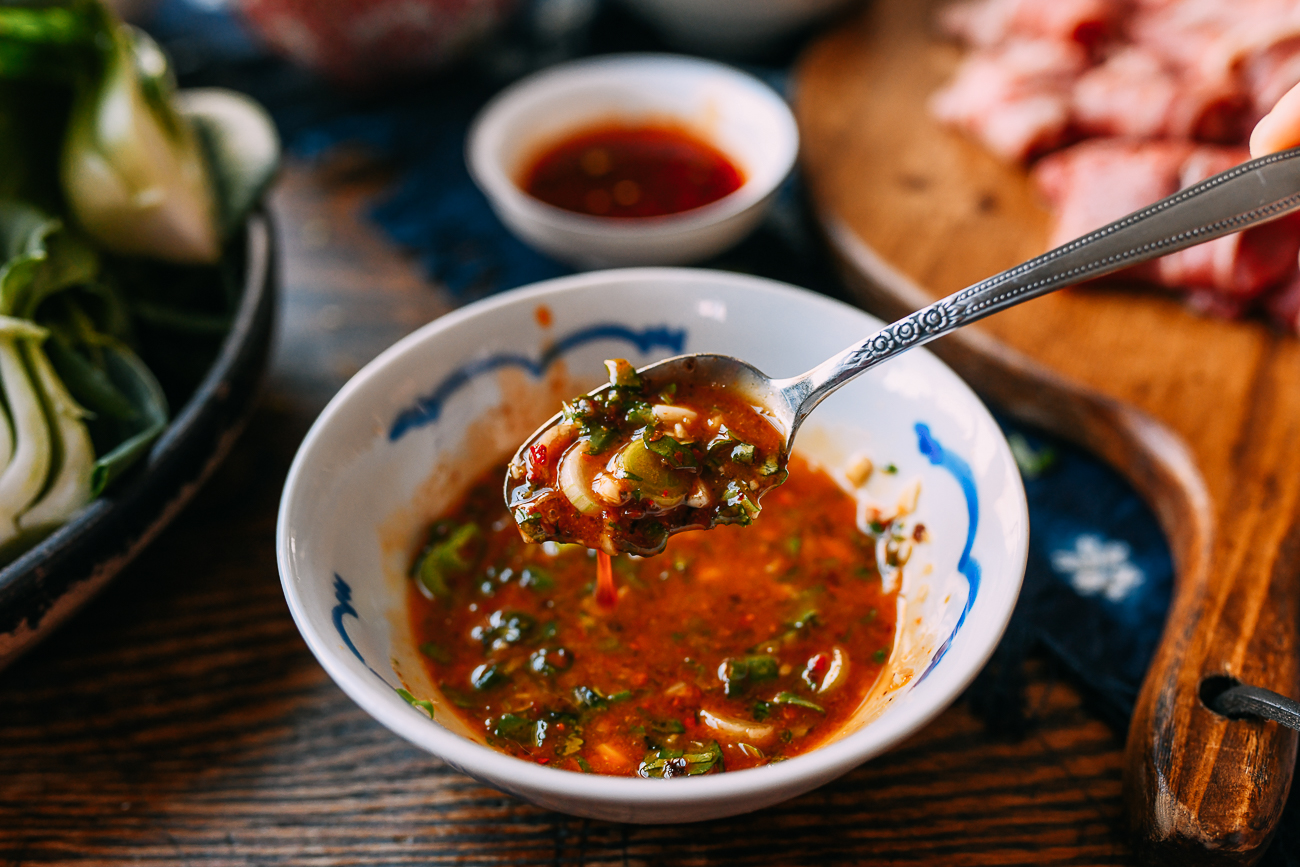
To make your dipping sauce, start out with what you’d like your base to be (sesame sauce, peanut butter, soy sauce, Sha Cha) and add additional flavorings from there, tasting as you go.
Here are some sauce elements:
- Chinese sesame paste or sauce
- Peanut butter or peanut sauce
- Soy sauce (light soy sauce, seasoned soy sauce, and seafood flavored soy sauce are all good options)
- Sha Cha Sauce (Chinese BBQ Sauce)
- Sesame Oil
- Sichuan Peppercorn Oil
- Chili Oil/Sauce
- Chili Garlic Sauce / Sambal Oelek
- Chinese black vinegar/rice vinegar (a less common ingredient, but up to personal preference)
- White pepper
- Toasted sesame seeds
- Minced garlic
- Chopped scallions
- Chopped cilantro
- Fried shallots or garlic
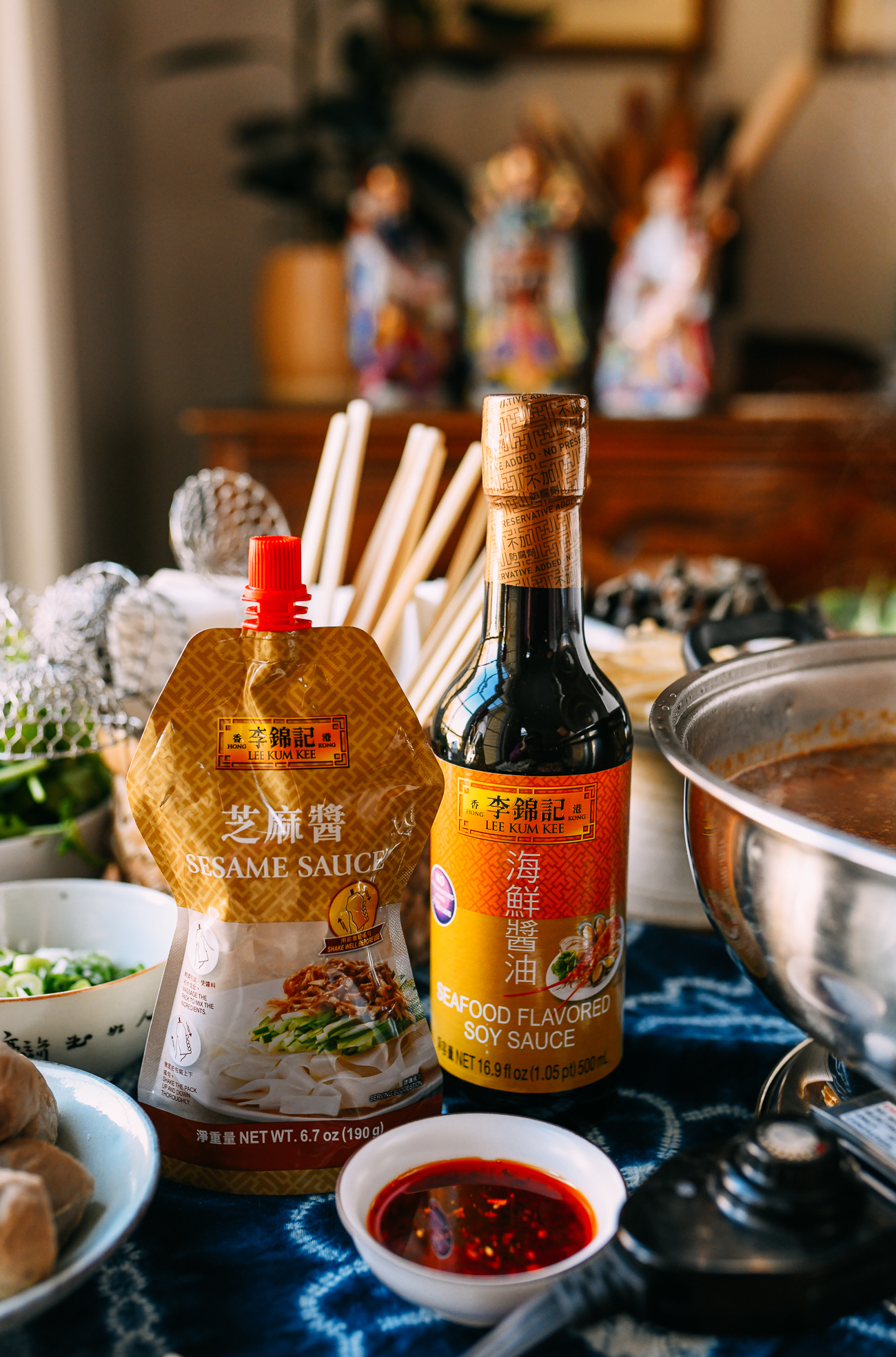
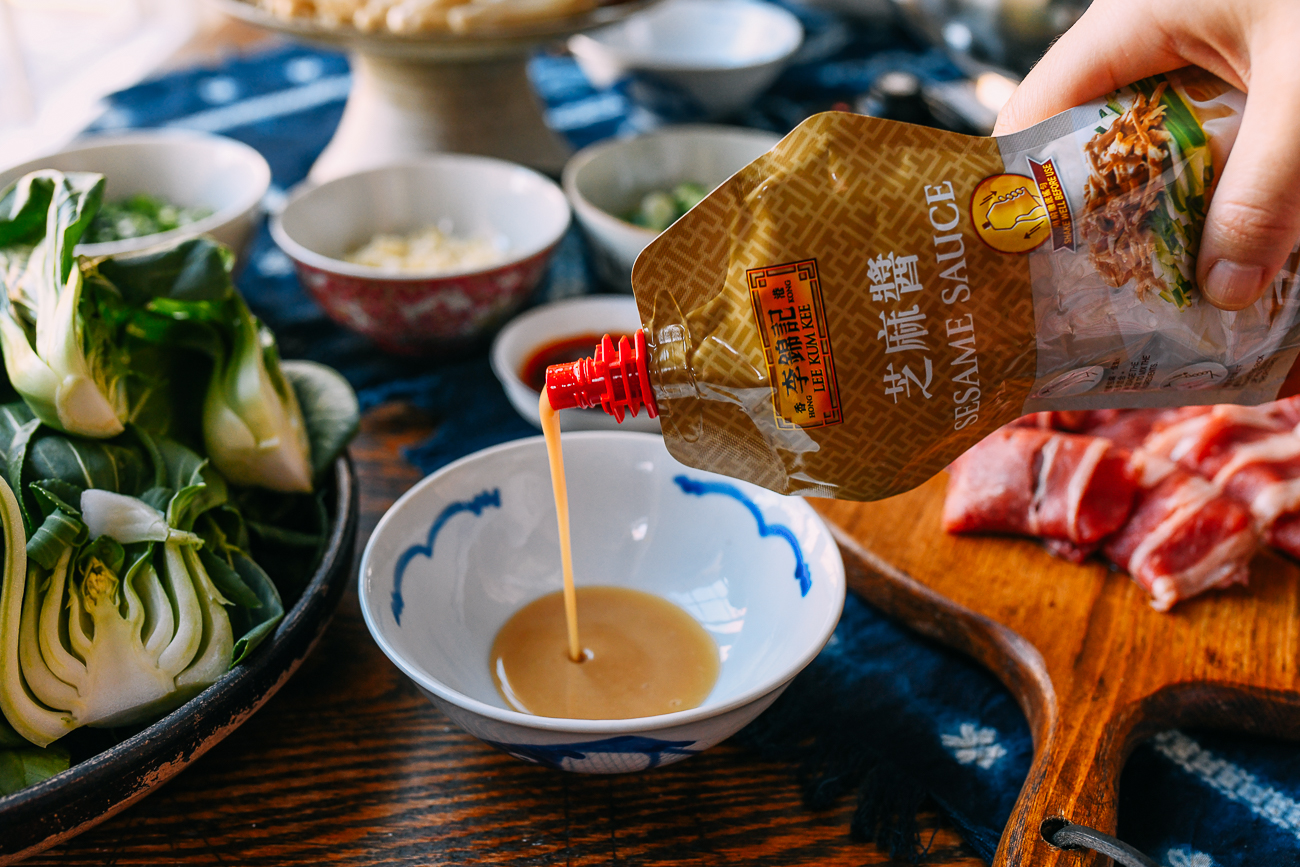
You can also buy sesame sauce, like this Lee Kum Kee one, which is a bit thinner than traditional Chinese sesame paste. Sesame paste can be very thick and difficult to stir smoothly, while the Sesame Sauce pours more easily.
We also tried their seafood flavored soy sauce, which has oyster extracts in it to give it a bit of extra umami.

Hot pot dipping sauces are so tasty, I’ve also done a recipe where I made a batch without hot pot, just to mix into noodles. Check out my hot pot sauce noodles recipe.
Ok, I think that’s everything. We’ve included the ingredients, equipment, and instructions in the recipe card below so you can embark on your own adventure of making hot pot at home!
Looking for more authentic recipes? Subscribe to our email list and be sure to follow us on Pinterest, Facebook, Instagram, and Youtube!
Recipe

Chinese Hot Pot at Home
Equipment
- Electric Hot Pot Set or portable gas/electric burner with wide, shallow pot
- Bamboo or wooden chopsticks
- Hot pot strainer scoops (optional)
- Small bowls
Ingredients
- Hot pot soup base (with water) or stock
Leafy Greens (choose 1-2):
- baby bok choy (thoroughly washed)
- napa cabbage (washed, cut into 1-2 inch pieces)
- choy sum (thoroughly washed)
- spinach (thoroughly washed)
- pea tips (thoroughly washed)
- watercress (thoroughly washed)
- AA Choy/Cai (washed, trimmed)
- Chrysanthemum Leaves (washed, trimmed)
Other Vegetables (choose 1-2):
- lotus root (cut into 1/4 inch thick half moons)
- potato (cut into 1/4 inch thick half moons)
- sweet potato (cut into 1/4 inch thick half moons)
- pumpkin/kabocha squash (cut into 1/4 inch thick half moons)
- daikon radish (cut into 1-inch chunks)
- tomatoes (sliced into wedges)
- corn (whole ears, cut into 1-inch pieces)
- winter melon (cut into 1-inch chunks)
Mushrooms (choose 1-2):
- Enoki mushrooms (slice 1/2-1 inch of the base off, and separate the bundle of enoki’s into smaller more manageable bundles
- Wood ears (soak to reconstitute, rinse any dirt or sand off, and remove any woody ends)
- King mushrooms (trim the ends, thinly slice)
- Shiitake mushrooms (trim woody stems, slice, and add to the pot early)
- Oyster mushrooms (thoroughly cleaned)
- Shimeji mushrooms (separated into individual pieces)
Meat & Seafood (Choose 2-3):
- Beef (brisket, short rib, ribeye, sirloin, flank steak, thinly sliced against the grain)
- Pork shoulder or loin (thinly sliced)
- Pork belly (thinly sliced)
- Lamb shoulder or leg (thinly sliced)
- Boneless chicken breast or thighs (thinly sliced)
- Fish fillets (such as tilapia, bass, fluke/flounder, thinly sliced)
- Shrimp
- Scallops
- Squid or cuttlefish
- Beef balls
- Pork balls
- Fish balls
- Squid balls
- Mixed seafood balls
- Fish cakes
- Fish tofu
Staple Starches (choose 1-2):
- Mung bean vermicelli (soak in warm water for 10 minutes)
- Rice vermicelli (boil to par-cook, rinse in cold water, drain)
- Thin fresh white noodles
- Fresh spinach noodles
- Shirataki noodles (add directly to boiling broth, cooks in seconds)
- Rice cakes (the thin ovals are best; the thick Korean-style rice cake logs take too long to cook)
- Frozen dumplings (smaller is better; cook time 7-10 minutes)
Tofu & Bean Curd (choose 2-3)
- Bean threads (AKA dried bean curd sticks; soak in warm water for 3-4 hours, cut into 2-inch pieces)
- Soy puffs (left whole or cut in half)
- Frozen tofu (cut into 1-inch pieces)
- Firm tofu (cut into 1-inch pieces)
- Dried bean curd rolls
- Fresh tofu sheets/skin
- Pressed tofu
Dipping Sauce Ingredients
- Chinese sesame paste or sauce
- Peanut butter or peanut sauce
- Soy sauce
- Sha Cha sauce
- Sesame oil
- Sichuan peppercorn oil
- Chili oil/sauce
- Chili garlic sauce/sambal oelek
- Chinese black vinegar/rice vinegar
- White pepper
- Toasted sesame seeds
- Minced garlic
- Chopped scallions
- Chopped cilantro
- Fried shallots or garlic
Instructions
- Place boiling soup base or stock in a wide, shallow pot the center of the table on a portable electric burner.
- Place individual plates of raw ingredients on the table, along with dipping sauce ingredients.
- Have each diner mix their own dipping sauce while the pot of soup comes to a boil. Once boiling, begin adding ingredients to the pot. Be sure to cook ingredients through before consuming, and allow the pot to boil for at least 30 seconds to 1 minute after adding any raw meat or seafood.
Tips & Notes:
Note: We worked with Lee Kum Kee to develop this Hot Pot at Home post.