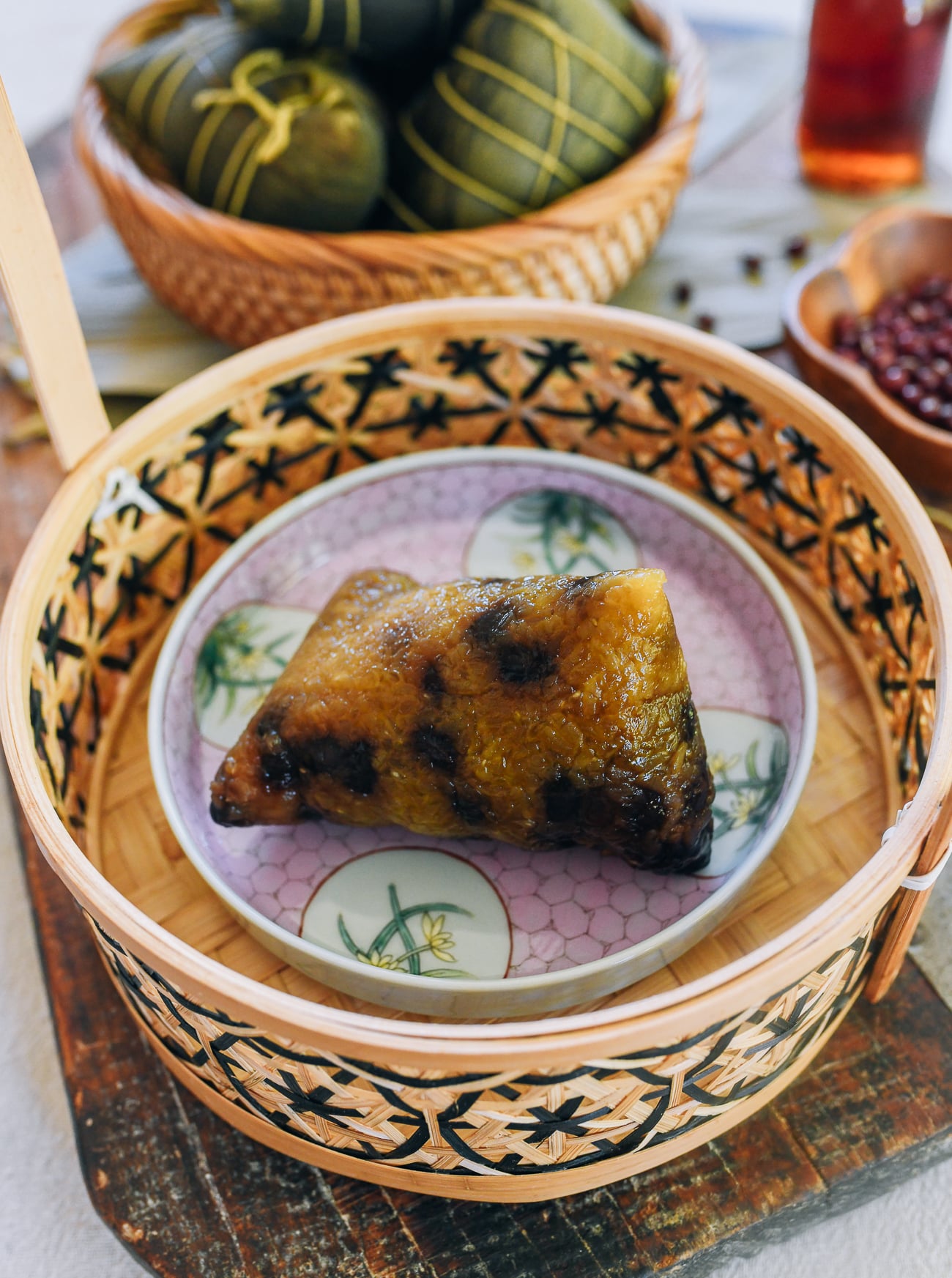
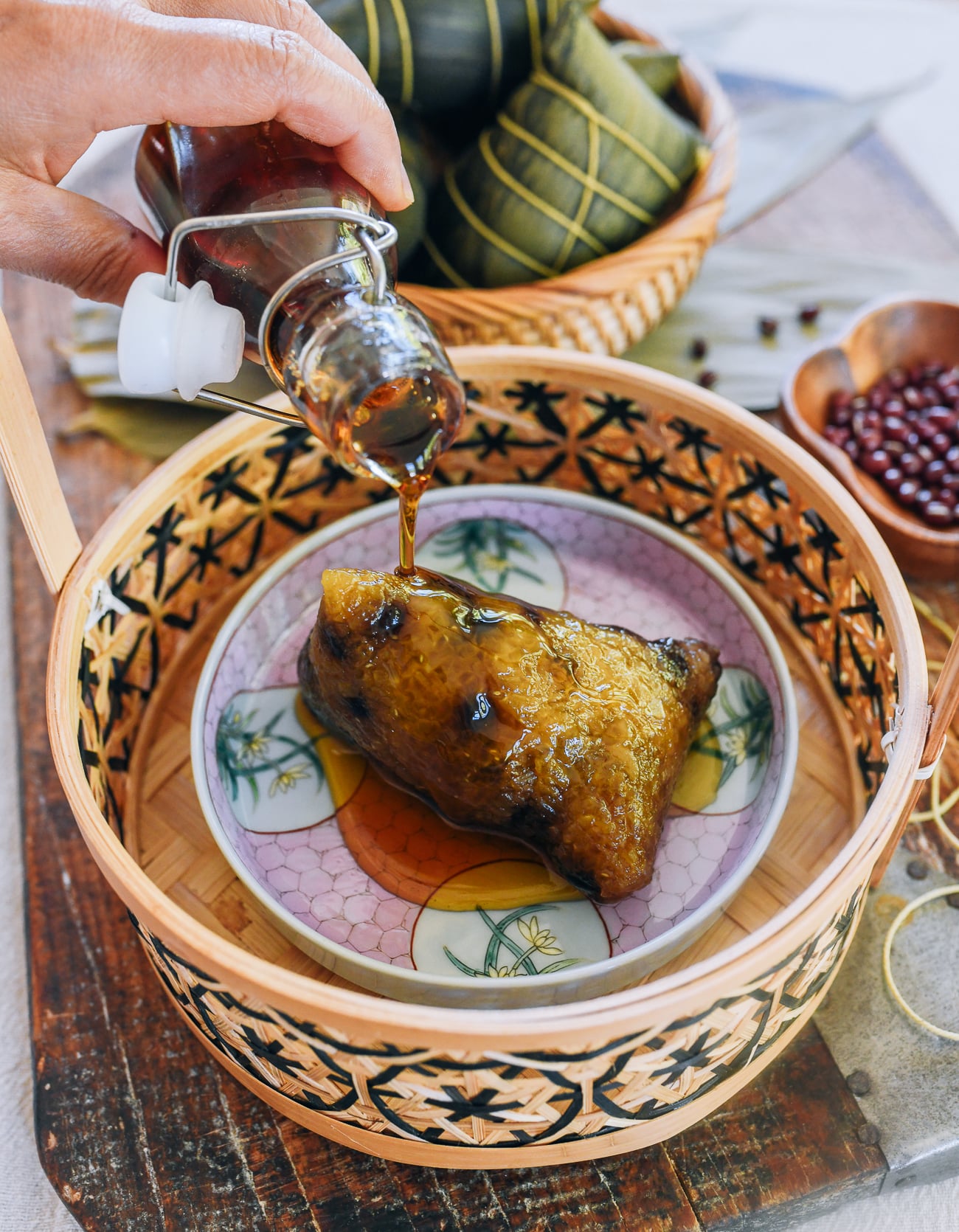
These red bean zongzi are sticky rice dumplings full of molten glutinous rice dotted with tender red (adzuki) beans! Serve with a little maple syrup or honey for a truly special dessert or snack, especially around the Dragon Boat Festival!
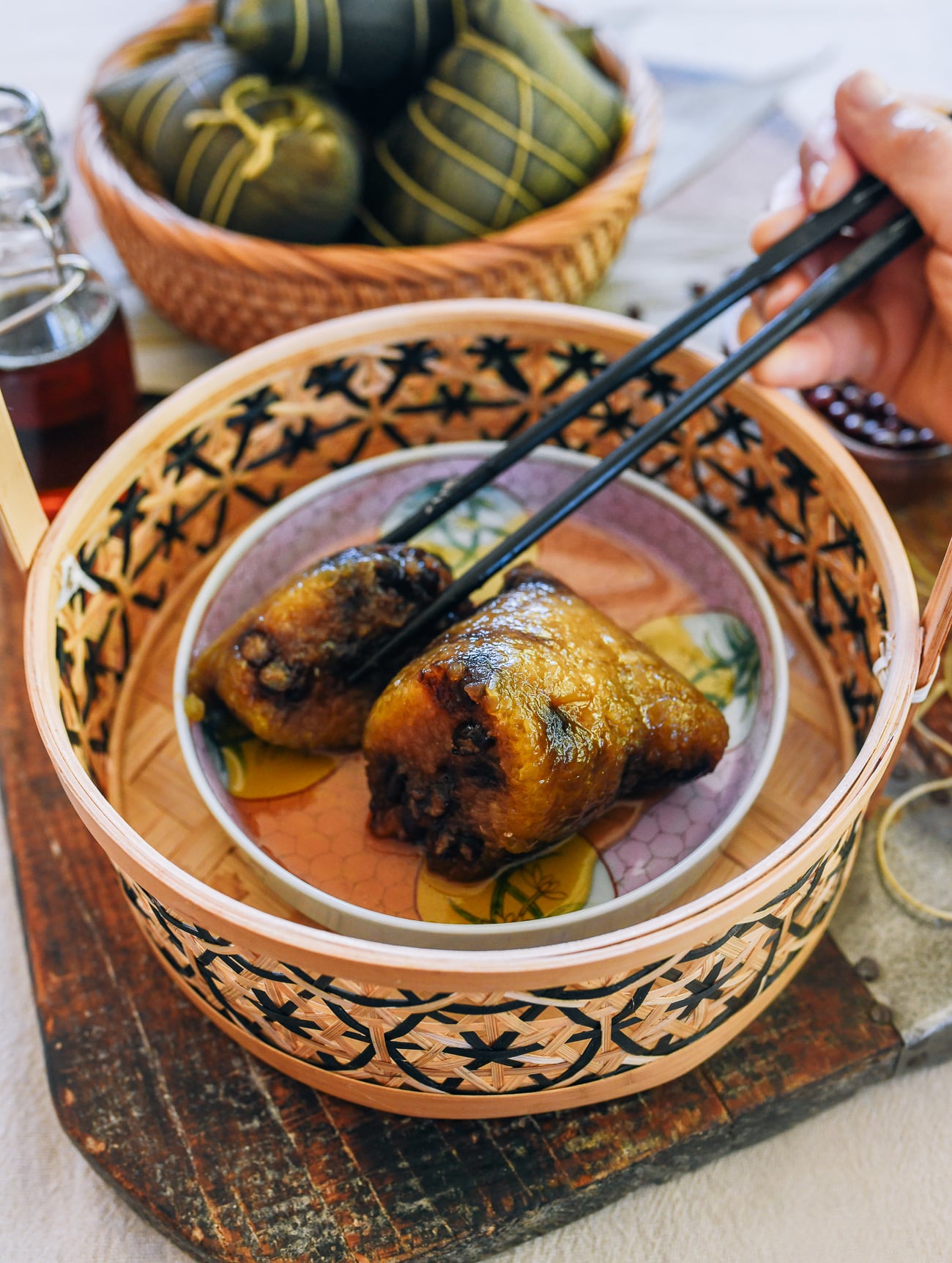
Using Whole Red Beans for a Different Texture
With the Dragon Boat Festival coming up, of course my mind turned to zongzi (粽子). But have you ever eaten a zongzi and craved more rice? When I last had my red bean paste zongzi, both Bill and I were craving more rice.
So I decided to nix the paste, making more room for rice, and added soaked red beans for that creamy textural contrast. With no red bean paste to make, this recipe is a lot less work. I love it even more than my original red bean paste zongzi recipe!
It shines when you serve it hot, warm, or even at room temperature. Bill prefers his zongzi warm, but the cooled sweet glutinous rice means it gets extra chewy, and that’s how I like it.
What is Alkaline Water (Jiǎnshuǐ)?
Both of my red bean zongzi recipes are jianshui zongzi, or alkaline water zongzi. For me, that rice mixed with alkaline water, also known as lye water, is the real prize.
This alkaline water has potassium carbonate in it, which raises the pH of dough. While you may have never heard of it, it’s used in some of your favorite foods, like pretzels, ramen noodles, and mooncake dough! It’s food grade and safe to consume, and you can find it at your Chinese grocery store.
The girls prefer their zongzi without the lye water, but Bill and I love it! Perhaps it’s an acquired taste—a sign of getting older! Lye water is what gives the rice its distinctive warm amber color, and for many, it has a comforting and nostalgic flavor.
How to Make Red Bean Zongzi (红豆粽子)
The night before prepare the rice, bamboo leaves, and red beans:
In a large, fine mesh strainer, rinse the sweet rice, agitating it with your hands until the water runs clear. You can also do this in a large bowl, changing the water out a few times. The rice will expand about 20-30%, so make sure your bowl is large enough.
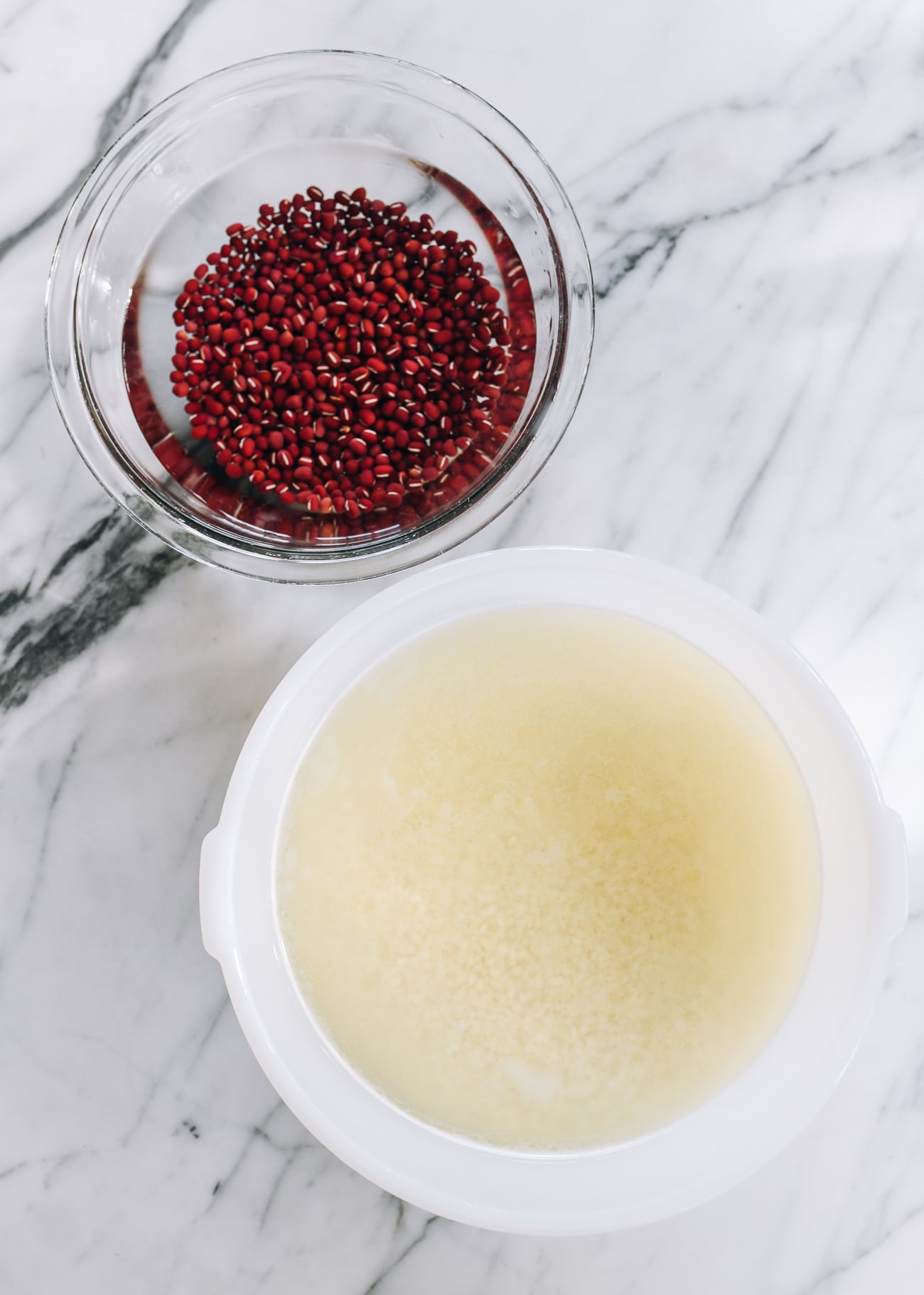
Transfer the rice to a large bowl with enough water so that the water line is ½-inch above the rice. Stir in the lye water and oil. Once the lye water hits the fresh water, both the rice and water will turn a light yellow color. Cover and soak in the refrigerator overnight.
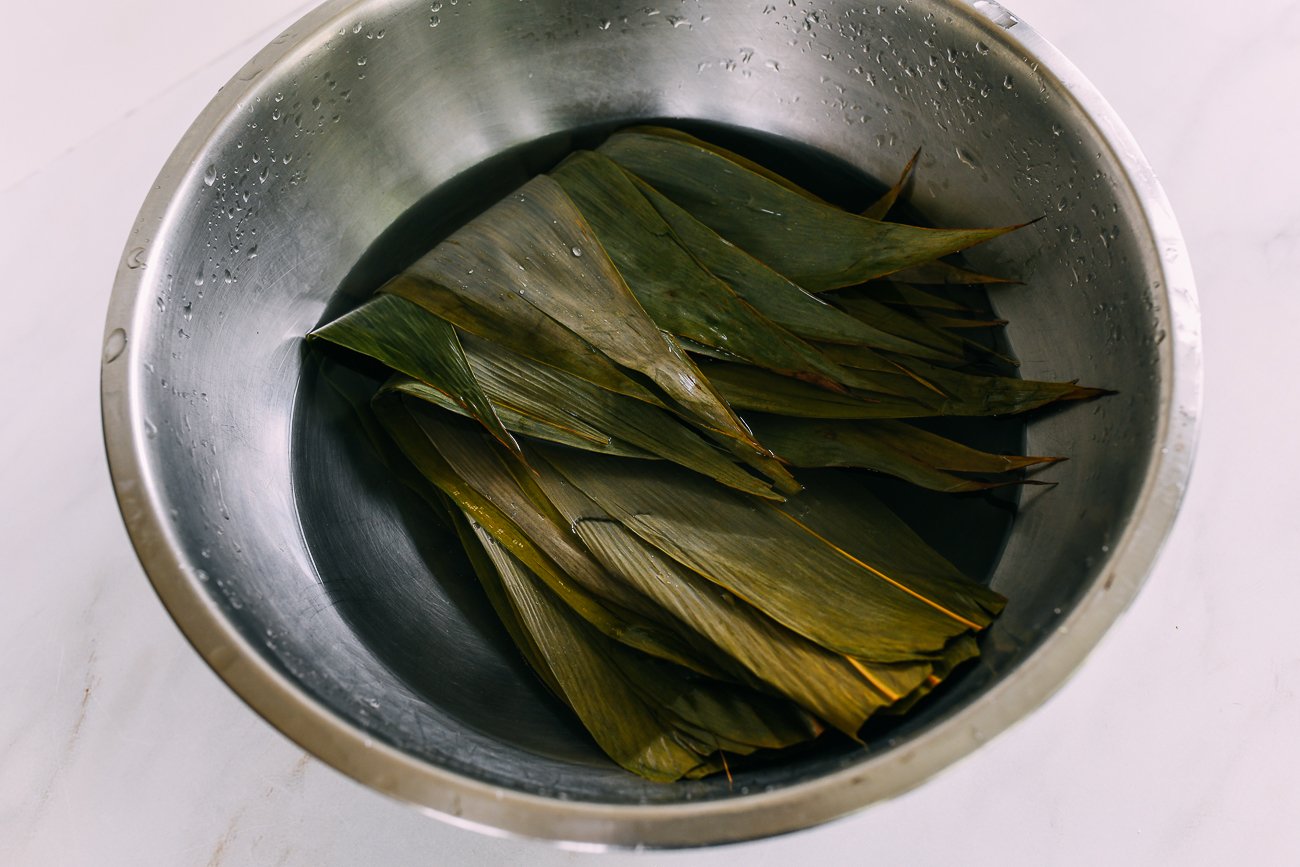
In a large basin (or your kitchen sink), soak the bamboo leaves overnight. Weigh the leaves down with something heavy to make sure all the leaves are submerged.
Rinse and soak the red beans in a bowl of water overnight.
The next day, assemble and cook the zongzi:
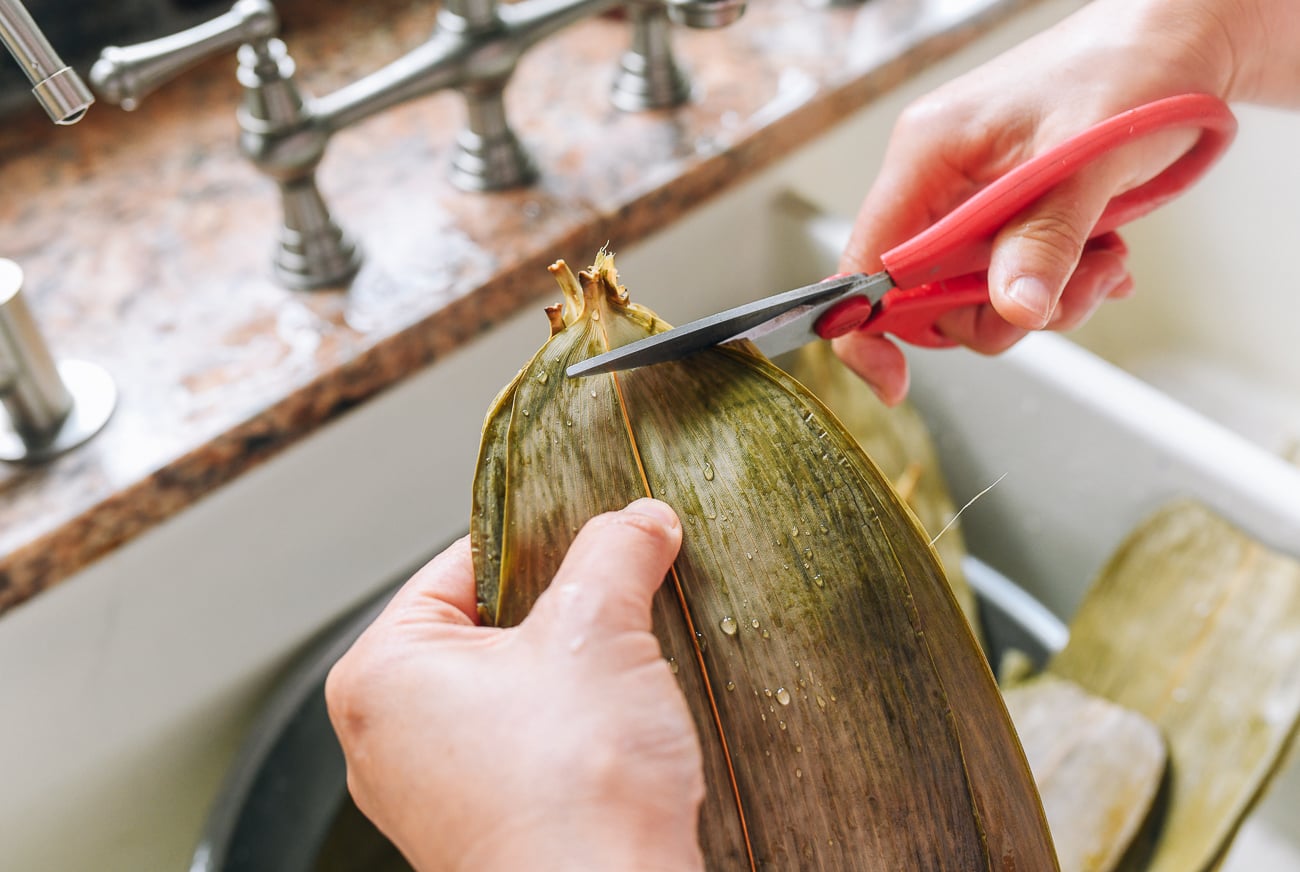
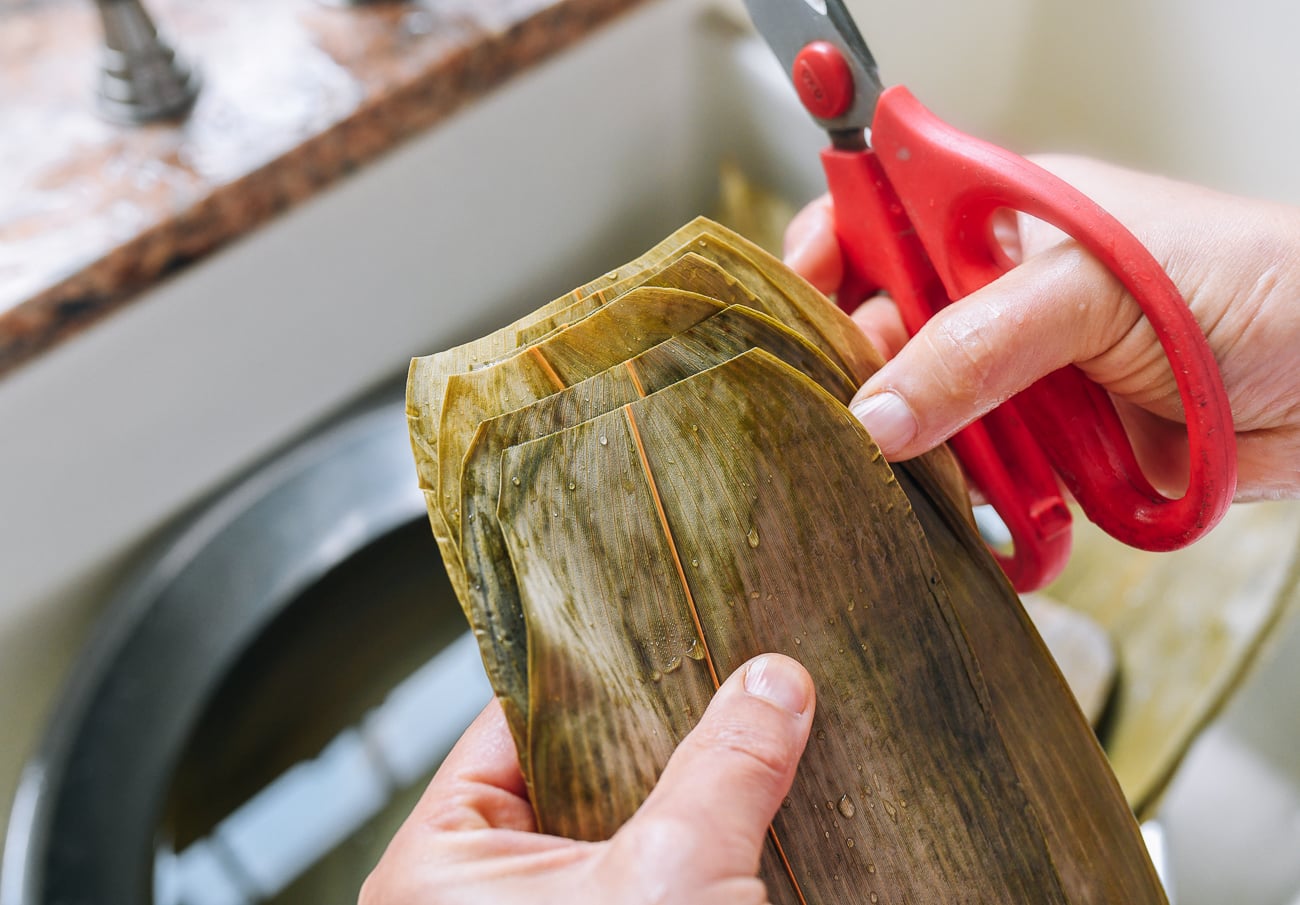
Clean each bamboo leaf, front and back, with a clean kitchen towel, shaking off any excess water and trimming off about a half inch of the leaf at the base (this part is too tough to fold). Set aside.
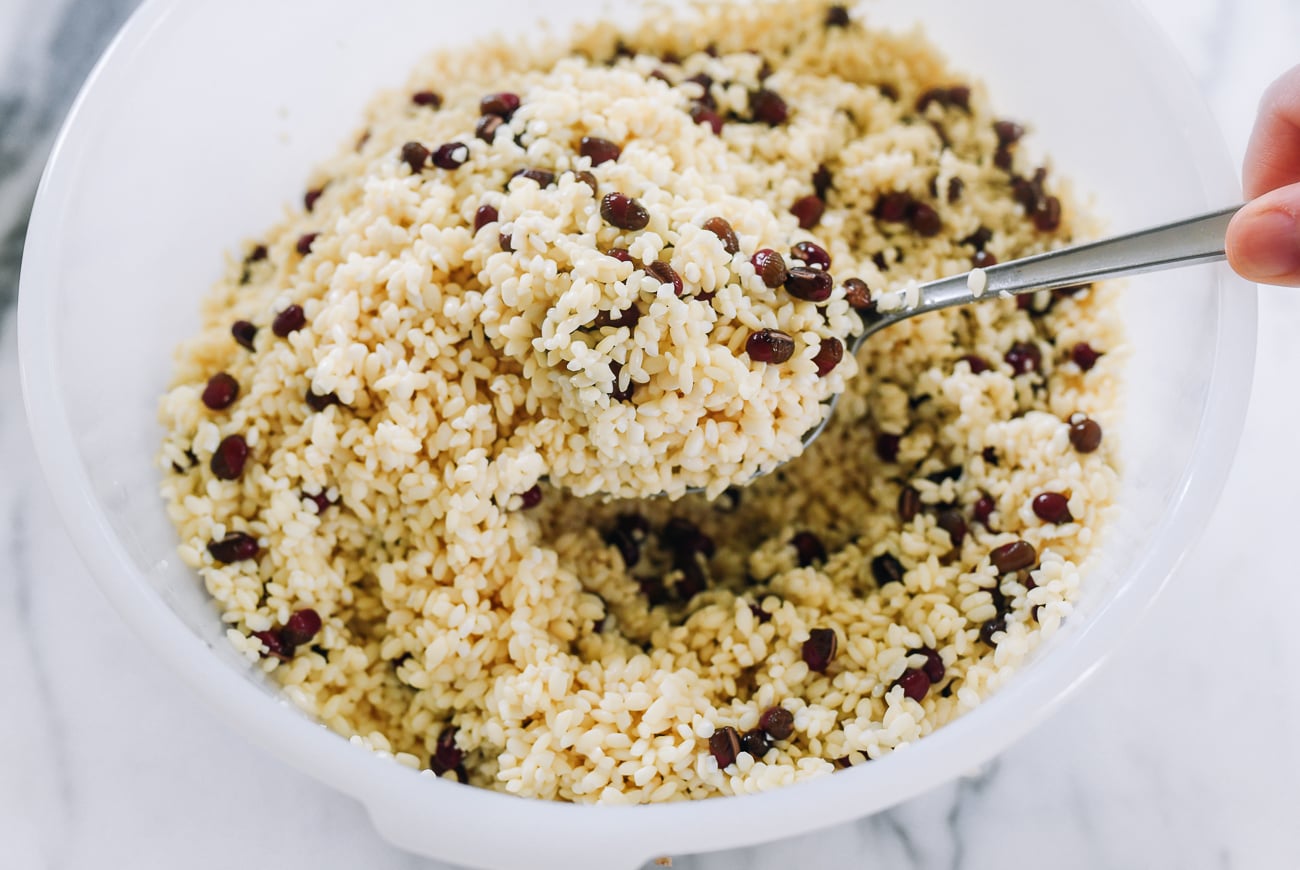
Take the soaked rice out of the refrigerator, and drain off all of the liquid. Drain the soaked red beans, and combine with the rice. Mix well.
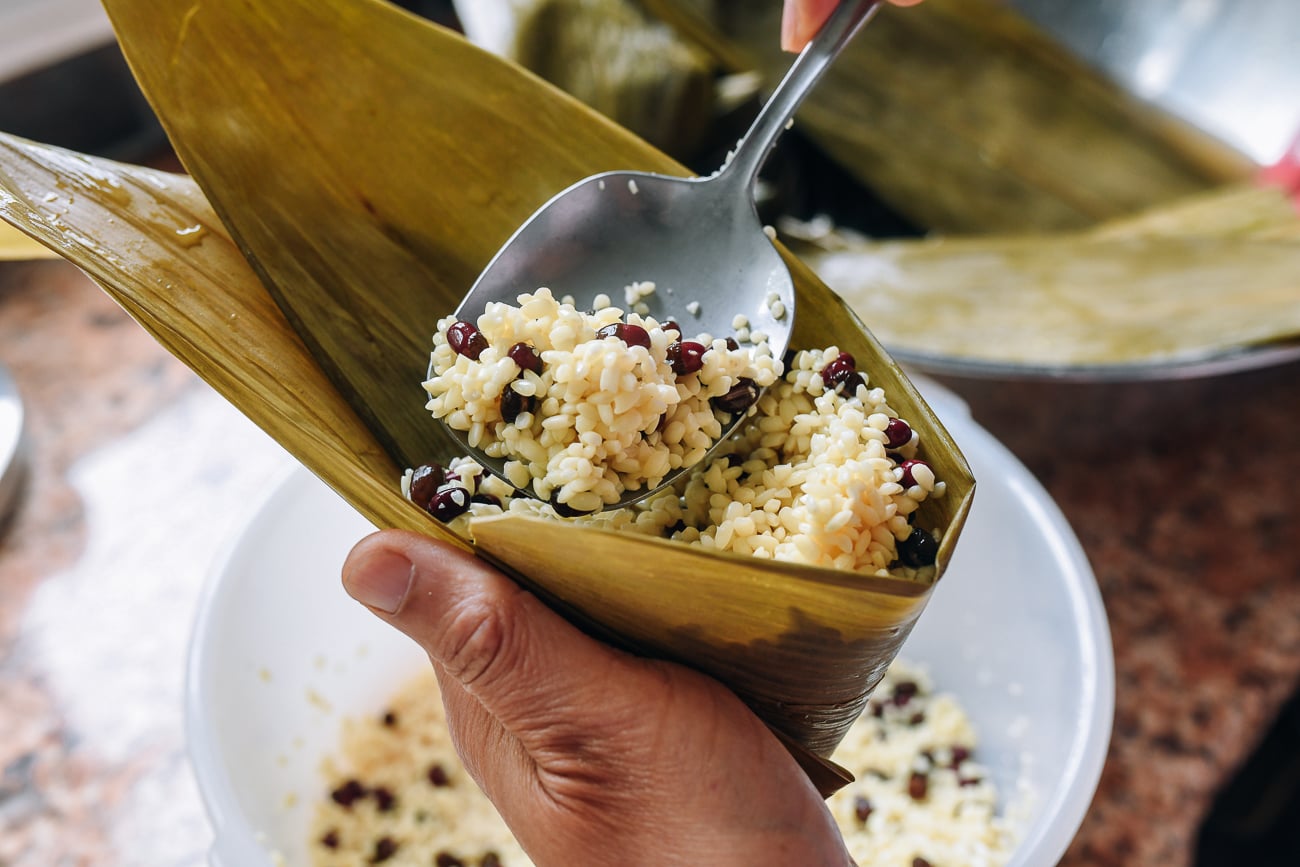
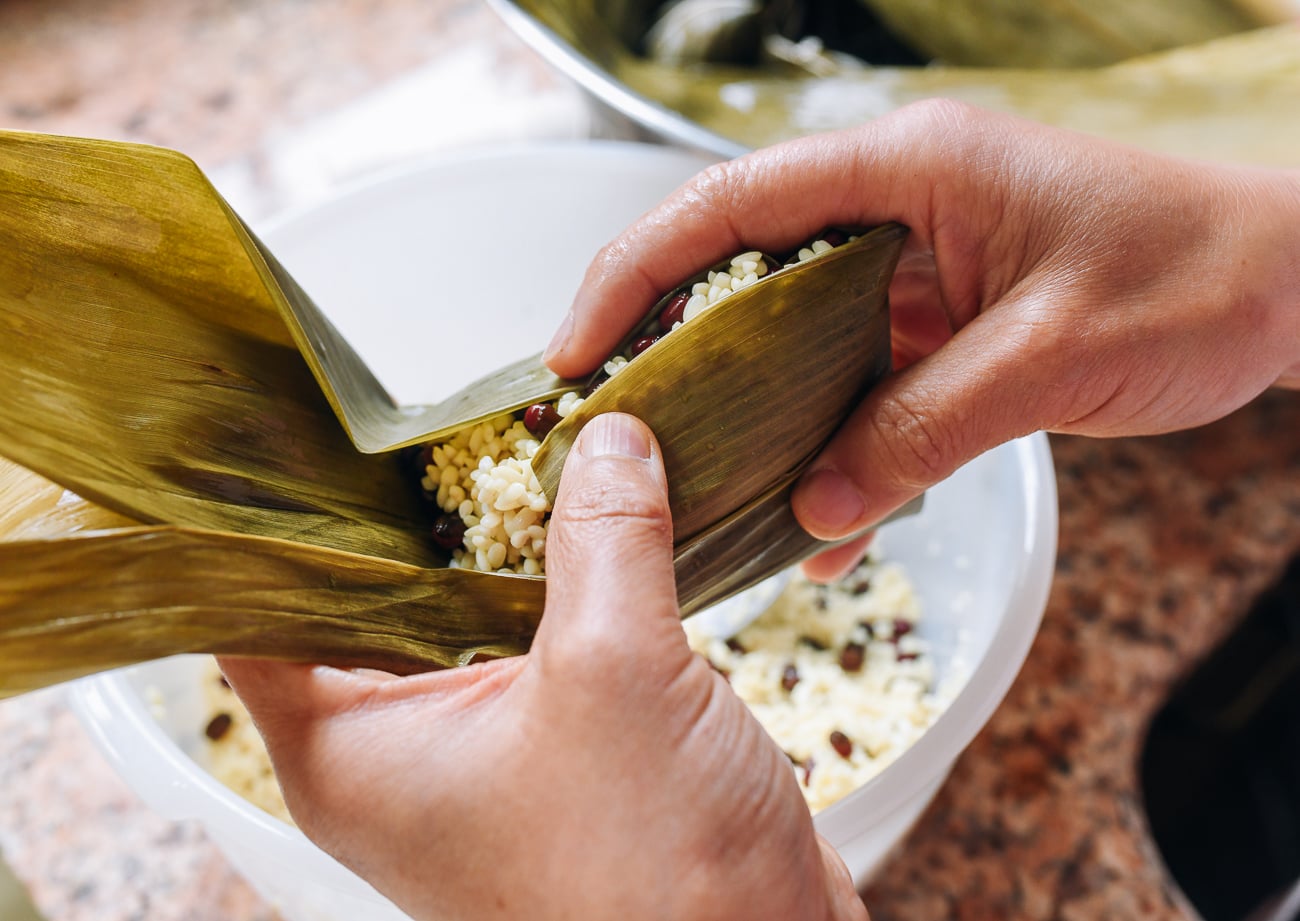
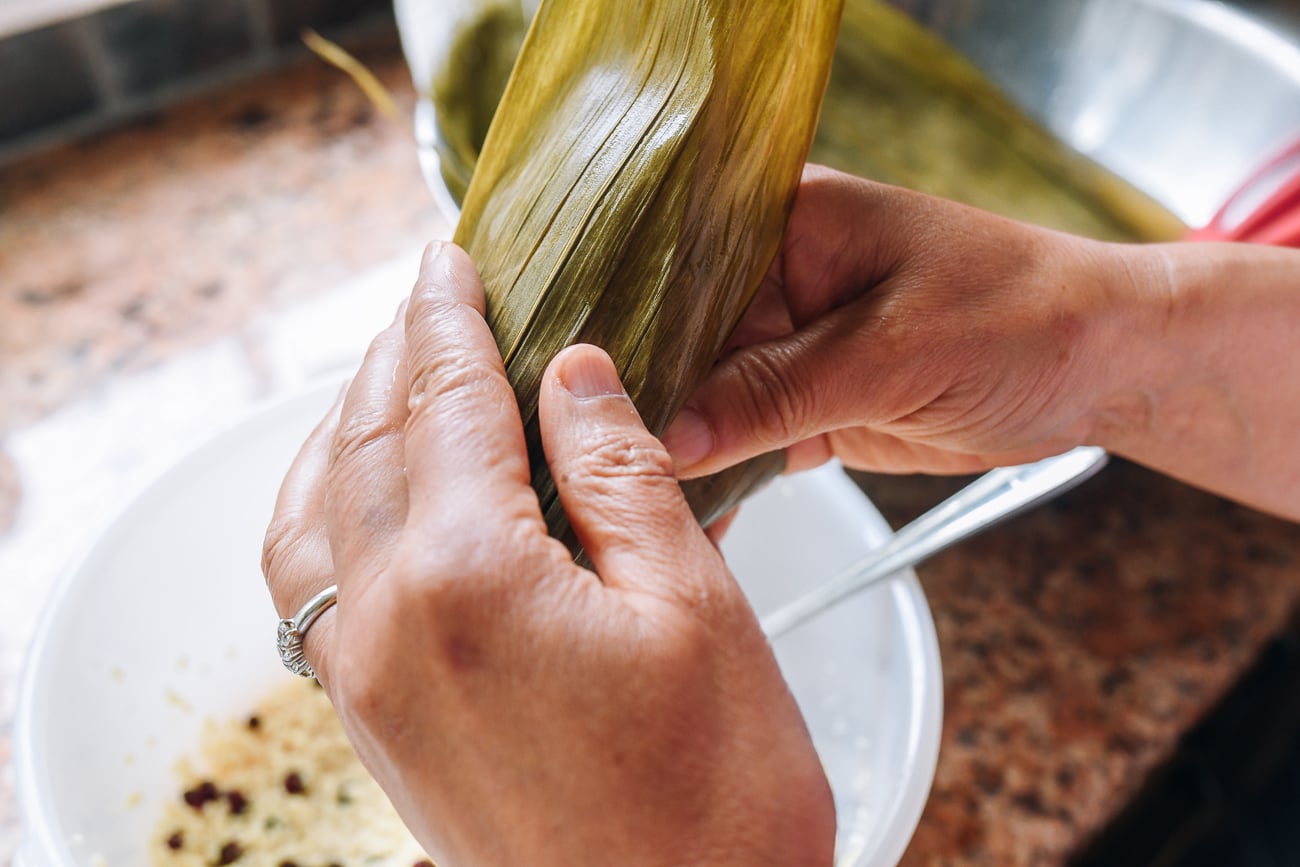
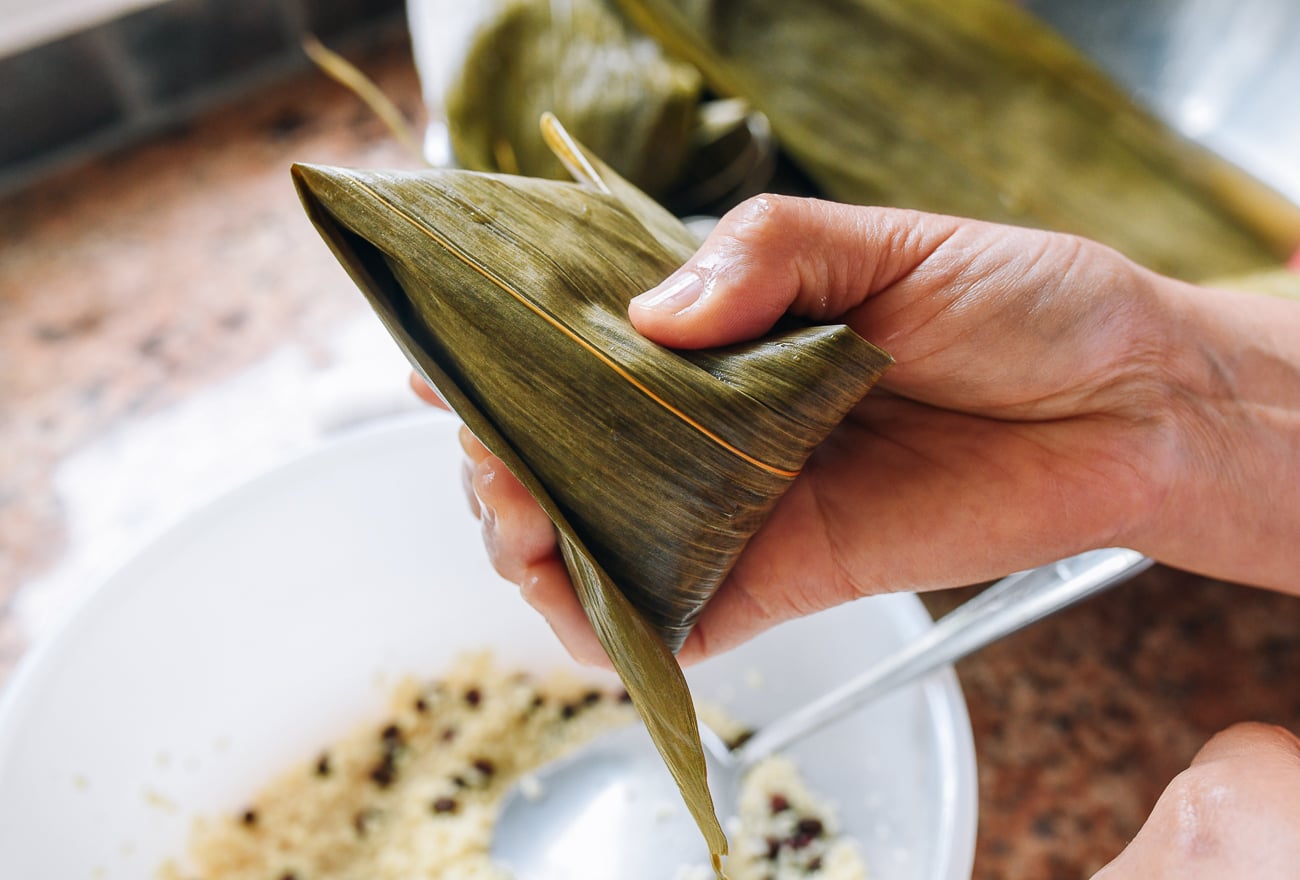
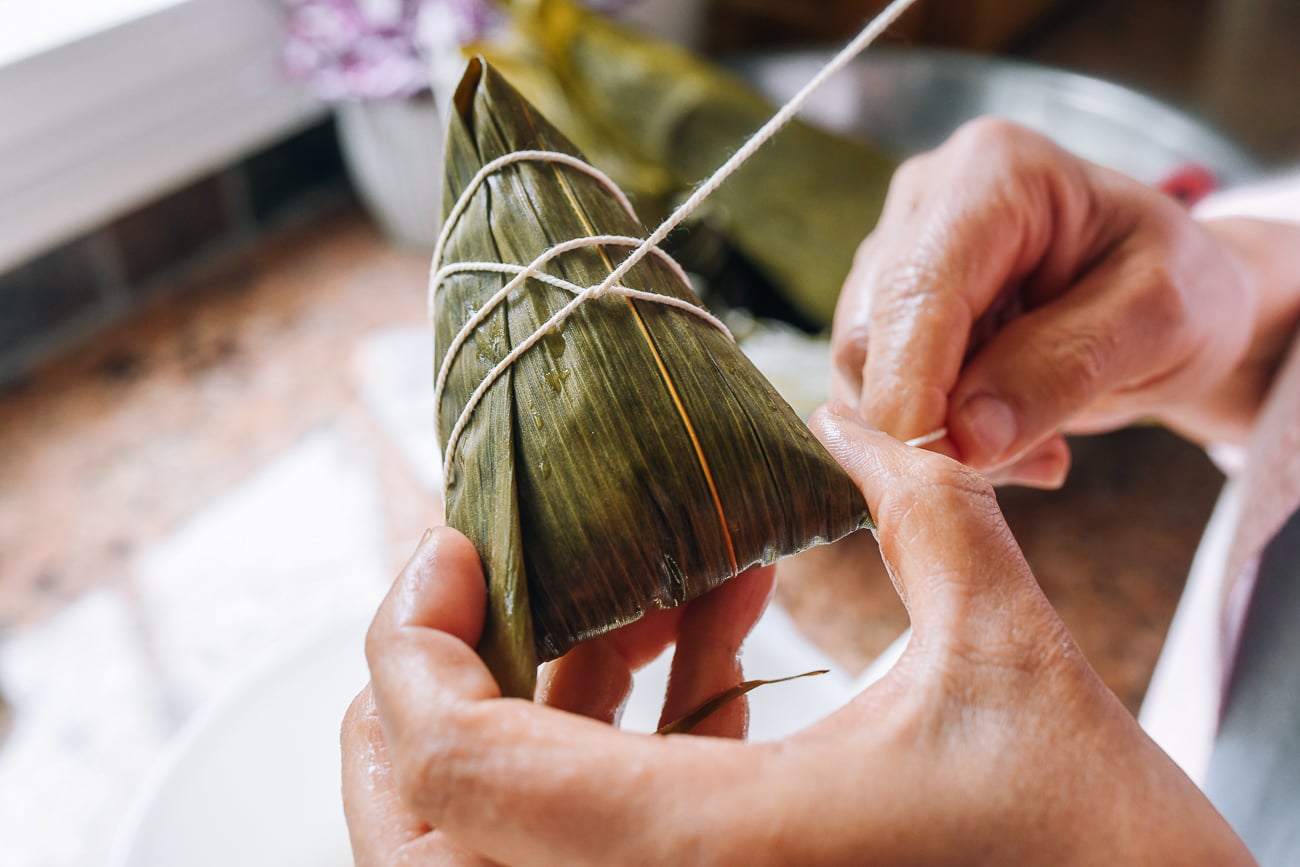
Take two bamboo leaves and follow the steps shown in the photos to wrap them. Start by layering the two leaves together so they’re overlapping, and folding up the bottom to create a cone. Fill with the rice/bean mixture. (Each dumpling will take about ¾ – 1 cup of the mixture.) Fold the two sides into the middle lengthwise, cupping your hands at the bottom of the cone so it doesn’t fall apart. Pinch the leaves at the top to start closing them around the rice, and fold down over the rice. Tie the bundle securely with kitchen string, not tying too tightly so the rice has room to expand during cooking.
Since getting an InstantPot, I never cook zongzi on the stove anymore. Cook the zongzi for 1 hour on manual high pressure, followed by natural release. It’s too easy!
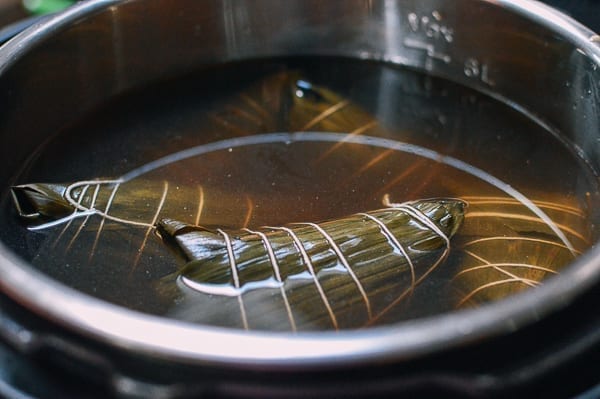
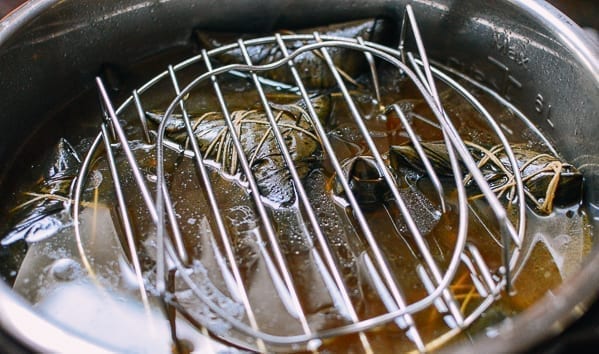
Neatly nest the zongzi in the Instant Pot, minimizing gaps. Fill the pot until it’s no more than 2 inches below the max fill line. Put the metal steamer rack that came with your pot on top of the zongzi, to keep them in place during cooking. Fill with water just until you reach the max fill line. (If you have fewer zongzi, simply cover with at least 2 inches of water.)
Cover the Instant Pot and lock the lid in place. Set on manual high pressure for 1 hour, and allow the pressure to release naturally. Be sure all pressure is released before safely opening the lid.
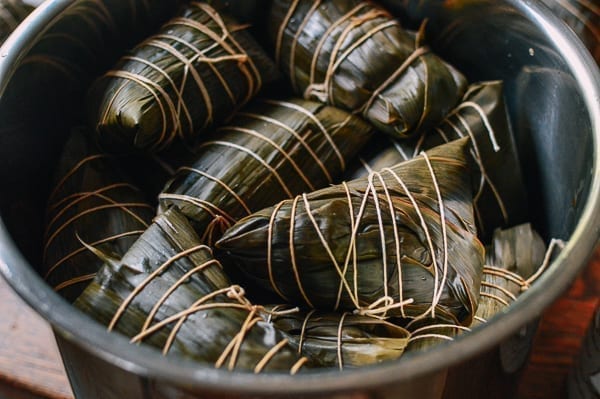
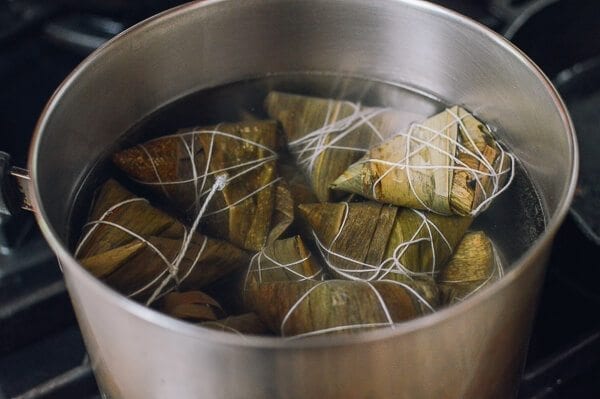
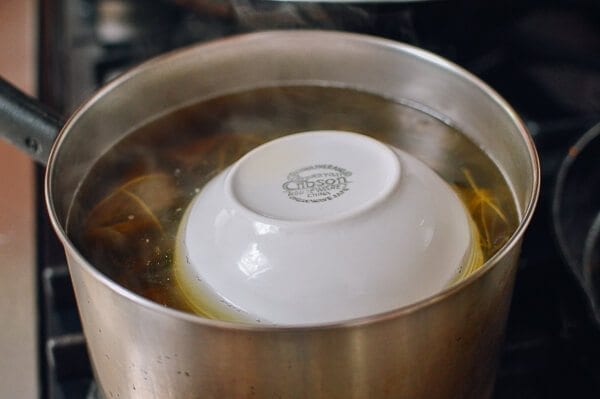
If you don’t have an Instant Pot, arrange the zongzi neatly in a stockpot, and fill with water about one inch above the top of the zongzi. Add 1½ teaspoons of lye water to the pot, and place a heat-proof dish on top of everything to weigh down the zongzi. Bring the water to a boil, and then reduce the heat to medium. Cook, covered, for 2½ to 3 hours. Check the water levels periodically, replenishing the pot with boiling water when the water line falls below the top of zongzi. Turn off the heat. Do not touch the pot, and let the contents cool gradually until they zongzi are just shy of room temperature but still warm. This step allows them to continue cooking in the residual heat.
Serve the zongzi warm or at room temperature with sugar, maple syrup, or honey!
Looking for more authentic recipes? Subscribe to our email list and be sure to follow us on Pinterest, Facebook, Instagram, and Youtube!
Recipe
Red Bean Zongzi (红豆粽子)
Equipment
- kitchen string
Ingredients
- 2 pounds sweet rice (also known as sticky rice or glutinous rice; about 4 1/2 cups)
- 3 tablespoons lye water (potassium carbonate solution)
- 1 tablespoon neutral oil (such as vegetable, canola, or avocado oil)
- 1 cup dried red adzuki beans
- 26 dried bamboo or reed leaves (2 per zongzi, with a couple extra in case of tearing)
- Sugar, maple syrup, or honey (to serve with the zongzi)
Instructions
The night before prepare the rice, bamboo leaves, and red beans:
- In a large, fine mesh strainer, rinse the sweet rice, agitating it with your hands until the water runs clear. You can also do this in a large bowl, changing the water out a few times. The rice will expand about 20-30%, so make sure your bowl is large enough. Transfer the rice to a large bowl with enough water so that the water line is ½-inch above the rice. Stir in the lye water and oil. Once the lye water hits the fresh water, both the rice and water will turn a light yellow color. Cover and soak in the refrigerator overnight.
- In a large basin (or your kitchen sink), soak the bamboo leaves overnight. Weigh the leaves down with something heavy to make sure all the leaves are submerged.
- Rinse and soak the red beans in a bowl of water overnight.
The next day, assemble and cook the zongzi:
- Clean each bamboo leaf, front and back, with a clean kitchen towel, shaking off any excess water and trimming off about a half inch of the leaf at the base (this part is too tough to fold). Set aside.
- Take the soaked rice out of the refrigerator, and drain off all of the liquid. Drain the soaked red beans, and combine with the rice. Mix well.
- Take two bamboo leaves and follow the steps shown in the photos to wrap them. Start by layering the two leaves together so they’re overlapping, and folding up the bottom to create a cone. Fill with the rice/bean mixture. (Each dumpling will take about ¾ – 1 cup of the mixture.) Fold the two sides into the middle lengthwise, cupping your hands at the bottom of the cone so it doesn’t fall apart. Pinch the leaves at the top to start closing them around the rice, and fold down over the rice. Tie the bundle securely with kitchen string, not tying too tightly so the rice has room to expand during cooking.
- To cook in an Instant Pot: Neatly nest the zongzi in the Instant Pot, minimizing gaps. Fill the pot until it’s no more than 2 inches below the max fill line. Put the metal steamer rack that came with your pot on top of the zongzi, to keep them in place during cooking. Fill with water just until you reach the max fill line. (If you have fewer zongzi, simply cover with at least 2 inches of water.) Cover the Instant Pot and lock the lid in place. Set on manual high pressure for 1 hour, and allow the pressure to release naturally. Be sure all pressure is released before safely opening the lid.
- To cook on the stove: If you don’t have an Instant Pot, arrange the zongzi neatly in a stockpot, and fill with water about one inch above the top of the zongzi. Add 1½ teaspoons of lye water to the pot, and place a heat-proof dish on top of everything to weigh down the zongzi. Bring the water to a boil, and then reduce the heat to medium. Cook, covered, for 2½ to 3 hours. Check the water levels periodically, replenishing the pot with boiling water when the water line falls below the top of zongzi. Turn off the heat. Do not touch the pot, and let the contents cool gradually until they zongzi are just shy of room temperature but still warm. This step allows them to continue cooking in the residual heat.
- Serve the zongzi warm or at room temperature with sugar, maple syrup, or honey!