This basic, easy Chinese pork stock can be used as a base for many dishes, from wonton and noodle soups to braises and gravies!
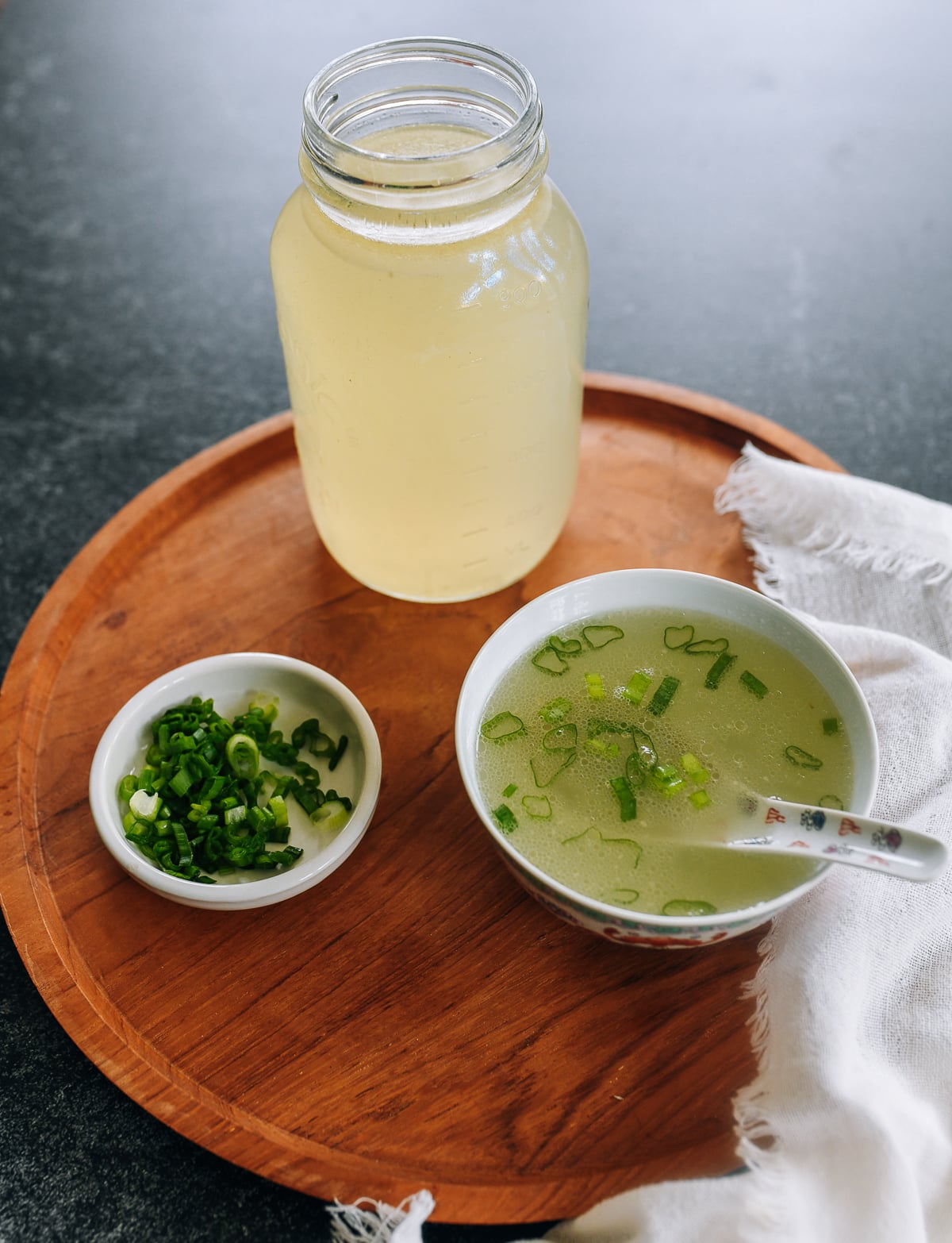
The key to a really clean and flavorful pork stock is a couple simple preparation steps. We’ll show you how to make it!
How to Get a Really Clean Flavor
We use two techniques here to get a really clean pork stock. We soak the pork neck bones in cold water for 1-2 hours, and then we blanch them in boiling water for 1 minute before rinsing them.

Where to find pork neck bones
You can find pork neck bones in Chinese grocery stores. That said, we can find them in our local supermarket too, and we actually prefer buying them there as they are often meatier!
If you can’t find them in the refrigerator case, you can always ask your butcher if they have neck bones that they’ll sell you, in which case you can probably get them for a good deal! If you have the choice, look for the meatiest neck bones you can find, which will yield the most flavor.
If you absolutely cannot find pork neck bones, meaty spare ribs will also work in a pinch. Cut them into individual ribs before using. You can skip the soaking step, as they are not as bloody or bony as neck bones, but do not skip the 1 minute blanch in boiling water.
You may be wondering why we go to such lengths to “clean” the pork bones. You may also be wondering whether we’re losing flavor to the soaking/blanching process.
Pork bones can have a very gamey flavor, and they can also have quite a bit of blood and other impurities that you want to boil out. You’ll see when you blanch them that quite a bit of scum rises to the surface, and you don’t want that stuff in your finished stock!
The soaking and blanching process cleans this off so that you’re left with a really nice clean, pork flavor, which is also mellowed by the addition of scallions and ginger. You may be tempted to skip these steps, but they are essential!
Don’t Waste the Meat!
Unlike with chicken, which dries out after simmering for so long, you can actually eat the meat off of these bones after they’re done cooking. Dip them in light soy sauce for a tasty treat!
How to Use Pork Stock
Pork stock is incredibly versatile. Use it as a soup base for our Simple Wonton Soup or Zhacai Rousi Mian. Combine it with store-bought chicken stock to make a really complex, delicious broth (see also my mom’s Pork & Chicken Stock if you’d like to make it from scratch).
You can also use it in place of chicken stock wherever we call for it in sauces, braises, and stir-fries.
Let’s make it!
Pork Stock Recipe Instructions
Cover pork neck bones in cold water. Soak for 1-2 hours.
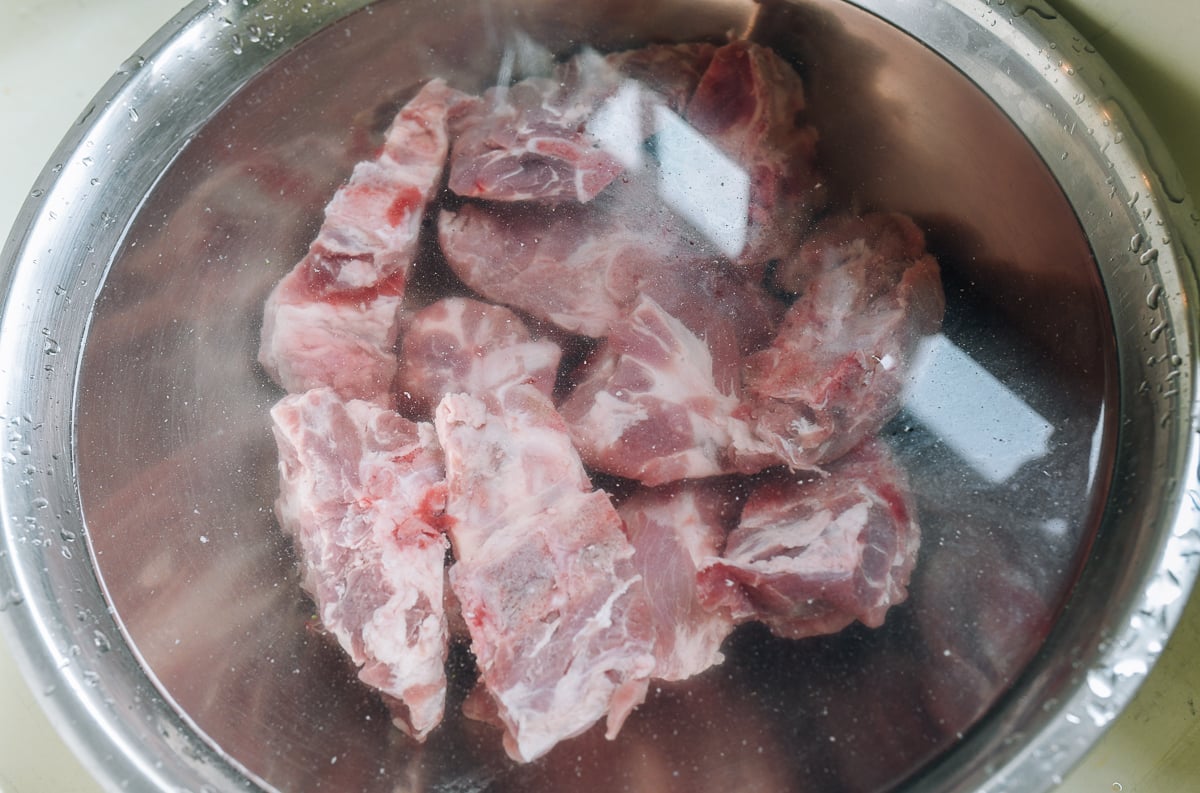
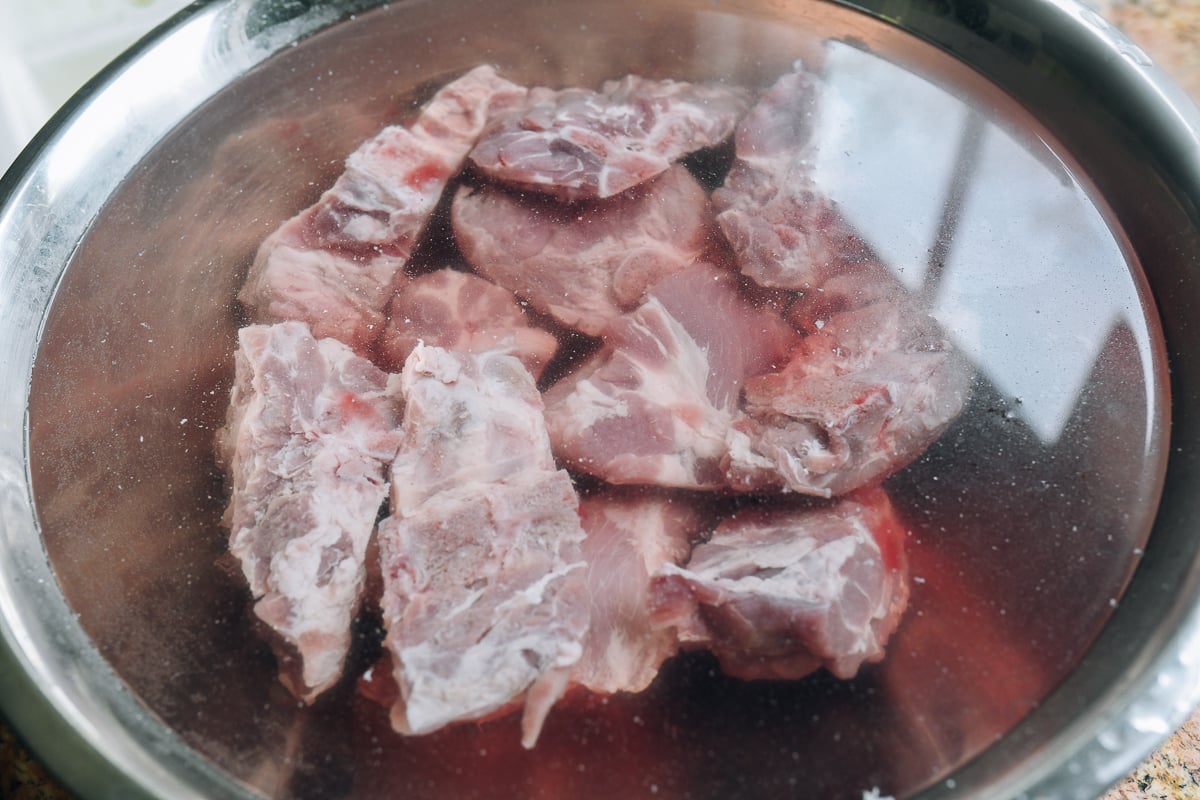
Add the bones to a large, thick-bottomed soup pot, cover with fresh water, cover, and bring to a boil. Boil for 1 minute, then drain through a colander. Rinse the pork bones clean, drain, and set aside.
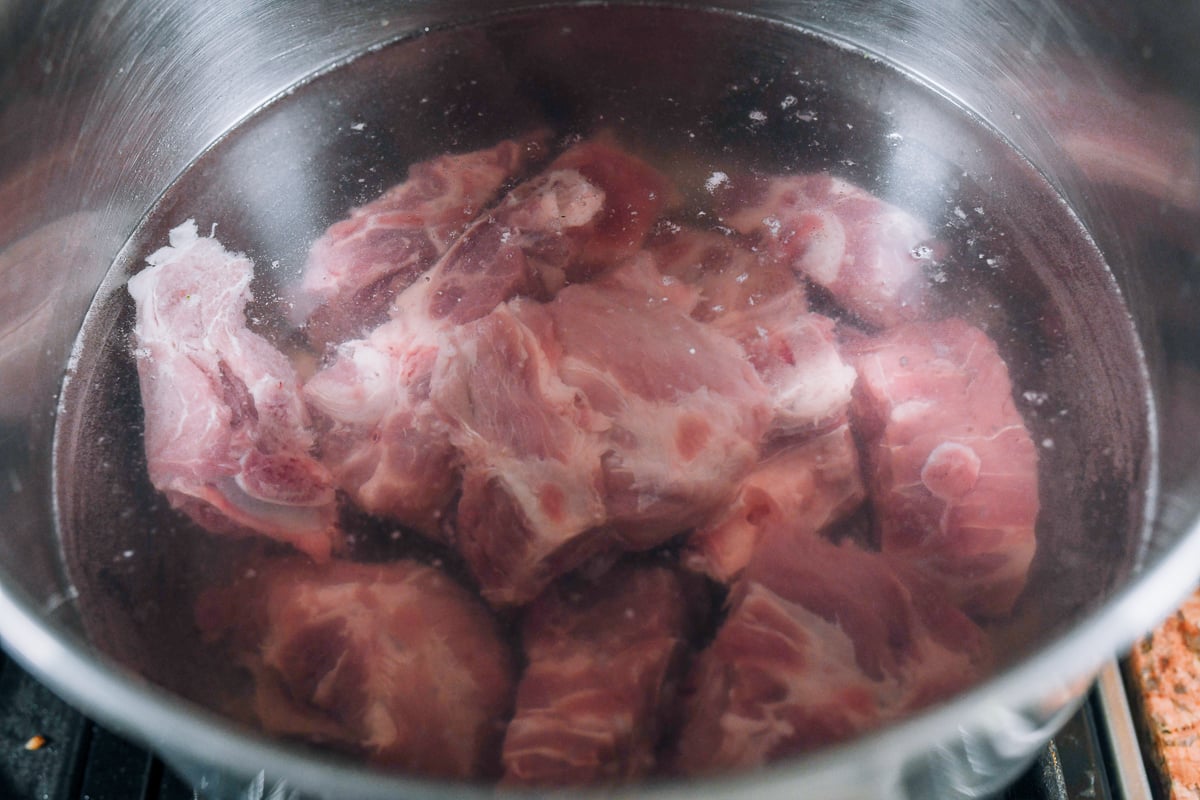
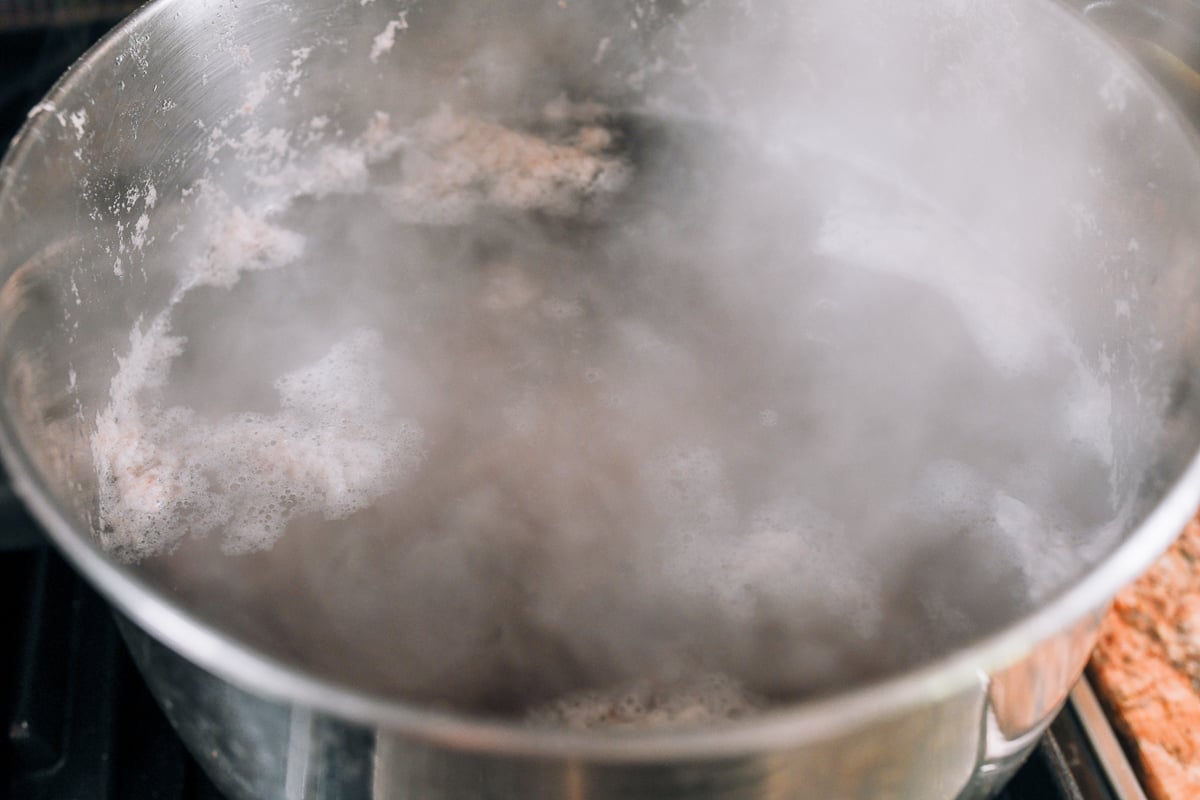
Wash the pot, and put it back over medium-high heat. Add the oil, scallions, and ginger, and fry for 2 minutes until fragrant. Add the clean pork bones to the pot and cover with 12 cups of water.
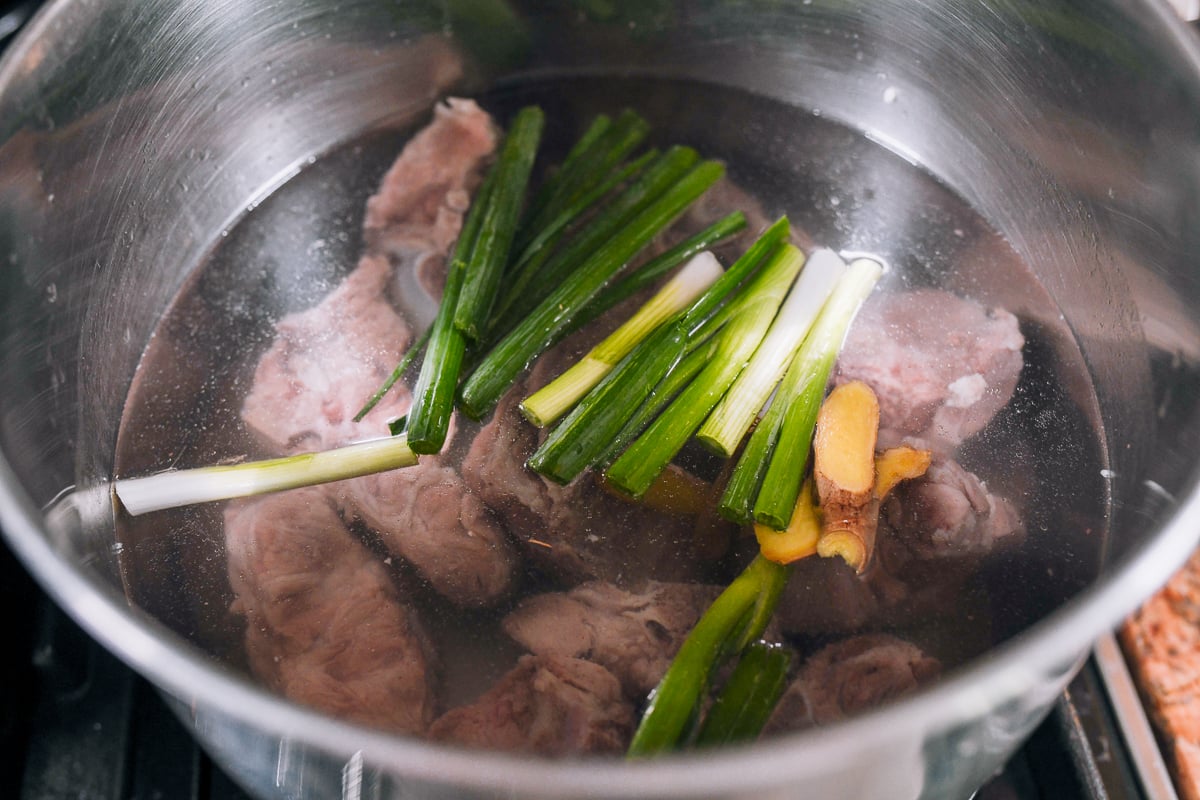
Bring to a boil. Lower the heat, cover, and simmer for 2-3 hours. Add salt to taste.
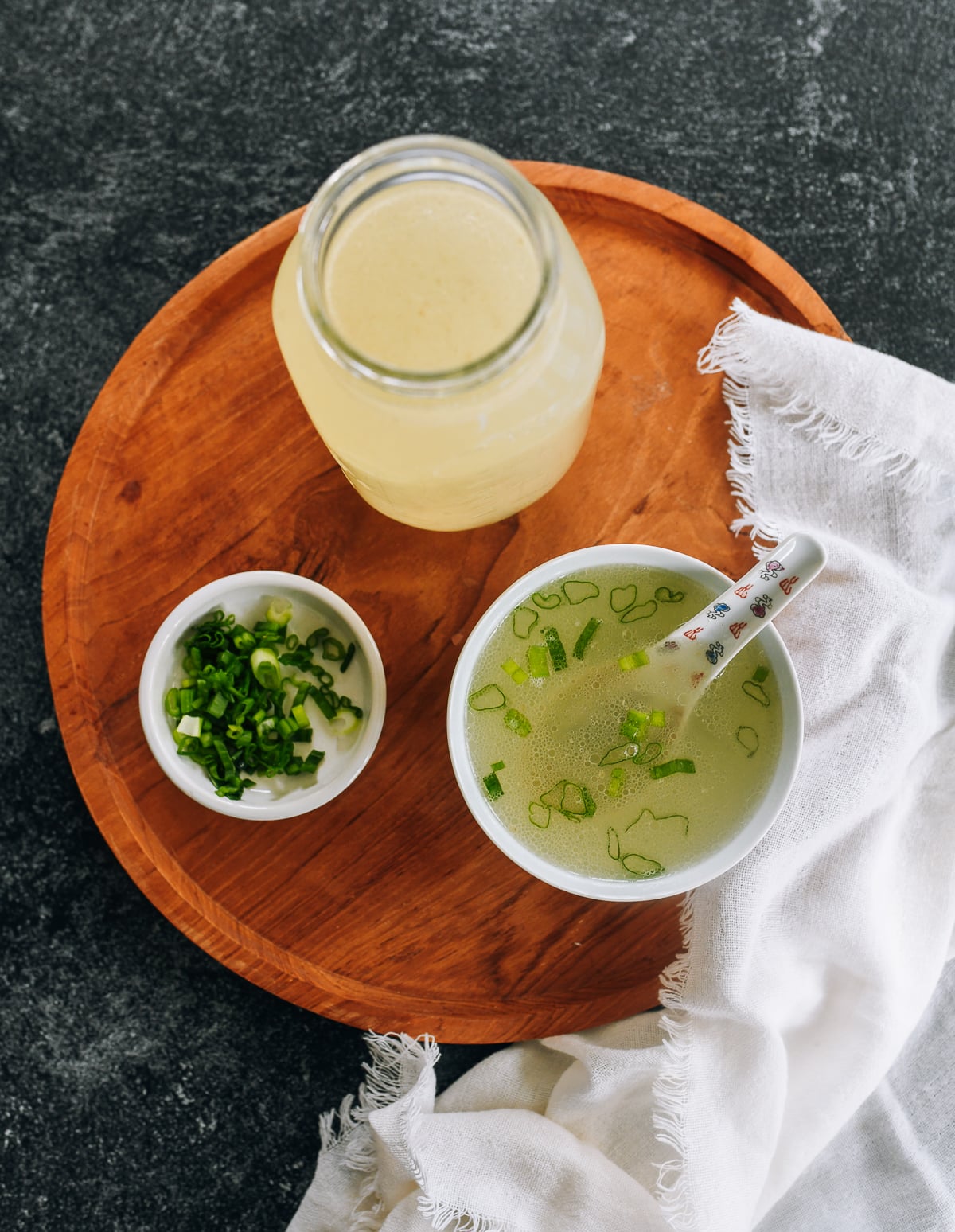
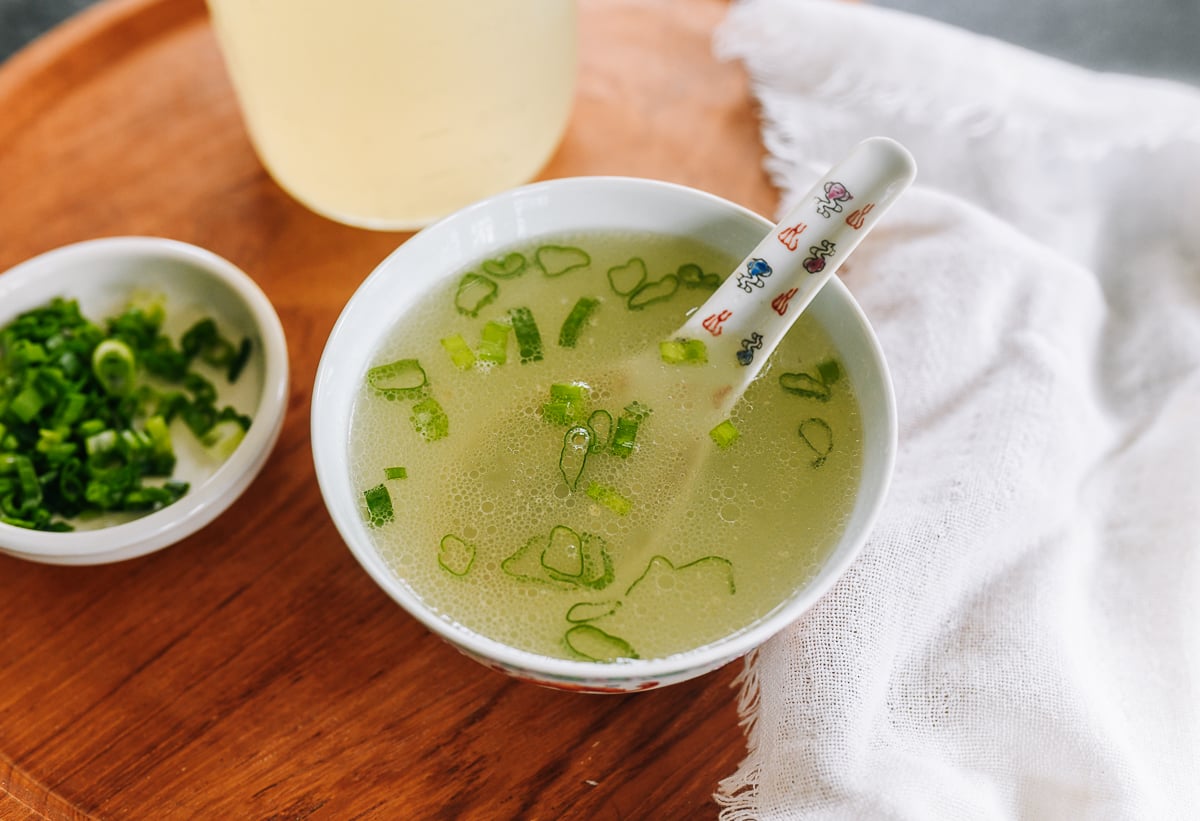
How to Freeze Pork Stock
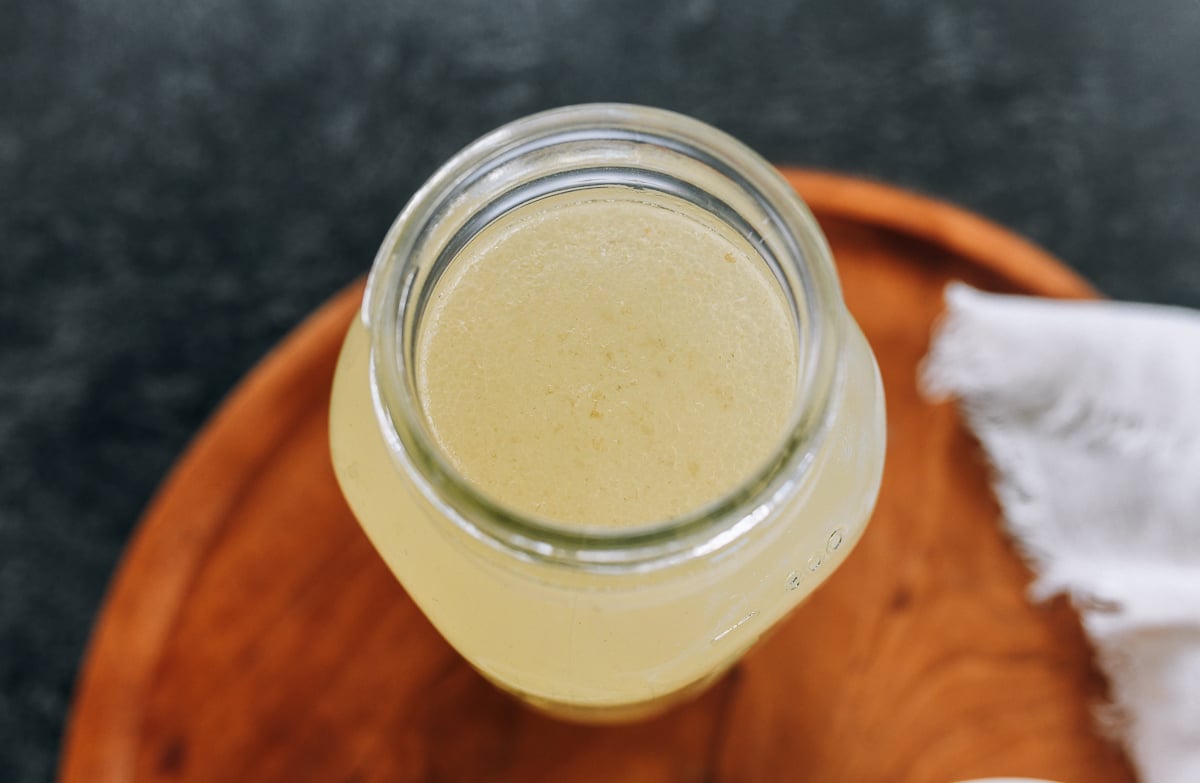
Strain the stock through a fine mesh strainer. (Save the bones—they’re good for eating with a bit of light soy sauce.) Pour into quart containers, leaving about 1 inch at the top to allow for expansion in the freezer. Cover tightly, label with the date, and freeze for up to 3 months at best quality.
Looking for more authentic recipes? Subscribe to our email list and be sure to follow us on Pinterest, Facebook, Instagram, and Youtube!
Recipe
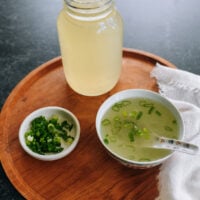
Chinese Pork Stock
Ingredients
Instructions
- Cover pork neck bones in cold water. Soak for 1-2 hours.
- Add the bones to a large, thick-bottomed soup pot, cover with fresh water, cover, and bring to a boil. Boil for 1 minute, then drain through a colander. Rinse the pork bones clean, drain, and set aside.
- Wash the pot, and put it back over medium-high heat. Add the oil, scallions, and ginger, and fry for 2 minutes until fragrant. Add the clean pork bones to the pot and cover with 12 cups of water. Bring to a boil. Lower the heat, cover, and simmer for 2-3 hours. Add salt to taste.